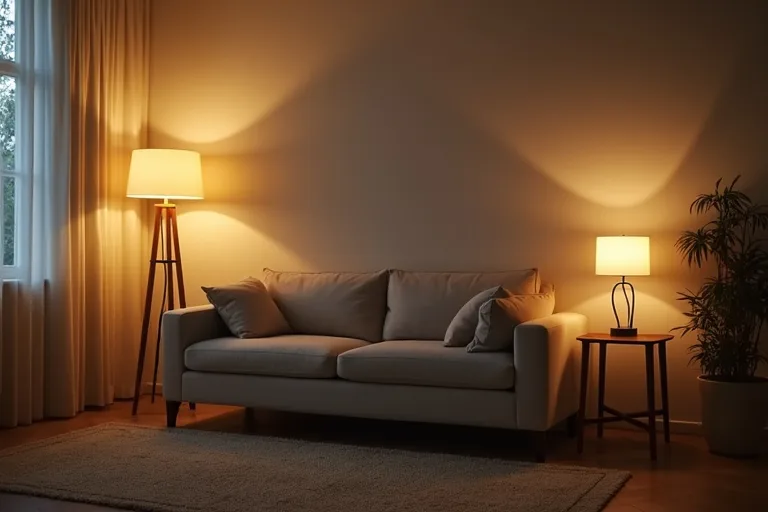
Living room lighting is easy to get wrong because the problem is not usually the lamp itself. It is the way the light spreads, where it lands, and whether the room has enough layers to feel balanced.
If a space feels flat, harsh, or strangely unfinished in the evening, the answer is often less about buying something new and more about fixing the lighting plan you already have.
Most flat or harsh living rooms need layered lighting, softer bulbs, and better lamp placement. A single overhead fixture usually creates glare or shadows, while table lamps and a floor lamp help the room feel warmer and easier to use.
Why one light source makes a room feel wrong
The most common mistake is relying on one ceiling light and expecting it to do every job. That can leave the room feeling bright in the wrong places and dim everywhere else. It also tends to flatten texture, so sofas, rugs, and wall colour lose depth once the main light is on.
A better plan is to think in layers. The ceiling light can provide general brightness, but it should not be the only source. Add softer lighting at eye level and lower down, so the room has shape after dark instead of looking like a waiting room.
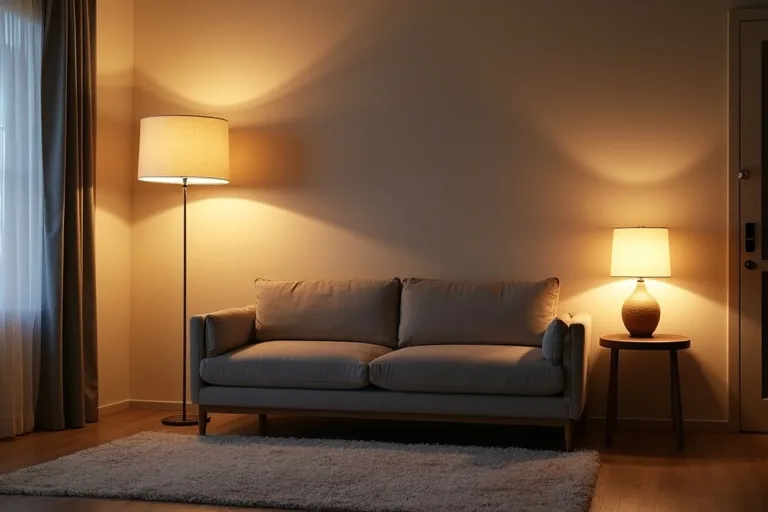
If your living room feels harsh when you switch on the main light, ask whether the room has at least three lighting levels: overhead light, a floor lamp, and one or more table lamps. If not, the room is probably under-layered rather than badly decorated.
How bulb choice changes the whole mood
Even a well-placed lamp can feel wrong if the bulb is too cool or too intense. Very bright cool-white light can make a living room feel clinical, while a softer warm bulb usually helps the room feel calmer and more natural in the evening.
This is one reason lighting can look fine in a shop and then feel disappointing at home. The product may be suitable, but the colour temperature and brightness do not match the way you actually use the room.

- Start with the mood you want: relaxed, readable, or brighter for family use.
- Choose bulbs that support that mood instead of chasing the brightest option.
- Check whether the shade diffuses light or throws it directly into the room.
- Test the room at night, because lighting changes most after daylight fades.
Why lamp placement matters more than you think
Lighting problems often come from height and position, not from having too few fixtures. A lamp that sits too high can glare into the room, while one that is too low may leave the walls and seating area unevenly lit. If a lamp is too close to a sofa or side table, it can also create a bright patch that feels visually noisy.
The goal is to light the areas where people actually sit, read, and move. In a living room, that usually means balancing light across the sofa zone, the side tables, and any corner that otherwise disappears into shadow.
Think about the furniture first, then the light. If the room layout has changed, the lighting plan should change with it.
If a lamp looks attractive but lights the wrong part of the room, it is not solving the real problem. Repositioning is often the fastest fix before you buy a second or third fixture.
Helpful next tools and planners
If you want to make the decision easier before you buy
The right lamp is easier to choose once you know where the seating, walkways, and corners sit in the room. These tools and planners can help you make a calmer choice before adding more lighting.
Simple fixes that soften the room fast
If your living room feels flat or harsh, you do not always need a full redesign. Often the fastest improvement comes from adding a warm ambient layer, moving one lamp, and reducing the room’s dependence on the ceiling light.
One floor lamp can soften a dark corner and help the room feel anchored. A matching pair of table lamps can make the seating area feel more settled and usable in the evening. Together, they give the room a clearer lighting rhythm.
If you are planning a more complete update, it helps to map the room before you shop. A simple layout plan makes it easier to see where lighting should support circulation, conversation, and reading rather than working against them.

- Using only one ceiling light for the whole room
- Choosing bulbs that are too cool, too bright, or too harsh for evening use
- Placing lamps without checking the sofa, corner, or walkway they actually need to serve
- Adding more fixtures without fixing the room layout first
- Ignoring how shadows, glare, and furniture placement affect the final result
Best next step
Before you buy another lamp, map the room by zone. The Styling Homes Room Layout Planner helps you place lighting alongside furniture, so you can see where a floor lamp, table lamp, or ambient layer will actually improve the space.
A living room usually feels flat when the lighting has no layers, and harsh when the bulbs or placement are doing too much. Start by softening the ambient light, then place fixtures around the furniture plan instead of around the shopping list. That usually gives you a calmer room without unnecessary spending.
FAQ
What makes a living room lighting plan feel flat?
Usually it is a lack of layers. If one ceiling light is doing all the work, the room can lose depth and feel visually one-dimensional.
Why does my living room light feel harsh at night?
The bulb may be too cool or too bright, or the fixture may be throwing light directly into the room instead of diffusing it gently.
Do I need a floor lamp or table lamps first?
Choose the one that supports the area you use most. A floor lamp often helps corners and seating zones, while table lamps are useful for side tables and a softer, lower glow.
Should I plan lighting before I buy new furniture?
Yes, if possible. Lighting works best when it follows the room layout, because furniture placement determines where people sit, move, and need light.
Three sensible next steps
Some links in this article may be affiliate links. Read more in the Affiliate Disclosure.