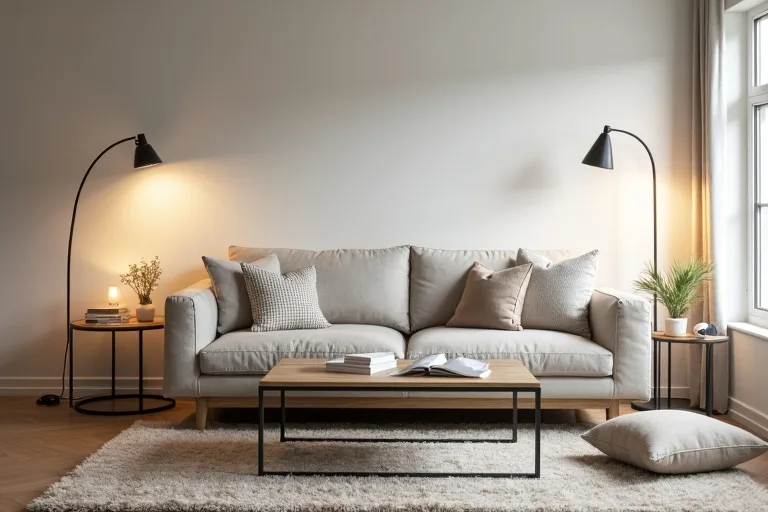
Living room lighting does more than brighten a space. It changes how the room feels to sit in, how easy it is to move through, and whether different parts of the room actually work for reading, relaxing, or conversation.
The best approach is usually not one perfect fixture. It is a simple mix of ceiling light, task light, and softer ambient light, chosen to suit the layout you already have.
Start with layered lighting: one main source, one task light, and one soft ambient layer. That gives you enough brightness for daily use without making the room feel flat or harsh.
Why lighting matters in a living room
A living room usually has more than one job. It may be a place to watch television, read, talk, play games, or simply unwind at the end of the day. Lighting should support those uses instead of forcing one bright overhead setting to do everything.
Good lighting can make a room feel calmer and easier to use. It helps separate seating zones, softens awkward corners, and gives the eye somewhere comfortable to rest. Poor lighting, by contrast, often shows up as glare on a screen, shadowy corners, or a room that feels bright in the centre but unfinished at the edges.
Before choosing fixtures, it helps to look at the room as a plan, not just a style choice. Ask where the sofa sits, which seat is used for reading, where daylight enters, and which parts of the room need help after dark. That is the basis of a better lighting decision.

The real decision is not whether a lamp looks good on its own. It is whether the whole room has enough light in the right places once the furniture is in place. If the seating plan changes, the lighting plan often needs to change with it.
How to build the three lighting layers
The easiest way to think about living room lighting is in layers. Each layer has a different job, and together they create a room that feels flexible rather than overlit.
- Main light: This is the general light for the room, often a ceiling fixture or pendant.
- Task light: This supports a specific activity such as reading, knitting, or working on a laptop.
- Ambient light: This softens the room and keeps it from feeling stark in the evening.
A ceiling light alone can work, but it rarely gives the most comfortable result. Add a floor lamp near the sofa if you need light for reading or conversation. Add table lamps where you want a gentler glow on side tables or console surfaces. The aim is balance, not brightness for its own sake.
For many rooms, a modern arc floor lamp works well beside a sofa because it brings light into the seating area without needing a side table in exactly the right spot. A set of two table lamps can be useful when you want the room to feel symmetrical or when you need light at both ends of a longer seating arrangement.

Where to place lights for better flow
Placement matters as much as the fixture itself. A well-chosen lamp in the wrong spot can still leave the room awkward to use.
Start with the furniture layout, then place the lights around the daily routes through the room. The goal is to light the places people actually sit and walk, not just the centre of the ceiling.
In practice, this usually means:
- placing a floor lamp close enough to a reading seat to be useful, but not so close that the bulb feels exposed;
- using table lamps to balance a sofa or anchor the ends of a console or side table group;
- avoiding glare from lamps that sit directly in front of a television;
- leaving dark corners only where they support the room rather than make it feel unfinished.
If you are unsure about spacing, confirm the furniture plan first. A room layout that is too tight or too spread out will make lighting decisions harder than they need to be. Once the seating and walkways are settled, lighting becomes much easier to place.
What to buy first on a budget
If you are updating the room gradually, begin with the fixture that changes the feel of the space fastest. In most living rooms, that means one strong ambient or task layer before you add decorative extras.
A floor lamp is often the most useful first purchase because it can solve a reading corner, soften a dark side of the room, and make the sofa area feel more complete. Table lamps come next when you want the room to feel balanced in the evening. If you already have decent table lighting, a better ceiling fixture may be the more worthwhile upgrade.
It also helps to plan the room before you buy. A simple layout or budget sheet can stop you from buying lighting that looks good online but does not fit the seating plan at home. If you prefer to work it through on paper first, a room planning download can be a useful middle step before shopping.

Best next step
Before you buy a new lamp or ceiling fixture, confirm how the room is arranged and which seating zones need light. That one step usually makes the rest of the choice much clearer.
- Relying on a single ceiling light for the entire room.
- Buying lamps before settling the sofa and chair placement.
- Using decorative lighting that looks good but does not support the way the room is used.
- Creating glare near the television or in a reading seat.
- Leaving the room too dark at the edges, which makes it feel smaller and less finished.
The simplest living room lighting plan is usually the best one: one main light, one task light, and one softer ambient layer. If you start with the layout and seating zones first, you can choose fixtures that make the room calmer, more usable, and easier to live in.
Helpful next tools and planners
If you want to make the decision easier before you buy
These are useful when you are still working out the layout, the budget, or which type of lighting suits the room best.
FAQ
How many lights should a living room have?
Most living rooms work better with at least two or three sources of light rather than one. A ceiling light, a floor lamp, and one or two table lamps is a common starting point.
Is a ceiling light enough for a living room?
It can be, but it often feels too flat or too bright on its own. Adding task and ambient lighting usually makes the room more comfortable.
Where should a floor lamp go in the living room?
Place it where people actually sit, especially beside a sofa or reading chair. It should light the activity, not just fill an empty corner.
What should I buy first if my budget is limited?
Start with the light that fixes the biggest daily problem. For many rooms, that is a floor lamp near the main seating area or a better ambient light for evening use.
Three sensible next steps
Some links in this article may be affiliate links. Read more in the Affiliate Disclosure.