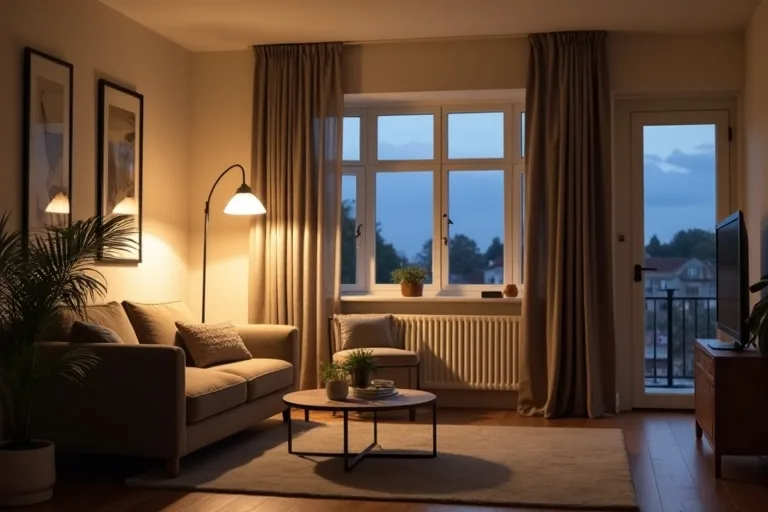
If your living room feels dim, patchy, or a little flat in the evenings, lighting is often the easiest place to start. The choice is usually between a quick budget fix and a more layered plan that takes the whole room into account.
The good news is that you do not need a full redesign to make the space feel better. A few well-placed lamps can improve comfort quickly, but a layered setup usually gives you the calmer, more usable result.
Budget lighting can improve a room fast, but layered lighting gives you better comfort, flexibility, and a softer overall look. If you only need the room to feel less harsh, start with one strong floor lamp or a pair of table lamps. If you want the living room to work for reading, relaxing, and evenings with guests, plan for a layered mix of ambient, task, and accent light before you buy.
What budget lighting changes first
A budget lighting update is usually about fixing the most obvious problem with the least spending. In many living rooms, that problem is not the amount of furniture or the wall colour. It is the way the light falls.
The fastest improvements come from adding one or two lamps where the room already feels dark. A modern arc floor lamp can help spread light over a seating area, while a matching pair of table lamps can balance the room and reduce the sense that all the light is coming from one point.

If you are trying to keep things simple, look for the part of the room you use most in the evening. That might be the sofa, a reading chair, or the main conversation area. Adding light there often makes the whole room feel better without changing anything else.
Budget lighting works best when the goal is relief, not perfection. It can soften shadows, make the room feel more welcoming, and help you see the space more clearly. It will not always solve every lighting problem, but it is often the right first move.
If the room already has a decent ceiling light, ask whether you need more overall brightness or simply better distribution. If the answer is distribution, one carefully placed lamp may be enough. If the answer is brightness in several parts of the room, you are likely moving into layered lighting territory.
How a layered lighting upgrade works
A layered lighting upgrade does more than make a room brighter. It gives the room different kinds of light for different moments, which is why it usually feels calmer and more comfortable at night.
The basic idea is straightforward: keep ambient light for general glow, add task light where people actually sit or read, and use a little accent light to soften the edges of the room. When those layers work together, the room looks less harsh and feels easier to use.
- Ambient light sets the base level so the room does not feel gloomy.
- Task light supports reading, hobbies, or conversation areas.
- Accent light helps the room feel balanced and visually softer.
This is where a layered plan starts to make sense. A ceiling fixture alone may be enough during the day, but in the evening it can create shadows or leave corners behind. Adding table lamps and a floor lamp gives you control over how the room feels at different times.

Placement, sizing, and lamp count matter more than style
Before you buy another lamp, it helps to step back and think about placement. A well-chosen light in the wrong spot can still leave the room feeling awkward.
For most living rooms, the most useful question is not which lamp looks best online. It is where the light needs to land. Does the sofa need reading light? Does a dark corner need to disappear? Does the room feel too top-heavy because all the light comes from above?
A simple way to think about it is to match the lamp type to the problem:
- One floor lamp works well when you need to lift a darker seating area.
- A pair of table lamps helps when you want the room to feel more even on both sides.
- More than one layer becomes useful when the room is used for several activities after dark.
Size also matters. A lamp that is too small can disappear, while one that is too large can crowd the furniture. That is why room layout comes first. If the sofa, side tables, and walkways are clear, it is much easier to choose lighting that feels intentional rather than random.
If you are also adjusting rugs, seating, or side tables, the room plan should guide all of those choices together. The Room Layout Planner is useful here because it helps you place the furniture first, then decide where the light should go.
For proportion checks in the wider room, the Rug Size Calculator can also help keep the seating zone balanced before you commit to new pieces.
What to buy in what order
If you are trying to stay calm and avoid overbuying, the order matters. Start with the planning decision, then the lighting layers, then the shopping list.
The simplest sequence is usually this: first decide what the room needs most, then confirm where each lamp will sit, and only then choose the products. That approach helps you avoid buying a second lamp when one good lamp and a better layout would have solved the problem.

If you want to keep track of your choices, a simple budget sheet is useful. The Room Makeover Planner, Home Layout Budget Spreadsheet (Digital Download) can help you map out purchases before you start shopping. That is especially helpful when you are comparing a budget fix with a more complete upgrade.
For lighting products, the most relevant starting points from this article are a modern arc floor lamp for living room and table lamps set of 2 living room. Both can fit naturally into a layered plan if the room layout supports them.
If you want to see how lighting fits into the bigger picture, start at the Living Room Ideas hub and work outward from the room plan rather than the product first.
Best next step
Before you buy any lamp, map the room and decide where the light should support the sofa, side tables, and walkways. That small planning step makes it much easier to choose the right lamp count and avoid clutter.
- Buying lamps before deciding where the seating area actually works best.
- Relying on one overhead light and expecting the room to feel warm in the evening.
- Choosing lamps that are too small for the furniture they need to support.
- Placing lighting only at the edges of the room and leaving the main seating zone dim.
- Adding decorative lights without checking whether the room needs task light first.
Budget lighting is the quickest way to improve a living room, but a layered lighting upgrade usually gives the better long-term result. If the room only needs a softer glow, start with one lamp. If the room needs to work well for evenings, reading, and relaxed use, plan the layout first, then build the light in layers.
Helpful next tools and planners
If you want to make the decision easier before you buy
A simple plan can save you from buying the wrong number of lamps or choosing pieces that do not suit the room. These tools and products are most useful when you want to move from idea to action with less guesswork.
FAQ
Is one floor lamp enough for a living room?
Sometimes. If the room only has one dark area and the ceiling light is otherwise adequate, one floor lamp may be enough. If the room is used for reading or several people sit there in the evening, you will usually want more than one light source.
Are table lamps better than floor lamps?
Neither is always better. Table lamps work well for a softer, balanced feel beside sofas and chairs, while floor lamps are useful when you do not have surface space or need light to reach over furniture.
What is the cheapest way to improve living room lighting?
Start by identifying the darkest part of the room and add light there first. One carefully placed lamp often makes a bigger difference than buying several small decorative lights.
When should I move from a budget fix to a layered lighting plan?
Move up when the room needs to support more than one activity, or when the light still feels uneven after adding one lamp. If the room is used most evenings, a layered plan usually gives a better result.
Three sensible next steps
Some links in this article may be affiliate links. Read more in the Affiliate Disclosure.