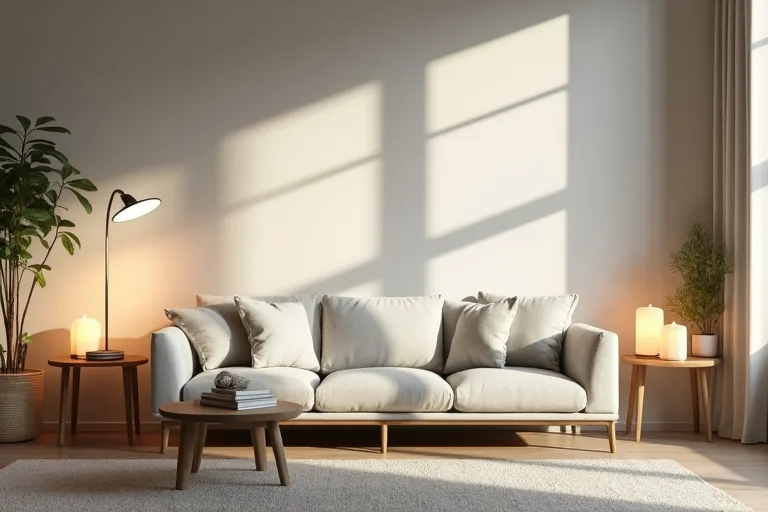
Living room lighting does more than help you see. It affects how large the room feels, how comfortable the seating area is, and whether the space works for reading, relaxing, or spending time with family.
The easiest way to improve it is not to buy one brighter fixture. It is to layer light so the room has a softer base, clearer task lighting, and a little depth in the corners.
Layer ambient, task, and accent lighting to make the room feel warmer and work better every day. In most living rooms, that means a mix of overhead light, a floor lamp near seating, and table lamps that soften darker edges.
Why layered lighting changes how the room feels
A single ceiling light often makes a living room feel flat. It can brighten the center of the room while leaving corners, side tables, and reading spots underlit. Layered lighting solves that by spreading light across the room in different ways.
Ambient light gives you the general level of brightness. Task light supports what you actually do in the room, such as reading, knitting, or helping children with homework. Accent light adds depth by pulling attention away from dark edges and helping the room feel more settled.
That mix matters because most living rooms have more than one use. A room that only works for TV at night usually feels awkward in daylight. A room that only feels decorative may look good in photos but still be inconvenient when you need to sit down, read, or move around comfortably.
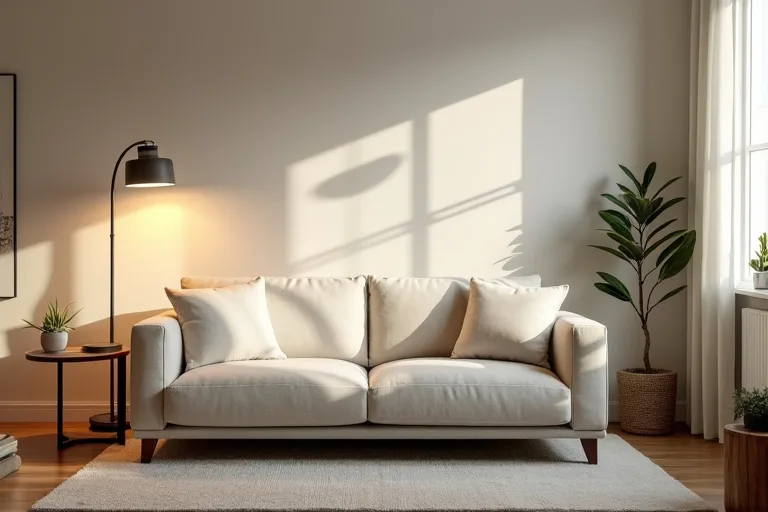
Before you shop, name the room’s real jobs. If the space is mostly for TV, conversation, and occasional reading, your lighting plan should support those uses first. If you also work, study, or entertain there, the room needs more than one lighting zone.
Where floor lamps and table lamps work best
Floor lamps and table lamps are often the fastest way to improve a living room because they add light without a full electrical project. They are also easier to move when the layout changes.
A modern arc floor lamp works well beside a sofa or armchair when you want light that reaches over seating without taking up much floor area. It is especially useful if the room has a darker corner or if the main ceiling fixture does not land in the right place.
Table lamps set of 2 living room setups are useful when you want symmetry, softer background light, or a more balanced feel on both sides of a sofa or console. They can make the room feel calmer at night because they spread the glow more evenly than one strong source.
- Place a floor lamp where it supports a seat, not where it blocks movement.
- Use table lamps to soften edges and make side tables useful after dark.
- Repeat light on both sides of the room if one area still feels visually heavy.
How to choose bulb warmth and brightness
The wrong bulb can undo a good layout. If the light is too cool, the room may feel sharp or unfinished. If it is too dim, the room can feel gloomy even with several lamps.
For a calm living room, a warm white bulb usually feels more natural than a crisp white one. The goal is not to make the room yellow. The goal is to keep it comfortable enough for evenings while still bright enough for daily use.
Think about brightness in relation to placement. A reading lamp near a chair needs to do more work than a lamp that simply adds background glow. If every light is equally strong, the room can feel harsh. A better plan is to let one or two fixtures handle the task lighting while the others stay softer.
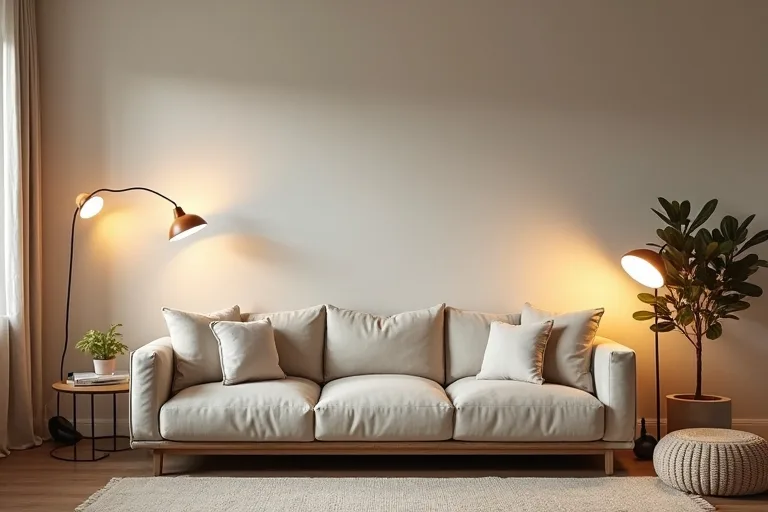
If you want a simple rule, start with one brighter task light, then use softer ambient lighting around it. That balance usually feels more comfortable than filling the room with the same level of brightness everywhere.
A simple plan before you buy
The most useful lighting decision is usually not the lamp itself. It is where the lamp will sit, what it needs to support, and whether the room still flows well once it is added.
Start by marking the main seating zone, the reading spot, and any dark corners that need soft fill light. Then check outlets, table widths, and walking paths. A lamp can look right online and still feel wrong if it interrupts circulation or competes with furniture placement.
If you are reworking the room at the same time, use a planner so the lighting choices match the furniture layout instead of fighting it. That is especially helpful when you are deciding between one larger lamp, a pair of smaller lamps, or a floor lamp placed to offset a heavy sofa arrangement.
Best next step
Map the room before you buy. The room layout planner can help you place lamps, seating zones, and outlet positions with more confidence. If you are also checking the size of a rug or furniture group, the rug size calculator can help keep the whole layout balanced. For broader browsing, start with the living room ideas hub.
- Using only one overhead light and expecting the room to feel finished.
- Buying lamps before checking outlet positions and table space.
- Choosing bulbs that are too cool for a relaxed living area.
- Putting every lamp at the same brightness level, which flattens the room.
- Ignoring corners, which makes the space feel smaller at night.
The best living room lighting is usually layered, not complicated. Start with a solid ambient base, add task lighting where you actually sit and read, and use softer lamps to warm the edges of the room. If you plan the layout first, the room will feel calmer, brighter, and easier to use every day.
Helpful next tools and planners
If you want to make the decision easier before you buy
These options are most useful after you know where the light needs to go. One helps with placement, one helps you compare room changes, and one is a simple digital planner if you want a budget-friendly way to stay organized.
FAQ
How many lights does a living room usually need?
Most living rooms work better with at least three light sources spread across the space, but the right number depends on room size, furniture placement, and how you use the room.
Is a floor lamp enough for a living room?
A floor lamp can help a lot, but it usually works best as part of a wider plan. Most rooms still need some ambient lighting and, often, a table lamp or two.
What bulb color is best for a cozy living room?
A warm white bulb is usually the easiest place to start because it feels softer in the evening and more comfortable for relaxing spaces.
Should living room lamps match?
They do not have to match exactly. It is often better if they relate in scale, finish, or visual weight while still serving different parts of the room.
Three sensible next steps
Some links in this article may be affiliate links. Read more in the Affiliate Disclosure.