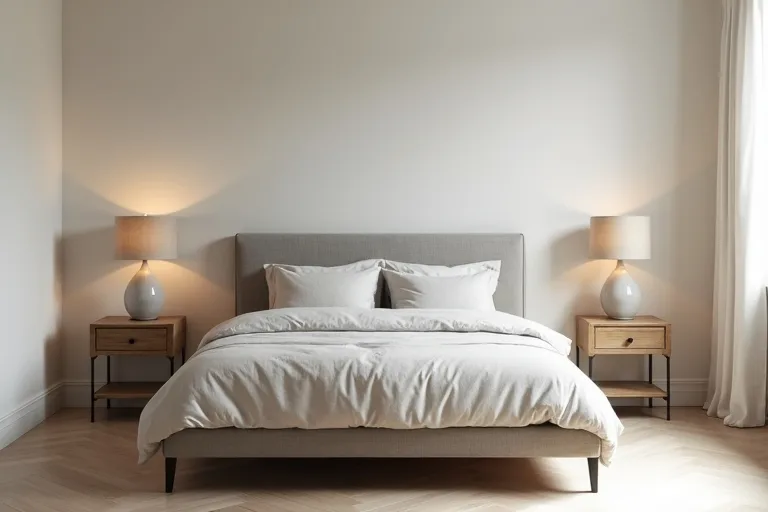
A minimalist bedroom works best when the room feels easy to use, not empty for the sake of it. The goal is to remove decisions that create visual noise and keep the ones that support sleep, movement, and calm.
If you are starting from scratch, the smartest approach is to plan the room before you buy anything. That usually means checking bed size, bedside spacing, lighting needs, and storage early, so the room feels balanced once it is finished.
Start with layout, then choose only the furniture, lighting, and storage you actually need.
What minimalist bedroom design really means
Minimalist bedroom design is not about making a room bare. It is about reducing clutter, keeping the layout clear, and choosing a small number of practical pieces that work well together. A good minimalist bedroom still feels warm, lived in, and comfortable.
The style usually depends on restraint rather than decoration. You will often see fewer objects on display, simpler furniture lines, a limited color palette, and materials that feel calm rather than busy. That can make a small room feel larger, but it also helps a larger room feel less scattered.
The best minimalist bedrooms are built around use first. If the bed is too large, the lighting is awkward, or storage spills into the floor area, the room stops feeling calm no matter how simple the decor looks.
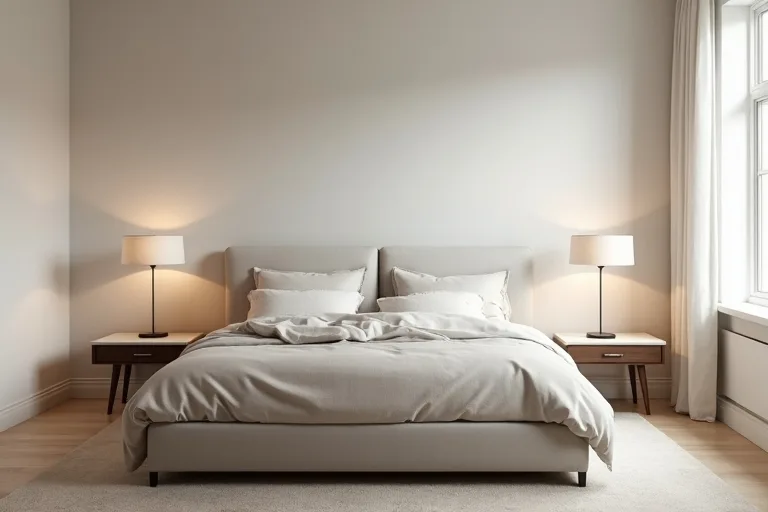
Before choosing finishes or decor, ask one question: does the room have enough space for the bed, the bedside pieces, and a comfortable path around them? If the answer is no, the design problem is layout, not styling.
How to plan the layout first
Layout is the foundation of a calm bedroom. When the bed, doors, windows, and storage are placed well, the room feels easier even with very simple furniture. When the layout is off, every other decision becomes harder.
Start by mapping the room and thinking about the natural walking route. In most bedrooms, the bed is the anchor, but the right placement depends on door swing, window position, and how much clearance you need on each side. If the room is tight, one carefully chosen bedside table may work better than forcing in a pair.
A useful way to approach the decision is to work in order:
- Measure the room and note doors, windows, and built-in storage.
- Place the bed where it supports the clearest circulation path.
- Check whether there is room for bedside storage or if a smaller alternative is better.
- Plan lighting based on where you read, relax, and get dressed.
- Leave a clear route to wardrobes and the main exit.
If you want a calmer way to test the space before buying furniture, a layout planner is worth using early. That is especially helpful if you are deciding between a queen bed and a smaller size, or if the room needs to do more than one job.
Furniture, lighting, and storage choices that keep the room calm
In a minimalist bedroom, every piece needs a reason to be there. That does not mean the room should feel unfinished. It means each item should support comfort, storage, or lighting without adding clutter.
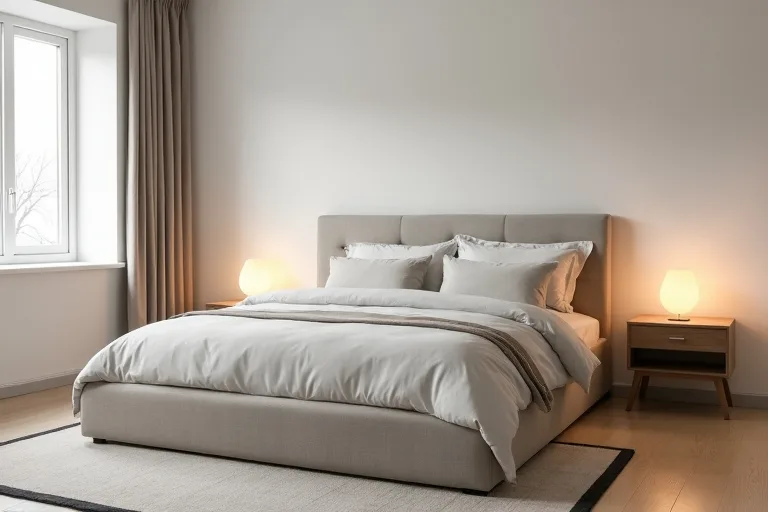
A simple upholstered platform bed can be a good anchor because it gives the room a defined focal point without adding visual weight. Pair it with bedside tables that fit the room rather than oversized pieces that crowd the path. If you need storage, look for closed options that hide everyday items instead of displaying them.
Lighting deserves more attention than decor in this kind of room. Layered lighting usually works best: a ceiling source for general light, bedside lamps for reading or evening use, and softer ambient light when you want the room to feel relaxed. Matching bedside lamps can help the room feel orderly, especially when the rest of the palette stays quiet.
Storage should reduce what you see, not just increase what you own. A bed with concealed storage, built-in wardrobe space, or simple closed drawers will usually support the minimalist feel better than open shelving filled with mixed items.
If you are budgeting or redesigning the whole room, it helps to compare furniture and lighting choices against the actual layout before ordering. That is where a room planner or budget spreadsheet can save time and prevent awkward purchases.
Simple styling that still feels finished
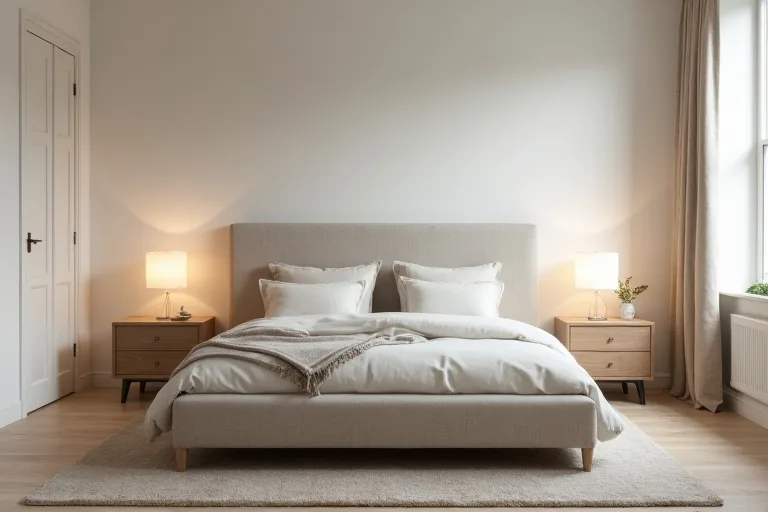
Minimalist styling works best when it is intentional and restrained. A room can feel complete with only a few details, as long as they are consistent. Soft bedding, one or two useful bedside items, and a limited palette are usually enough to make the space feel settled.
Keep surfaces mostly clear. A single lamp, a book, or a glass of water on a nightstand can feel calm; a collection of small objects usually does not. The same idea applies to wall decor. One quiet piece is often more effective than several competing accents.
Materials matter too. A mix of matte finishes, light wood, linen, wool, or upholstered surfaces can add warmth without breaking the minimalist feel. The goal is to avoid flatness, not to fill the room with pattern.
For readers who like to think through the room before buying, a planning tool can be especially useful here. It helps you decide where the budget should go: bed size, bedside spacing, storage, or lighting. That order makes a minimalist bedroom feel deliberate instead of sparse.
On a practical level, this is also where many people realize they do not need as much furniture as they first thought. The room often improves when you remove one piece rather than add one.
Best next step
If you are serious about keeping the room calm, map the layout before you shop. That gives you a clearer answer on bed size, bedside spacing, and where layered lighting will actually work.
- Buying furniture before checking how the room flows.
- Using a bed that leaves too little space for movement.
- Relying on one overhead light instead of layered lighting.
- Keeping too many small decor items on visible surfaces.
- Choosing open storage that makes the room feel busier.
- Making the room visually empty instead of calm and usable.
A minimalist bedroom feels best when the layout is clear, the furniture count is low, and the lighting and storage work quietly in the background. If you plan the room first, the style becomes much easier to get right and much easier to live with.
Helpful next tools and planners
If you want to make the decision easier before you buy
These picks fit the planning stage of a minimalist bedroom. Use them to test the room, keep the layout practical, and avoid buying pieces that do not suit the space.
FAQ
What makes a bedroom look minimalist without feeling cold?
Use a simple layout, a calm color palette, and a few materials with soft texture. Comfort matters as much as restraint.
Should a minimalist bedroom have matching bedside tables?
Not always. Matching pieces can look orderly, but one side can be different if the room layout or storage needs call for it.
What is the best first purchase for a minimalist bedroom?
Usually the bed or the layout plan comes first. Once you know the bed size and placement, the rest of the room is easier to decide.
How do I keep clutter from returning?
Use closed storage where possible, leave surfaces mostly clear, and make sure every item has a defined place in the room.
Three sensible next steps
Some links in this article may be affiliate links. Read more in the Affiliate Disclosure.