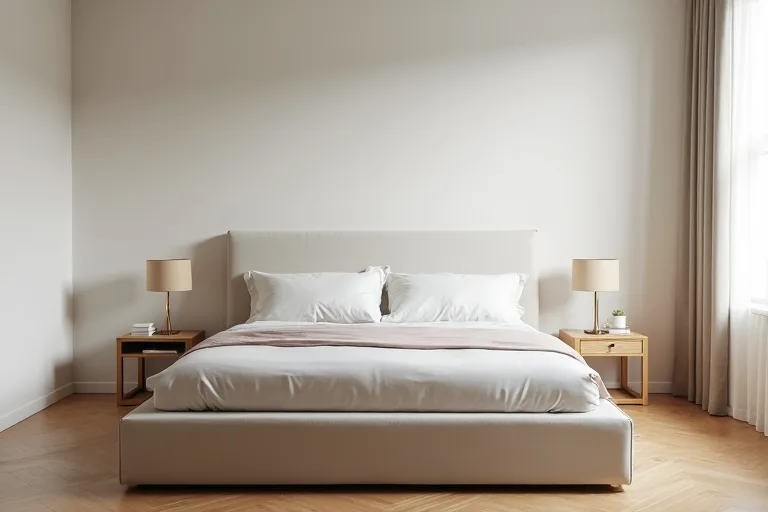
Minimalist bedroom ideas work best when they solve a layout problem first. A room can look clean in theory and still feel awkward if the bed is too large, the bedside space is uneven, or the lighting is incomplete.
The goal is not to remove everything. It is to keep only what helps the room feel calm, balanced, and properly finished, so the space feels easy to live in every day.
Use fewer, better-chosen pieces, keep the layout clear, and add layered lighting for a finished minimalist bedroom. Start with bed placement, then add matching bedside lamps, simple storage, and only the textiles and decor you actually need.
What makes a minimalist bedroom feel off
A minimalist bedroom usually feels unbalanced for one of three reasons: the furniture is too heavy for the room, the layout leaves awkward gaps, or the styling stops before the room feels complete. When any of those happen, the space can read as unfinished rather than calm.
Start by looking at the room with the furniture removed from the decor. Ask whether the bed can sit where the room naturally allows clear movement on both sides. Then check whether the bedside areas need symmetry or just enough visual order to feel settled.
If you are still unsure how the room should be grouped, review the broader Bedroom Ideas hub for related planning guidance, or compare the layout against your preferred design style so the room choices stay consistent.
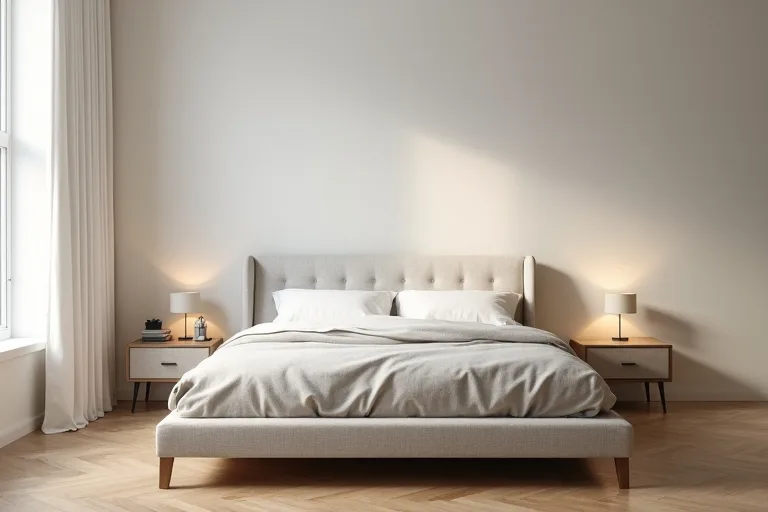
The real decision is not whether the room has enough decor. It is whether the bed size, bedside spacing, and lighting work together without crowding the walking path. If the room feels tight, a smaller or simpler setup may look more finished than adding more styling.
Choose the bed and layout first
In a minimalist bedroom, the bed does most of the visual work, so its size and placement matter more than the number of accessories. A clean upholstered frame can soften the room without making it busy, which is why a simple upholstered platform bed often works well in this kind of plan.
Place the bed so the room has an obvious path in and out, with enough room to move around without turning the layout into an obstacle course. When possible, keep the bed visually centered on the main wall so the room feels intentional instead of improvised.
If you are planning a move, a refresh, or a first-time furniture purchase, use a layout tool before buying. A quick room plan can help confirm whether the bed size, nightstands, and lamp spacing will actually fit. If you want a structured way to work it out, the room layout planner is the most useful next step.
- Measure the wall and the open floor space before choosing the bed.
- Decide where the main walking path should stay clear.
- Check whether bedside tables can fit without crowding the room.
- Only then decide if the room needs a larger or simpler bed frame.
Use lighting and bedside pieces to finish the room
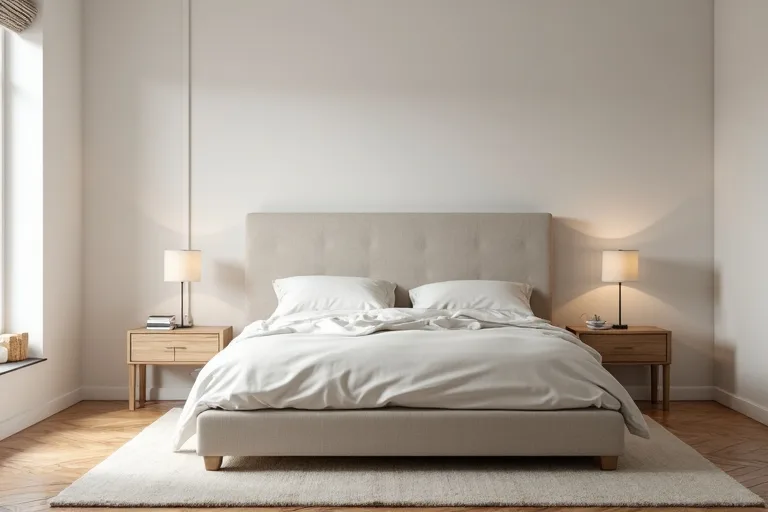
Lighting is often what separates a sparse bedroom from a finished one. Minimalist rooms need more than one light source if they are going to feel warm at night and still look composed in the day. Bedside lamps are especially useful because they create balance on both sides of the bed and make the room feel settled.
If you are choosing lamps, matching pairs are usually the simplest route. A bedside table lamps set of 2 can help the room feel even and avoid the half-finished look that happens when each side of the bed is treated differently. Keep the shades and bases visually quiet so the lamps support the room rather than compete with it.
Bedside storage should work like a tool, not a display. A small table with one drawer or shelf is often enough. If you need more surface area, choose it because it solves a real habit, such as keeping a book, glasses, or charger within reach. If the room is very compact, it may be better to reduce the size of each bedside piece rather than forcing in extra furniture.
For a fuller room plan, a home style quiz can help you see whether your preferences lean more classic, simple, or softened minimal, which makes the lighting and furniture choices easier to narrow down.
Keep the styling simple without making it feel bare
Minimalist styling is strongest when it feels selective. Choose a restrained palette, repeat a few materials, and leave enough visual space for the room to breathe. That usually means a neutral bed covering, one or two practical accessories, and wall color that does not fight the furniture.
Textiles matter more than people expect. A neat duvet, a single throw, and a pair of pillows can be enough if the rest of the room is well planned. If the room starts to feel cold, add softness through texture instead of adding more objects.
A practical bedroom should also be easy to maintain. That is why a simple layout and a modest number of pieces often look better over time than a heavily styled room that needs constant correcting. If you are comparing ideas for a full reset, an upholstered frame such as an upholstered platform bed frame queen can give the room a cleaner base without making the design feel unfinished. For larger planning jobs, the Room Makeover Planner, Home Layout Budget Spreadsheet is a useful digital tool when you want to track room decisions before spending.
Best next step
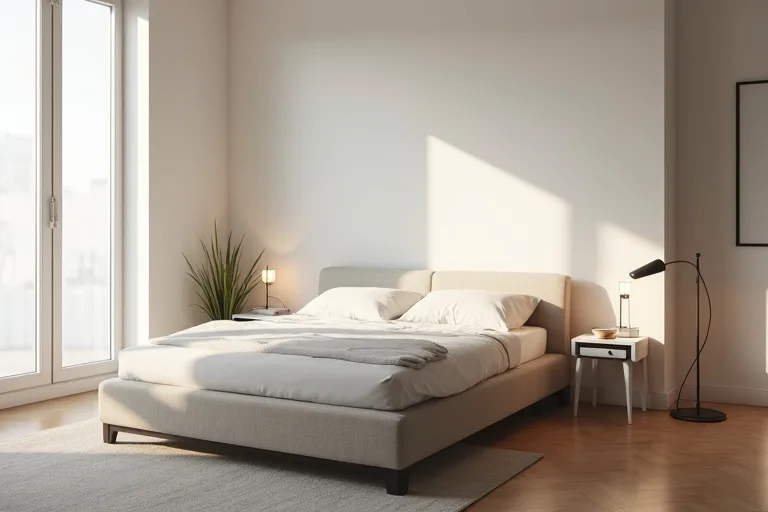
If you want the room to feel more balanced before you buy anything, confirm the layout first. A clear plan helps you avoid the common mistake of adding pieces that look fine online but crowd the room in real life.
- Choosing decor before the bed placement is settled.
- Using mismatched bedside pieces that make the room feel visually uneven.
- Relying on one ceiling light and calling the room finished.
- Adding too many small accessories instead of a few useful ones.
- Ignoring walking space because the furniture looks good on its own.
The best minimalist bedroom ideas are the ones that make the room easier to live in. Keep the layout clear, choose the bed carefully, add layered lighting, and style only what the room needs to feel calm and complete. That is usually what creates the most balanced result.
Helpful next tools and planners
If you want to make the decision easier before you buy
These are useful when you are still deciding on bed size, bedside lighting, or how much the room can realistically hold. They fit best after the layout is clear and before you commit to furniture.
FAQ
How do I make a minimalist bedroom feel finished instead of empty?
Start with a clear layout, then add only the pieces that improve balance: matching bedside lighting, a comfortable bed frame, and one or two simple textiles. A room usually feels finished when the practical elements are deliberate, not when the decor count gets higher.
What kind of bed works best in a minimalist bedroom?
A bed with a simple shape and a calm finish usually works best. An upholstered frame can soften the room and make it feel more complete without adding visual clutter, especially if the rest of the furniture stays restrained.
Do I need matching bedside tables in a minimalist room?
Not always, but matching pieces are often the easiest way to create visual balance. If the room is small, the more important question is whether each side has enough useful surface area without blocking movement.
Why does layered lighting matter so much?
Because one overhead light can leave a minimalist bedroom feeling flat. Layered lighting adds warmth, makes the room easier to use at night, and helps the space feel more intentional.
Three sensible next steps
Some links in this article may be affiliate links. Read more in the Affiliate Disclosure.