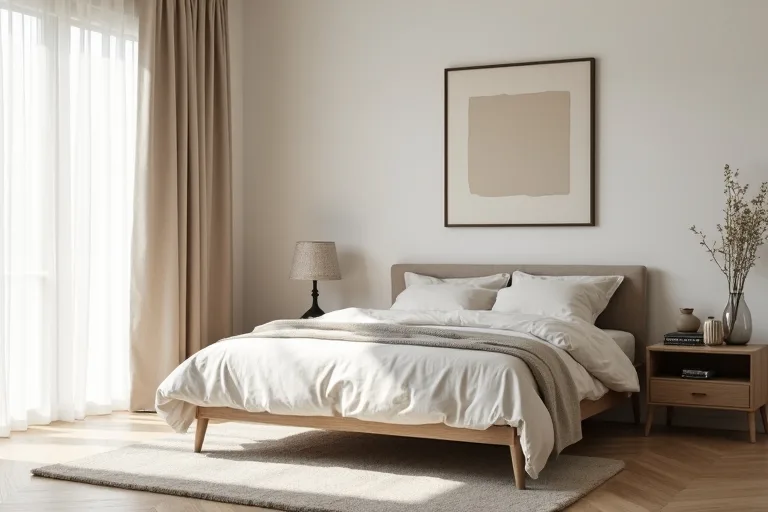
Minimalist interior design is often described in a way that makes it sound severe or empty, but that is not the point. In a real home, minimalism is mostly about making clearer choices so the room feels easier to use and easier to keep in order.
If you are trying to simplify a space, the best place to start is not with decor. Start with layout, storage, and the few finishes that will carry the room day to day. That is what gives minimalism its calm feeling without making the space cold.
Minimalist interior design keeps a room simple, functional, and uncluttered, with only the pieces you need and a few calm, well-chosen finishes.
What minimalist interior design really means
At its best, minimalist interior design is a decision-making style. You keep what serves the room, remove what does not, and let light, space, and a few strong basics do the work. The result should feel settled, not bare.
That is why minimalism can work in small apartments, family bedrooms, and busy homes just as well as in more open spaces. The style is less about owning very little and more about making each item earn its place.
In practical terms, minimalism usually rests on four ideas: function first, enough open space to breathe, natural or soft light, and restraint in color and object count. If a room starts to feel hard to use, or if every surface needs constant rearranging, the plan probably needs more structure rather than more decoration.

If your room feels busy, ask one simple question: am I missing storage and layout clarity, or am I simply trying to decorate around clutter? Minimalism works best when the room plan is solved before the styling starts.
How to plan a minimalist room before you buy anything
Minimalist rooms look easy because the planning is hidden. The real work happens before shopping. Begin by deciding what the room must do every day, then remove anything that gets in the way of those basic functions.
A calm minimalist room usually comes together in this order:
- Choose the main use of the room and the largest piece of furniture first.
- Measure the clearances you need for walking, opening doors, and pulling out storage.
- Decide what should be stored out of sight and what can stay visible.
- Limit your finishes so the room has a clear visual pattern rather than several competing ideas.
If you want a room to feel minimal without becoming awkward, this planning step matters more than the furniture style itself. A simple sofa in the wrong position will always feel busier than a modest room with a good layout.
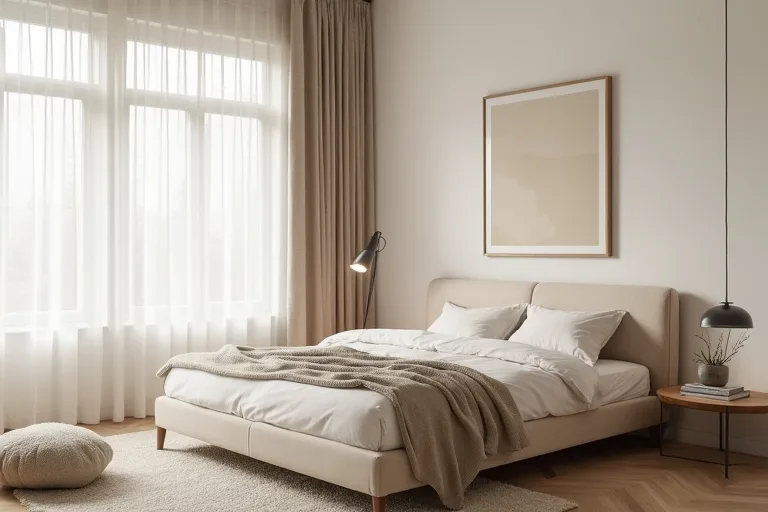
For a bedroom, this usually means making the bed placement, nightstand space, and storage access work together. If you are planning that room specifically, the Bedroom Ideas page is a useful place to start.
Furniture, storage, and layout choices that reduce clutter
Furniture in a minimalist room should do more than fill a corner. It should support the room plan, fit the space properly, and avoid visual noise. That usually means lower profiles, cleaner lines, and fewer separate pieces.
Storage is just as important. When the room has a home for the things that are used often, it becomes much easier to keep the surface count down. Closed storage is often the better choice when the goal is a calmer view from the doorway or bed.
Good minimalist decisions are often about tradeoffs. A larger dresser may be more useful than a second bedside table. A bench with storage may be better than a decorative accent chair that blocks circulation. A simpler layout can make the room feel more generous even when the room itself is not large.
If you are trying to make the plan clearer before you spend money, the room layout planner is a sensible next step. It helps you test the room logic before you choose furniture.
How to keep minimalism warm instead of cold
The most common mistake with minimalist interior design is overcorrecting. People remove too much color, too much texture, and too much personality, then wonder why the room feels flat. The fix is not more decor. It is better material balance.
Soft textiles, matte finishes, wood grain, linen, and a little contrast can make a minimalist room feel livable. Neutral walls do not need to be stark white, and a room does not need many objects to feel finished. One well-chosen framed print, a simple lamp, or textured bedding can be enough.
That is where finishing choices matter. Linen curtain panels in a neutral tone can soften the window area without adding visual weight, and a framed neutral abstract wall art set can give the room a calm focal point without breaking the restraint of the style. Used carefully, those are not decorative extras; they are part of the room’s balance.
If you are still deciding whether this style suits your home, a simple style check can help you avoid buying the wrong pieces. The home style quiz is a practical place to confirm whether a minimalist approach fits your habits and your space.

Best next step
If you are planning a minimalist room, it helps to test the layout first and then choose the finish level that feels right for your home. That keeps the style practical instead of purely visual.
- Using too many small decorative items, which quickly makes a minimal room feel busy.
- Choosing furniture before checking clearances and storage needs.
- Going too stark with white, hard surfaces, and low texture.
- Leaving everything visible, then calling the result minimal.
- Adding trendy pieces that do not support the room’s daily function.
Minimalist interior design works best when it is treated as a planning approach, not a shopping style. Decide how the room should function, reduce the number of visible decisions, and use a few soft, well-chosen finishes to keep the result warm. If you get the layout and storage right, the rest becomes much easier.
Helpful next tools and planners
If you want to make the decision easier before you buy
These options are useful when you are narrowing down a minimalist room plan and want a calmer way to choose the last pieces.
FAQ
Is minimalist interior design only for small spaces?
No. It works in small rooms and larger rooms alike. The main goal is clarity, not size.
How do I keep a minimalist room from feeling empty?
Use texture, thoughtful storage, and one or two calm focal points instead of adding many objects.
What colors work best in minimalist interiors?
Soft neutrals, muted whites, warm grays, and natural material tones are usually the easiest to live with.
What should I buy first for a minimalist room?
Start with the main furniture piece and the storage plan. After that, choose lighting and finishes that support the layout.
Three sensible next steps
Some links in this article may be affiliate links. Read more in the Affiliate Disclosure.