Minimalist interiors are often described as simple, but the better version is more intentional than empty. The room still needs good layout, balanced scale, and a few finishing pieces that make the space feel complete.
If you are choosing between a budget approach and a bigger style investment, the real question is not how much you spend. It is which parts of the room affect calm, function, and the overall finish most clearly.
Budget minimalism works best when you focus on layout, lighting, and a few clean finishing pieces. A bigger investment makes sense when you are improving the items that shape daily comfort, such as window treatments, seating, storage, or a better room layout.
What minimalist style really needs
Minimalist interior design is not just about owning less. It works when the room has enough visual breathing space, furniture that suits the room size, and a simple palette that feels calm rather than stark.
That means the first decisions should be practical. Check how the room flows, whether the main furniture is scaled correctly, and whether there is enough light for the space to feel open during the day. Once those basics are in place, the styling can stay restrained without looking unfinished.
For rooms where the layout is still uncertain, it helps to start with a planning step before buying anything. The broader Design Styles hub is a useful place to compare minimalism with other room approaches, while the tools page can help you confirm the room plan first.
If the room already feels crowded, unfinished, or awkward to move through, styling will not fix it. Start with layout, clearances, and the largest pieces first. Minimalism depends on structure, not just a short shopping list.
Budget choices that still feel considered
A budget approach can work very well in minimalist design when you are selective about where the money goes. The goal is not to fill the room with low-cost pieces. It is to keep the core plan clean and spend only where the item changes the feel of the room.
Good budget priorities usually include the following:
- Choose the right furniture scale before adding decorative pieces.
- Keep the color palette quiet and consistent.
- Use a simple rug, lamp, or curtain solution that suits the room without dominating it.
- Limit accessories to a few useful objects instead of many small items.
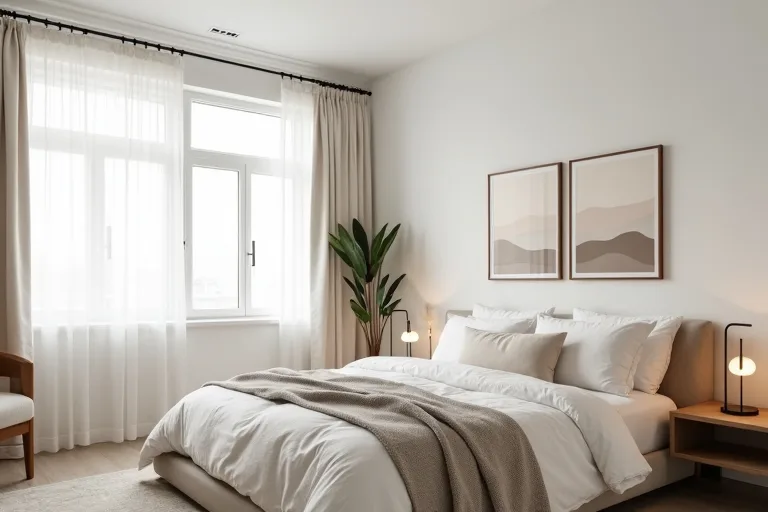
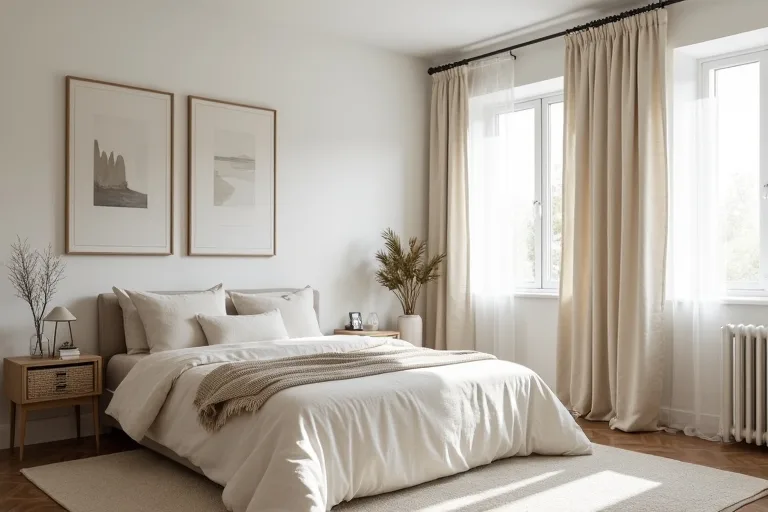
In a minimalist room, soft window treatments often do more than people expect. Linen curtain panels neutral can make a room feel calmer and more finished without adding visual weight. A framed neutral abstract wall art framed set can also provide a subtle focal point when the rest of the room stays quiet.

Where a bigger investment makes sense
Some parts of a minimalist room are worth upgrading because they affect comfort every day and set the tone for the entire space. If you spend more anywhere, spend on the elements that shape the room’s structure and long-term usability.
That usually means pieces like well-made seating, storage that fits the room properly, quality window treatments, and lighting that supports both function and atmosphere. These are the items that can make the room feel steady and quiet rather than thin or improvised.
A bigger investment also makes sense when the room has to do a lot at once. In a bedroom, for example, good flow and restful scale matter more than decorative variety. If that is your situation, the Bedroom Ideas page can help you think through the room in a calmer, more practical way.
If you want a simple way to keep the decision grounded, compare what you see every day from the bed or sofa. If the view is dominated by awkward proportions, harsh light, or thin-looking finishes, that is where a stronger investment tends to pay off.
How to finish the room without overbuying
The difference between a budget minimalist room and a well-resolved one often comes down to finishing. A room can have the right furniture and still feel incomplete if the edges, windows, and wall areas are not considered.
That is why curtains and art deserve attention even in a restrained space. Neutral fabric softens the room and helps the architecture feel quieter, while a framed abstract piece can give the eye one clear place to settle. Used carefully, these details finish the room without competing with it.
If you want help staying focused while you plan, a simple room tool can stop the usual overbuying spiral. The Home Style Quiz and Room Layout Planner are useful before you commit to any purchase. For small spaces or rooms with tight budgets, the Home Planning System Bundle, Room Makeover, Small Space, Budget Tool (Digital Download) can also help keep choices in order.

Best next step
Before you buy, confirm the room plan and the level of investment that makes sense for your space. A quick planning check now is usually cheaper than replacing the wrong curtain, rug, or furniture piece later.
- Buying decor before the layout is settled.
- Choosing pieces that are too small, which makes the room feel scattered.
- Using too many finishes, textures, or colors in a style that works best when edited down.
- Spending on accessories while underinvesting in curtains, lighting, or storage.
- Trying to make a room feel minimalist without leaving enough visual space.
Minimalist interior design does not require a large budget, but it does require clear priorities. Keep the layout simple, spend first on the pieces that affect daily function, and use a few restrained finishing details to make the room feel complete. If the room is already well planned, budget choices can look calm and polished. If the room has structural issues, a bigger investment is better spent on the pieces that quietly fix them.
Helpful next tools and planners
If you want to make the decision easier before you buy
These tools and products fit the planning stage of a minimalist room update. Start with the room logic first, then use the lighter finishing pieces to complete the space.
FAQ
Is minimalist design cheaper than other styles?
It can be, because the room often uses fewer pieces and a simpler palette. The cost depends more on quality, layout, and the finishes you choose than on minimalism itself.
What should I upgrade first in a minimalist room?
Start with the items that affect the room every day: layout, lighting, curtains, storage, and the main seating or bed. Those choices shape the whole feel of the space.
Can budget decor still look minimalist?
Yes, if it is edited carefully. A small number of well-placed pieces will look more intentional than a room filled with inexpensive extras.
What is the easiest way to avoid overbuying?
Confirm the room plan before shopping. If the size, flow, and scale are settled first, it is much easier to buy only what the space really needs.
Three sensible next steps
Some links in this article may be affiliate links. Read more in the Affiliate Disclosure.