
Open shelves can make a kitchen feel lighter, but only when they fit the room, the storage plan, and the way you actually cook. Without that planning, they can become a surface that collects visual clutter instead of helping the kitchen work better.
The safest approach is to treat open shelving as a layout decision first and a styling choice second. That means checking placement, depth, and what needs to live on the shelves before anything is installed.
Avoid open shelves that are too deep, too crowded, poorly placed, or hard to clean. The best open shelf kitchen ideas are the ones that keep everyday items easy to reach, leave enough breathing room, and match the amount of storage your kitchen really needs.
Why open shelves work best when the layout is right
Open shelving can be useful in a kitchen that needs a little visual relief or a more accessible place for everyday items. But it only works well when the rest of the room has a clear storage plan. If cabinets are already limited, shelves should not be added just because they look good in photos.
The first question is where the shelves sit in relation to the work zones. Shelves beside the sink or cooking area may be handy for plates, mugs, or glasses, but they can also collect splashes and grease faster than a shelf in a calmer part of the room. The farther the shelves are from the main mess, the easier they usually are to maintain.
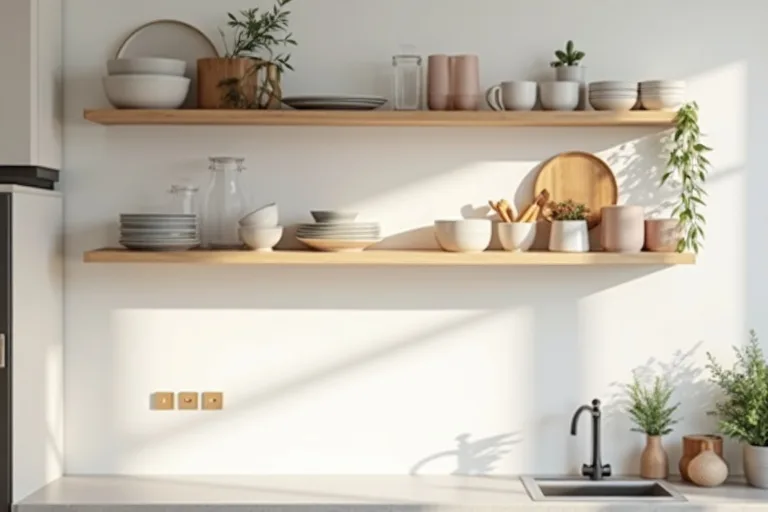
It also helps to think about how much of the wall should stay open. A short run of shelves often feels more balanced than covering an entire wall. In many kitchens, a small shelf zone does the job without taking over the room.
If the shelves are solving a real storage problem, they may belong in the plan. If they are replacing cabinet space you still need, or if you cannot say what will live on them, the design probably needs more work before you commit.
Placement, depth, and spacing mistakes
Many open shelf mistakes happen before styling even begins. The shelves are either too deep for everyday use, set too high to reach comfortably, or spaced in a way that makes the wall feel awkward.
Depth matters more than people expect. Very deep shelves can tempt you to stack items in front of one another, which quickly turns a neat shelf into hidden storage. Shallower shelves are often easier to keep tidy because they limit how much can be placed on display.
Spacing matters too. If the gap between shelves is too tight, larger plates, bowls, or glassware can look cramped. If the gap is too generous, the shelves may feel empty and unfinished. Aim for shelf spacing that matches the height of the items you actually use, not the height of objects in a styled photo.
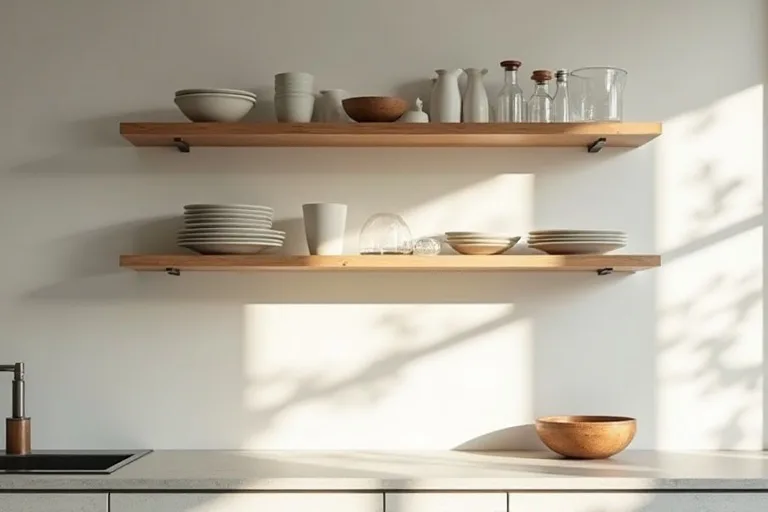
If you are still deciding where shelving should go, it helps to map the wall against your overall kitchen layout first. The Kitchen & Dining hub is a good place to start, and the kitchen island size calculator can help you check whether the shelving plan leaves enough room for movement and work flow.
- Measure the wall section you want to use.
- Check nearby cabinets, sink zones, and cooking areas.
- Confirm the shelf depth will not crowd the room.
- Make sure the height works for the items you want to store.
Clutter, cleaning, and what to display
The biggest weakness of open shelves is not usually the shelf itself. It is the pressure to fill it. Once shelves become a display area for everything at once, they stop feeling calm and start feeling busy.
The easiest shelves to live with hold a limited set of items you use often: everyday plates, a few glasses, bowls, or a small stack of serving pieces. Decorative objects can work too, but they should support the room rather than compete with the kitchen’s practical side.
Cleaning is the other part of the decision that gets overlooked. Shelves near cooking areas gather dust, grease, and moisture more quickly than closed cabinets. That does not make them a bad choice, but it does mean you need to be honest about maintenance. If you do not want to wipe items regularly, open shelving may feel more demanding than expected.
Choosing the right objects for display is less about matching a look and more about lowering effort. Use items that are sturdy, stack well, and are easy to remove and clean. If a shelf only works when it is styled perfectly, it is probably not a practical shelf.
A simple decision check before you install
A good open shelf plan should pass a simple reality test. Before you commit, ask whether the shelves improve access, lighten the room, and still leave enough storage for the rest of your kitchen.
Open shelving often suits kitchens where the homeowner wants a few visible items within reach and already has enough closed storage elsewhere. It is less suitable when the kitchen is short on cupboard space, when the wall is close to heavy cooking activity, or when the household does not want another surface to clean and maintain.
This is also where broader room planning helps. If shelf placement affects circulation, seating, or appliance spacing, think about the room as a whole before buying hardware or materials. A small adjustment in layout can make the shelves feel intentional instead of improvised.

If you are still unsure, the easiest next step is to measure, compare, and keep the design simple. The dining table size calculator can also help if your open shelving is part of a larger kitchen and dining layout that needs to stay comfortable and balanced.
Best next step
Before you add open shelves, check the room layout and make sure the storage plan still works around them. A few minutes with a sizing tool is often enough to see whether the shelves belong in the design or whether another storage choice will stay calmer in daily use.
- Using shelves where the kitchen still needs more closed storage.
- Choosing shelves that are too deep for everyday items.
- Placing them too close to cooking splatter or heavy moisture.
- Spacing shelves so tightly that items feel crowded.
- Filling every inch of shelf space instead of leaving visual breathing room.
- Displaying objects that are hard to clean, move, or stack neatly.
- Skipping the layout check and assuming the shelves will solve the storage problem.
Open shelves work best when they are part of a real storage plan, not a last-minute decorative add-on. Keep the shelves shallow enough to stay tidy, place them where cleaning will be manageable, and use them for items you actually reach for. If the layout is still uncertain, measure first and make the room plan do the heavy lifting.
Helpful next tools and planners
If you want to make the decision easier before you buy
These are not replacements for good planning, but they can help you move from idea to a more practical setup. A small fixture upgrade, like a pull-down kitchen faucet brushed nickel, can also make a visible improvement once the layout is settled. For broader room changes, a simple planner can keep the project organized.
FAQ
Are open shelves practical in a small kitchen?
They can be, but only if you are selective about placement and keep the shelf load light. In a small kitchen, open shelves work best when they replace a limited amount of wall storage and do not interrupt the main work zones.
How deep should open kitchen shelves be?
The right depth depends on what you want to store, but shallower shelves are usually easier to keep calm and usable. Very deep shelves often encourage stacking and make the display look heavier than necessary.
What should I keep on open kitchen shelves?
Stick to everyday items that are easy to stack and clean, such as plates, bowls, glasses, and a few serving pieces. If an item is awkward to dust or move, it is usually better kept behind a cabinet door.
When should I avoid open shelves altogether?
Avoid them when you still need maximum closed storage, when the wall sits close to cooking splatter, or when you know extra cleaning will become annoying. In those cases, cabinets or another storage solution may be calmer long term.
Three sensible next steps
Some links in this article may be affiliate links. Read more in the Affiliate Disclosure.