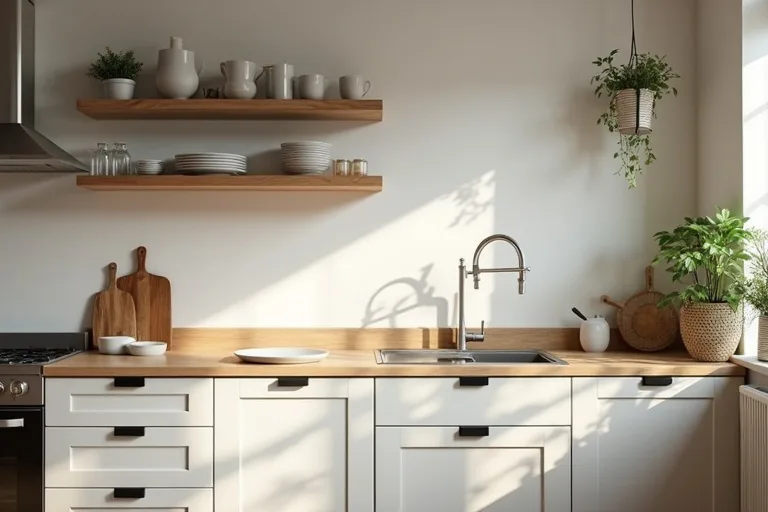
If you are thinking about open shelf kitchen ideas, the real question is usually not whether they look good. It is whether they solve a storage problem, soften a dated kitchen, or simply make the room feel easier to live with.
That is why the best decision comes before shopping. A shelf can change the feel of a kitchen quickly, but a bigger refresh only makes sense when the layout, storage balance, and everyday use all support it.
Start with shelf placement, storage balance, and one visible fixture upgrade before committing to a full kitchen refresh. If the shelves improve daily access and the room still feels practical, a smaller update may be enough. If the kitchen still works poorly after that, it is time to look at a broader plan.
What a budget open-shelf update can really do
A budget open-shelf update works best when the kitchen already functions well enough, but the wall space feels heavy, dark, or awkward. In that case, removing a cabinet door, adding a short run of shelves, or simplifying what sits near the sink can make the room feel lighter without turning the project into a remodel.
The value is usually practical first. Open shelves can bring everyday plates, glassware, or mugs closer to hand. They can also help a small kitchen feel less boxed in, especially if the rest of the room stays visually calm.
Still, a budget update should stay selective. Open shelving is easiest to live with when it is used for items you reach often and are happy to keep tidy. If you need every inch of enclosed storage, shelves should be treated as an accent, not the whole solution.
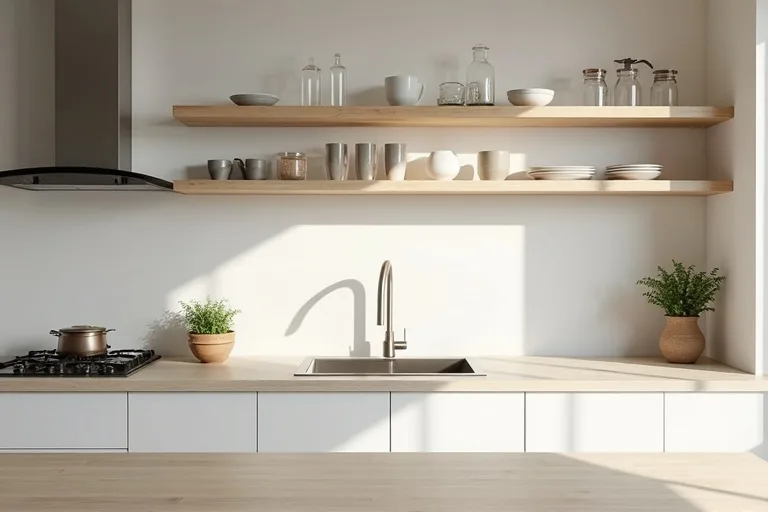
If you are also checking fit and flow, the Kitchen & Dining hub is a sensible place to keep the bigger room plan in view while you narrow down the shelf idea.
Ask one simple question: does the shelf help you store something you use often, or is it only there to look more open? If it does not improve access, reduce clutter, or balance the room, it may be decoration rather than a useful upgrade.
When open shelving starts to feel impractical
Open shelving begins to lose its appeal when the kitchen has too many visual demands already. If the room has limited closed storage, frequent cooking, or a lot of small appliances on the counter, extra open display can make the space feel busier rather than calmer.
It can also become a maintenance issue. Shelves near the hob collect grease faster, and shelves near a busy sink need more regular tidying. That does not make them a bad idea, but it does mean the placement matters more than the styling.
Use a simple filter before committing:
- Will the items on the shelf be used often enough to justify staying out?
- Is there enough closed storage elsewhere for the things you do not want visible?
- Will the shelf sit in a low-splatter, low-clutter part of the room?
- Does the kitchen still feel balanced if the shelf stays partly open?
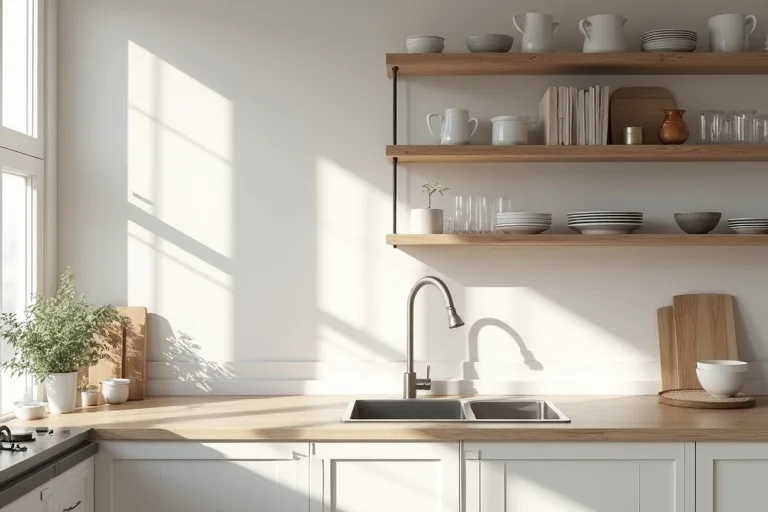
If the answer to most of those questions is no, the problem is probably not shelf style. It is the amount of storage the kitchen needs in the first place. In that case, a more thoughtful layout check matters more than choosing a decorative shelf finish.
Small refresh or bigger refresh
The difference between a small refresh and a bigger refresh is not only budget. It is how many decisions you are asking the room to carry at once.
A small refresh is usually best when the kitchen layout already works, but a few visible details feel tired. That might mean adding shelves, changing a faucet, updating a wall treatment, or improving what you keep on show. A bigger refresh comes into play when the storage plan, work zones, or circulation no longer fit how you actually use the room.
A simple way to compare the two:
Small refresh: improve what you see and touch every day without changing the bones of the kitchen.
Bigger refresh: address storage, workflow, and visual balance together so the room functions better long term.
The strongest visible upgrade for many kitchens is a new faucet, because it is used constantly and reads clearly in the room. A brushed nickel pull-down model can be a good middle ground if you want a cleaner look without taking on a full renovation. It is a practical place to spend if the rest of the kitchen still works and you simply want it to feel more intentional. You can browse a pull down kitchen faucet brushed nickel if that kind of fixture update fits your plan.
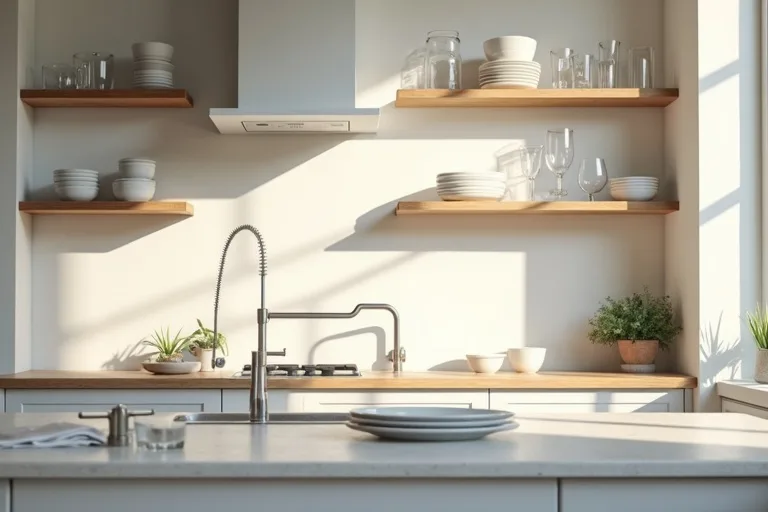
If you are weighing a room-wide change, it also helps to think in parallel about dining or seating nearby. The dining table size calculator can help you keep surrounding circulation in mind before you add more pieces.
What to plan before you buy
Open shelves are easiest to live with when they are chosen after the practical pieces are clear. That means checking where they will land on the wall, what they will store, and what they will replace visually.
Before you buy anything, work through the room in this order:
- Confirm the shelf location and depth against the wall space you actually have.
- Decide which items deserve open access and which should stay behind doors.
- Check whether the shelf will crowd the sink, hob, or prep area.
- Choose one fixture or hardware update that helps the whole room feel finished.
- Only then decide whether the kitchen still needs a larger refresh.
If you want a more structured way to think through the budget, the Room Makeover Planner, Home Layout Budget Spreadsheet (Digital Download) can help you slow the process down before you commit. It is especially useful when you are trying to decide whether one shelf, one fixture, or a broader update makes the most sense.
You can also sanity-check the room layout with the kitchen island size calculator if shelves, storage, and walking space are all part of the same decision.
Best next step
If the kitchen already functions reasonably well, start with one shelf decision and one visible fixture upgrade before you open the door to a bigger project. If the layout still feels cramped, use a planning tool first so you are not solving a space problem with styling alone.
- Adding open shelves before deciding what the kitchen actually needs to store.
- Using open shelving to cover up a layout problem that should be solved another way.
- Placing shelves too close to cooking splash zones or high-traffic prep areas.
- Styling shelves with too many items, which defeats the calm look you wanted.
- Spending on decor before checking whether a simple fixture upgrade would have more impact.
Open shelf kitchen ideas work best when they solve a clear problem: easier access, lighter visual weight, or a cleaner-looking wall. If the kitchen is already functional, a budget shelf update and one visible fixture upgrade may be enough. If storage and flow still feel off, use a layout check first and treat a bigger refresh as a planning decision, not a styling one.
Helpful next tools and planners
If you want to make the decision easier before you buy
A calm planning step can save you from buying shelves, fixtures, or seating that do not quite fit the room. These options are most useful when you want to compare the smaller update against the wider kitchen plan.
FAQ
Are open shelves a good idea in a small kitchen?
They can be, but only if you still have enough closed storage for the things you do not want visible. In a small kitchen, the shelf should reduce visual weight without creating more clutter.
What should I keep on open kitchen shelves?
Choose items you use often and are happy to keep tidy, such as plates, bowls, mugs, or glassware. Keep bulky, mismatched, or rarely used items behind closed doors.
Is a new faucet worth it if I am not remodeling the whole kitchen?
Often, yes. A visible fixture upgrade can change how finished the kitchen feels without requiring a full refresh, especially if the current faucet is dated or awkward to use.
How do I know if I need a bigger refresh instead of a shelf update?
If the layout, storage, or circulation still feels wrong after you have checked shelf placement and storage balance, the problem is probably bigger than styling. That is when a fuller refresh starts to make sense.
Three sensible next steps
Some links in this article may be affiliate links. Read more in the Affiliate Disclosure.