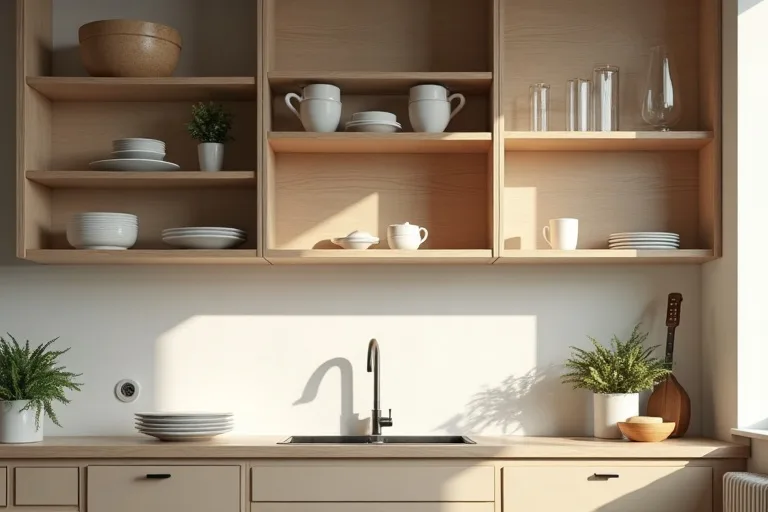
Open shelves can make a kitchen feel calmer and more intentional, but only when they are used with some restraint. The best results usually come from treating them as part of the room layout, not as the main feature.
If shelves are added without thinking about balance, they can make a kitchen feel crowded faster than closed storage does. When they are sized and placed well, though, they can soften a wall of cabinets, make everyday items easier to reach, and help the room feel more finished.
Use open shelves sparingly, keep them aligned with the room’s layout, and style them with a clear mix of storage and negative space. In most kitchens, the most balanced result comes from a few shelves in the right place rather than a full wall of open storage.
Why open shelves can improve balance
Open shelves work best when they break up heavy cabinetry or add visual breathing room above counters. In a kitchen with a lot of upper cabinets, even one small run of shelves can make the wall feel lighter and more layered.
They can also help the room feel more finished because they create a place for everyday items that are useful enough to keep out, but neat enough to display. Think mugs, bowls, glassware, or a small number of cookbooks rather than a shelf full of mixed storage.
That balance matters. A shelf that is too full usually feels less calm than a closed cabinet, while a shelf with a little space left around the items can make the whole kitchen read as more deliberate.
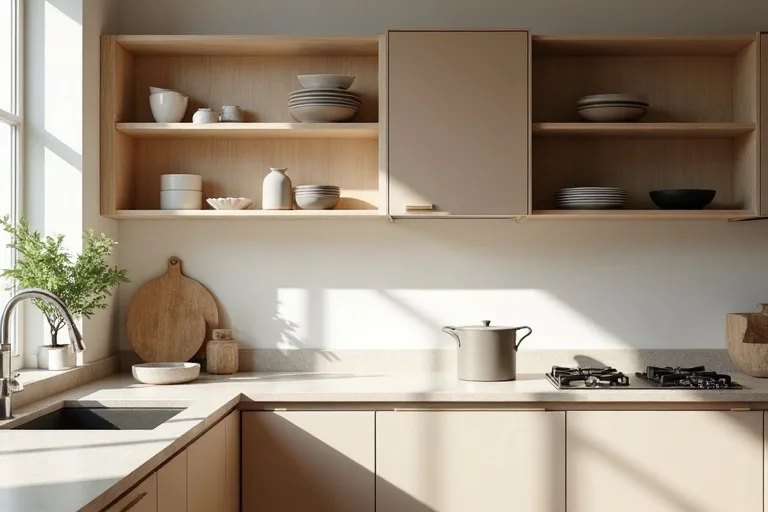
The real decision is not whether open shelves look good in a photo. It is whether they solve a layout problem in your kitchen. If you need visual relief, easier access, or a better transition between cabinets and counters, shelves may help. If you mainly need more hidden storage, a closed cabinet is usually the better choice.
When open shelving works best in a kitchen
Open shelving tends to work best in kitchens where the layout already has some structure. A small shelf run can improve a wall that feels too solid, too tall, or too empty without changing the whole room.
It is often most effective in these situations:
- Above a counter where you want quick access to everyday dishes or glassware.
- On a short wall that needs a lighter visual finish than another bank of cabinets.
- Near a sink or prep zone where function matters more than display.
- In a kitchen that already has enough closed storage elsewhere.
If the kitchen is very small, the shelves should usually earn their place by reducing bulk, not by adding more to look at. That is why proportion matters so much. A slim, well-placed shelf line can feel cleaner than a larger arrangement that tries to do too much.
How many shelves to use and where to place them
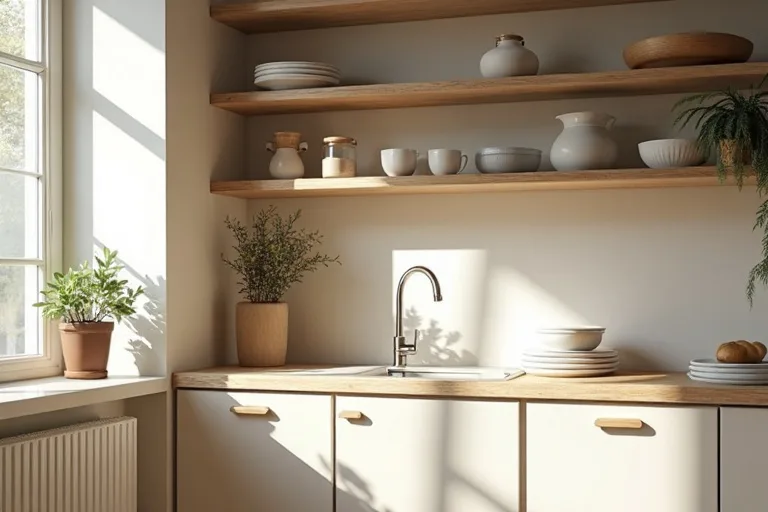
Most kitchens do not need many open shelves to get the effect. In fact, one or two carefully placed shelves often look more balanced than a larger stack. The goal is to add a useful pause in the room, not fill every open wall.
Before deciding where shelves go, it helps to look at the kitchen as a whole. Ask where the eye naturally lands, where the counters already feel busy, and which wall needs a softer finish. That is usually where open shelving earns its place.
A simple way to think about the decision is to work from the room outward:
- Start with the largest cabinet and counter masses.
- Look for the wall or zone that feels visually heavy.
- Place shelves where they will reduce that heaviness, not add to it.
- Keep shelf length and height in line with the cabinetry around them.
- Leave enough open space that the shelves still feel intentional.
If you are also trying to understand whether the kitchen layout itself is working, it can help to check your overall proportions first. The Kitchen Island Size Calculator is useful if you are balancing shelves against an island, and the Kitchen & Dining hub is a good place to step back and compare the rest of the room before you commit.
What to display, store, and finish well
Open shelving looks best when it serves the kitchen you actually use. Keep the most visible items simple and repeat them with a bit of order. Matching bowls, clear glassware, stacked plates, or one small plant usually feel calmer than a mix of unrelated objects.
Use the shelves for items that you reach for often or that help the room feel settled. Keep bulkier, brighter, or less attractive things behind closed doors. That division lets the shelves support the kitchen instead of carrying every storage task.
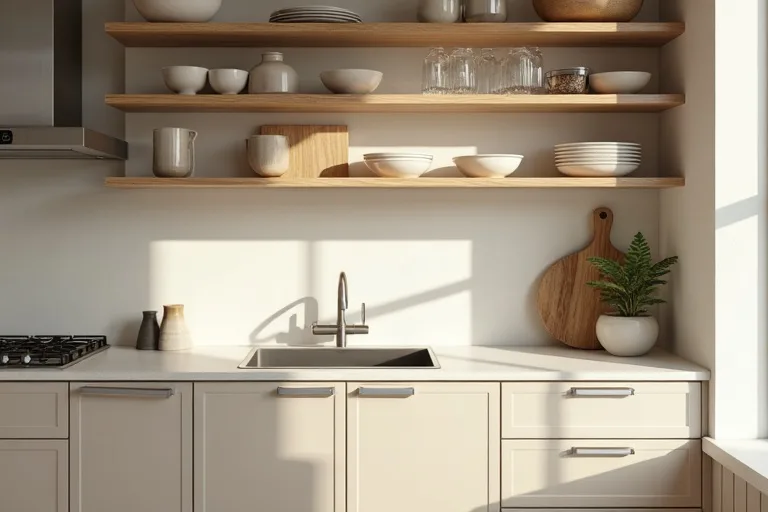
Small finishing choices matter more than decorative accessories here. A brushed nickel faucet, clean counter edges, and a few clear zones of negative space can make the whole setup feel more resolved. If you are also planning the dining area nearby, the Dining Table Size Calculator can help keep the room from feeling crowded as a whole.
For readers who like to map the whole project before buying, a simple planning sheet can keep the shelves, storage, and budget aligned. A tool like the Room Makeover Planner, Home Layout Budget Spreadsheet is useful if you want to sort the decision before you order hardware or new storage pieces.
Best next step
If you are still deciding whether open shelves suit your kitchen, check the room proportions first. Layout is what determines whether shelving feels balanced or awkward, so the most useful next step is to compare shelf ideas against the overall plan rather than choosing by style alone.
- Adding too many shelves and losing the calm, open effect.
- Using shelves where the kitchen really needs more hidden storage.
- Letting the shelf length or height clash with nearby cabinets.
- Styling every shelf too tightly, with no visual breathing room.
- Placing shelves without checking how they affect the whole wall.
Open shelves work best when they solve a layout problem, not when they are used as filler. Keep them limited, align them with the room’s structure, and style them with a mix of useful items and open space. That approach usually gives the kitchen a more balanced, finished look without making it feel busier.
Helpful next tools and planners
If you want to make the decision easier before you buy
A few practical tools can help you check proportions, compare storage needs, and keep the project under control before you commit to shelves or matching fixtures.
FAQ
Are open shelves practical in a kitchen?
Yes, if they are used for items you reach for often and placed where they improve access or reduce visual bulk. They are less practical if you need the space for hidden storage.
How many open shelves do I need?
Most kitchens only need one or two runs to get the effect. More than that can make the wall feel busy unless the room is large and very carefully planned.
What should I put on open kitchen shelves?
Simple everyday items usually work best, such as plates, bowls, glassware, or a few cookbooks. Keep bulkier storage and less attractive items behind closed doors.
Do open shelves make a kitchen look bigger?
They can make a kitchen feel lighter and less enclosed, especially when they replace heavy upper cabinets. The effect depends on the room layout and how much you place on the shelves.
Three sensible next steps
Some links in this article may be affiliate links. Read more in the Affiliate Disclosure.