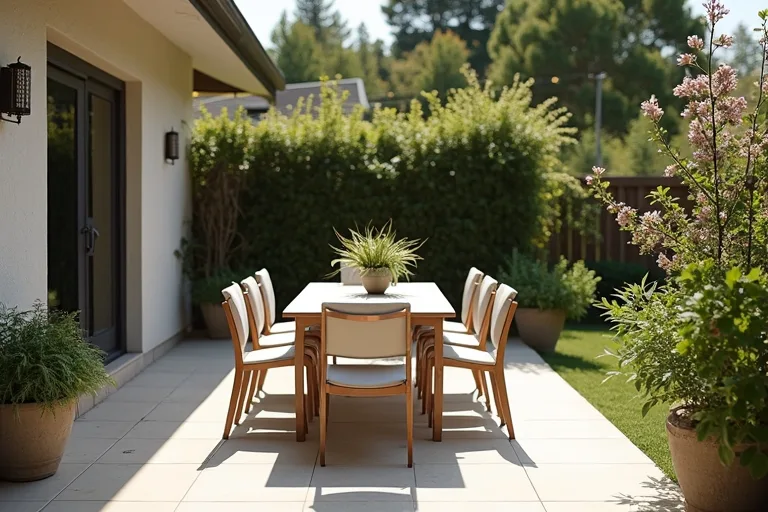
Outdoor dining is usually not ruined by a lack of style. It is ruined by a layout that leaves too little room to move, pull out chairs, or walk past the table without adjusting your route.
When a patio feels crowded, the answer is rarely to buy smaller decor. It is usually to measure the dining zone first, then choose furniture and lighting that fit the available clearance.
Measure clearance first, then choose a table and chairs that fit the dining zone without blocking movement. If the table, chairs, and walking path cannot coexist comfortably, the patio will feel cramped no matter how nice the pieces look.
Why outdoor dining feels cramped so quickly
The most common mistake is treating the patio as if the table is the only piece that matters. In reality, the dining area includes chair pull-out space, circulation paths, and a little visual breathing room around the edges.
If those zones overlap too much, the result is immediate: chairs bump walls or planters, people have to squeeze past the table, and the setting starts to feel busy before anyone has even sat down. This is especially noticeable in small patios, where one oversized choice can affect the whole layout.
Before you shop, think about the full dining zone rather than the furniture alone. That one shift makes it much easier to see whether the space can comfortably support a real meal area or only a decorative setup.
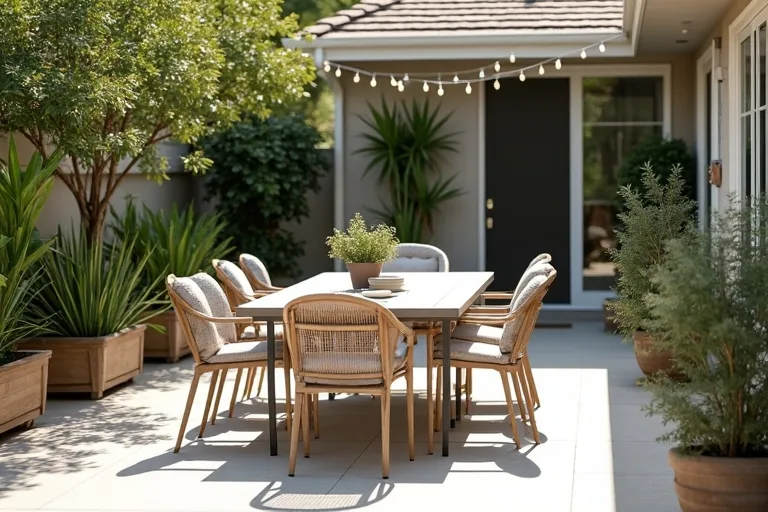
Ask yourself one simple question: can a chair slide out and a person still pass behind it without turning sideways? If the answer is no, the dining zone is probably too tight for daily use, even if it looks fine from across the yard.
How to size the dining zone before you buy anything
Outdoor dining works best when the table size is chosen from the available floor area, not from a product photo. Start with the space you actually have, then decide how much of it should belong to dining versus walking, gardening, or lounge seating.
A calm way to approach it is to measure in layers:
- Measure the patio footprint and note fixed items such as doors, posts, railings, grills, or planters.
- Mark the area you want to reserve for the table and chairs.
- Check where people will enter, exit, and move around the seating zone.
- Compare table shapes and seating counts against that usable area.
If you want a more structured way to do this, the dining table size calculator is a useful next step. It helps you compare table size and seating needs before you commit to a set that may crowd the room.
This is also where a planning tool can save money. A layout that looks just slightly too large on paper often becomes genuinely uncomfortable once chairs, serving dishes, and people are in the space.
Seating choices that either help the layout or block it
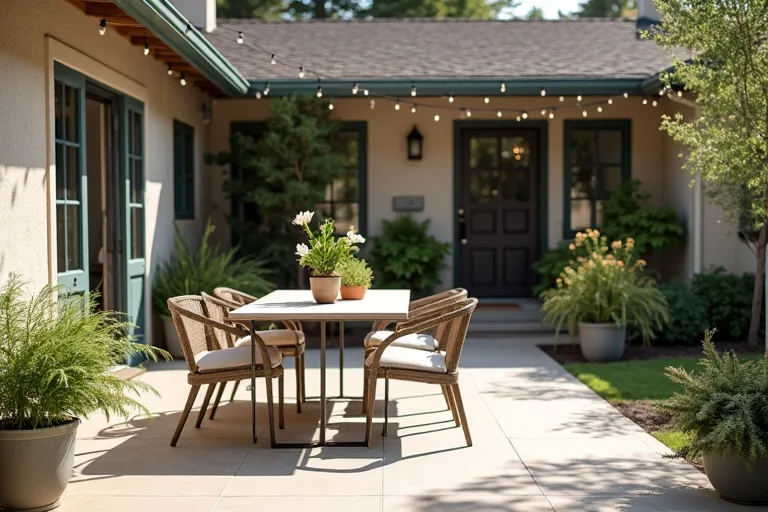
Not every chair creates the same experience. Some outdoor dining sets feel easy and open because the chairs tuck in cleanly, while others create an awkward footprint that takes over the patio.
The biggest issue is usually the chair depth and arm width. Bulky arms, wide backs, and oversized cushions can make a modest table feel much larger than it is. Even if the furniture is comfortable, it may leave too little room for movement.
For smaller spaces, a simpler chair profile often works better than a heavy one. Stackable or slimmer dining chairs can make the zone feel lighter, and a compact 5 piece outdoor dining set patio can be a practical reference point if you are comparing proportions rather than shopping blindly.
Think about the use case too. If the patio is mainly for weeknight dinners, clear access matters more than a dramatic table shape. If it is used for longer gatherings, comfort matters more, but that comfort still has to fit inside the available layout.
Choose the seating that supports the way you actually use the patio. A slightly smaller table with comfortable, easy-to-move chairs is often more pleasant than a larger set that forces everyone to squeeze around it.
Lighting and accessories that make the area feel busier than it is
After the table and chairs are set, it is tempting to keep adding layers: lanterns, oversized centerpieces, planters, cushions, and decorative items on every nearby surface. The problem is not decoration itself. It is scale.
Accessories should support the dining zone, not compete with it. A few well-placed plants can soften hard edges, but too many objects near the table make the space feel more confined. The same goes for lighting. Warm outdoor lighting helps a dining area feel finished, but too much dangling decor can create visual clutter.
Simple outdoor string lights waterproof can be a good finishing touch when they are used to define the zone rather than fill every corner. If you want a planning aid for sorting layout before shopping, a digital Room Makeover Planner, Home Layout Budget Spreadsheet (Digital Download) can help you keep the decisions in the right order.
The goal is not a bare patio. It is a dining area that feels calm enough to use easily and clear enough to move through without effort.
Best next step
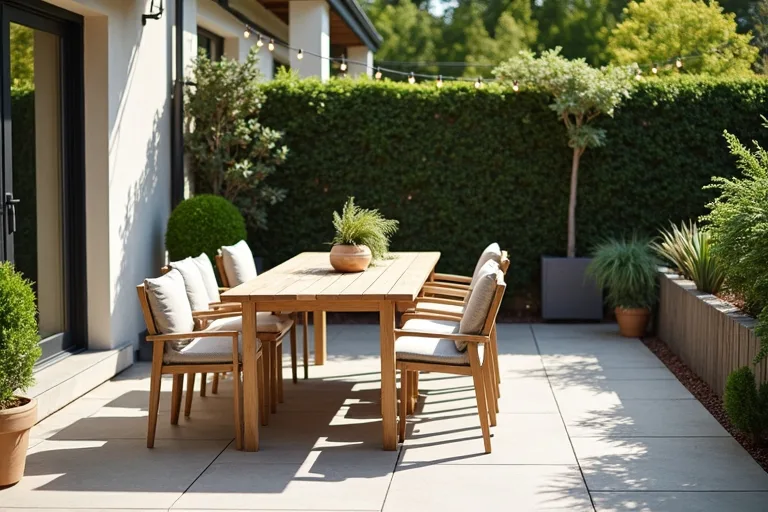
If you are still deciding what will fit, measure the patio dining zone and check the table size against the space before you buy. That one step will usually make the right option obvious.
A layout tool is often the easiest way to avoid crowding and compare seating counts without guessing.
- Choosing a table before measuring chair pull-out space.
- Ignoring how people will pass behind seated guests.
- Picking bulky chairs that make a small patio feel even tighter.
- Adding too many accessories near the dining zone.
- Using lighting as decoration instead of gentle definition.
Good outdoor dining comes from clear movement first and style second. If you measure the dining zone, check clearance, and choose seating that fits the real layout, the patio will feel calmer, more open, and much easier to use.
Helpful next tools and planners
If you want to make the decision easier before you buy
These are useful when you are comparing table size, seating capacity, and layout clarity before placing an order.
FAQ
How much space should I leave around an outdoor dining table?
Leave enough room for chairs to move out and for people to pass through the area without weaving around the table. The exact amount depends on your patio, but clearance should be checked before you choose the furniture.
Is a smaller table always better for a small patio?
Not always. The best table is the one that fits both your seating needs and your circulation space. A slightly larger table can work if the chair layout is simple and the path around it stays open.
What kind of chairs work best in tight outdoor spaces?
Chairs with a slimmer profile usually help the most. Look for pieces that tuck in neatly and do not add unnecessary width with arms or oversized cushions.
What is the easiest way to avoid buying the wrong size?
Measure the space first and use a layout or table size calculator before shopping. That helps you compare options based on real clearance instead of guessing from photos.
Three sensible next steps
Some links in this article may be affiliate links. Read more in the Affiliate Disclosure.