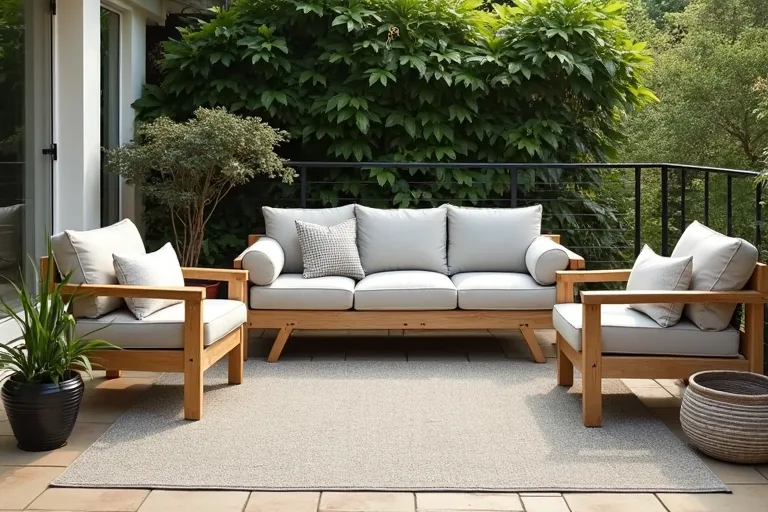
An outdoor rug can do more than add color. In a patio, deck, or balcony, it helps define the seating area so the furniture feels connected instead of floating in the space.
The best choice is usually the simplest one: a rug that fits the zone, stands up to weather, and supports the layout you already have. When those pieces line up, the whole area feels calmer and easier to use.
Choose a rug that fits the seating zone, is weather-resistant, and visually anchors the furniture group. The right size should help the chairs and sofa feel related, not crowded or disconnected.
Why an outdoor rug changes the layout
An outdoor rug gives the seating area a clear boundary. That matters because outdoor spaces often combine dining, lounging, storage, and circulation in a single zone. A rug makes the seating area read as one planned section instead of a loose collection of pieces.
This is especially helpful on patios and decks where hard surfaces can make furniture feel visually scattered. A rug adds a soft layer underfoot, but its main job is spatial: it tells the eye where the conversation area begins and ends.
For a calm result, think about the rug as part of the layout decision first and the styling decision second. If the rug is too small, the furniture feels stranded. If it is too large, it can blur the edges of the space and make the area harder to read.
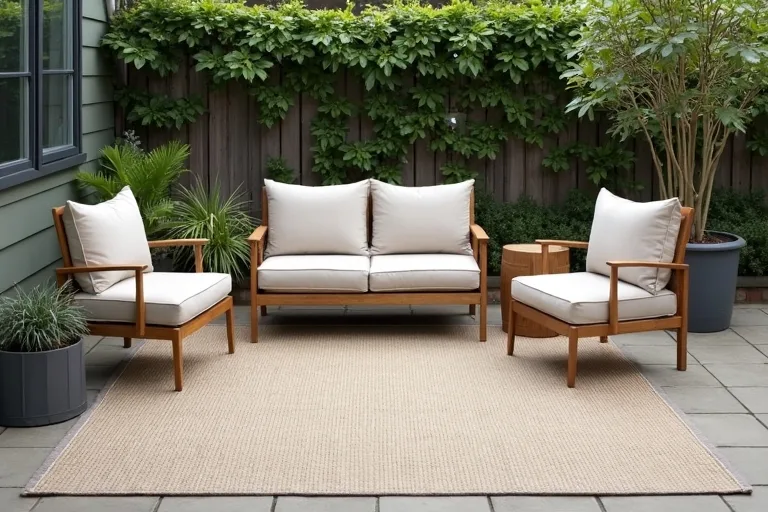
Before you shop, decide what the rug needs to do: anchor a full seating group, define a small balcony corner, or soften a deck lounge area. That single choice will narrow the size and shape much faster than browsing patterns first.
How to choose the right size
Size is the part that changes the whole room feel. For outdoor rug ideas, the best size is the one that matches your seating zone, not the one that looks good on its own in a product photo.
A useful way to judge scale is to look at how the rug relates to the front legs of the furniture. In many seating areas, the rug should sit under at least the front legs of the sofa and chairs so the group feels visually connected. If the space is tighter, the rug can still define the area, but it should not disappear under the furniture or stop too far away from it.
- Measure the seating footprint, not just the floor area.
- Leave a little visible space around the rug so it does not press into the edges.
- Make sure doors, walkways, and chair movement still feel easy.
- Check the balance from the main view, especially if the rug sits in a narrow balcony or long deck zone.
If you want a more exact decision, use the rug size calculator before you buy. It is a simple way to confirm whether the rug will support the furniture layout instead of fighting it.
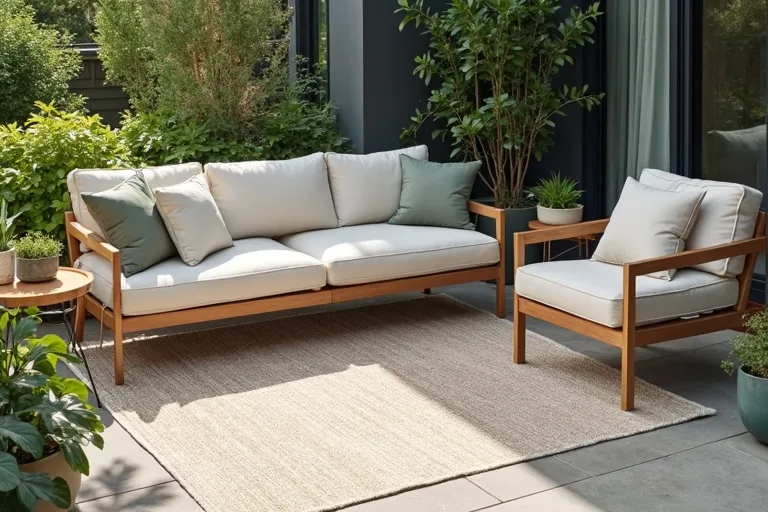
Materials, texture, and placement
Outdoor rugs need to handle moisture, dirt, and frequent use. That is why weather resistance matters more than softness alone. A rug may look perfect indoors, but outdoors it should also dry reasonably well, clean easily, and stay useful through changing conditions.
When comparing materials, focus on how the rug will behave in your exact setting. A covered balcony has different needs from an open patio, and a deck that gets a lot of sun is different again from a shaded corner that stays damp. The best outdoor rug is the one that fits the environment you actually have.
Placement also affects how well the rug works. Keep it flat, avoid bunching at the edges, and make sure the shape supports the furniture arrangement. If the area is exposed, a rug that stays in place and does not trap too much moisture will usually be the more practical choice.
If you are unsure what to prioritize, decide in this order: weather exposure, cleaning ease, then texture. That keeps the choice grounded in how the space will be used every day.
If your seating area also needs a simple lighting update, outdoor string lights waterproof can be a useful next layer once the rug is in place.
Color, pattern, and styling choices
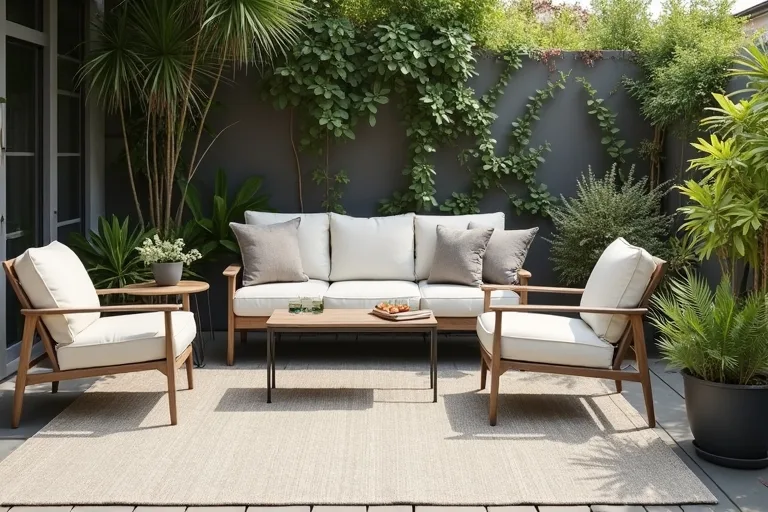
Once the size and material are right, color and pattern become the finishing layer. For a calm look, neutral tones usually work best because they let the furniture and plants do the visual work without making the space feel busy.
Simple stripes, small geometric patterns, or textured solids often work well outdoors because they add definition without overpowering the setting. If the seating area is already active with cushions, planters, or outdoor decor, a quieter rug will usually create better balance.
Try to match the rug’s visual weight to the rest of the space. A pale rug can lighten a dark deck, while a deeper tone can help a light patio feel more grounded. The goal is not to create a statement first; it is to make the seating zone feel complete.
Best next step
If you are still deciding on size, start with the tool that matches the layout problem first. A quick rug-size check will usually tell you more than another round of shopping.
- Choosing the rug before deciding what area it needs to anchor.
- Picking a size that is too small for the furniture group.
- Ignoring door swings, chair pull-back, or walking routes.
- Using a material that does not suit the amount of weather exposure.
- Adding a strong pattern when the rest of the seating area already feels busy.
The best outdoor rug is the one that makes the seating area feel planned. Focus first on size and placement, then choose a material that suits the weather, and only after that decide on color or pattern. That order keeps the space calm, practical, and easy to use.
Helpful next tools and planners
If you want to make the decision easier before you buy
A few practical links can help you move from planning to purchase without guessing. Start with the sizing tool, then look at a weather-ready rug option or a simple planning sheet if you want to map the whole seating area.
FAQ
What size outdoor rug works best under a seating area?
The best size is the one that fits the furniture group and helps it read as one zone. In most cases, the rug should be large enough for at least the front legs of the main pieces to sit on it.
Can I use an indoor rug outside?
It is usually better to choose a rug designed for outdoor use. Outdoor rugs are made to handle moisture and easier cleaning, which makes them more practical in patios, decks, and balconies.
What is the easiest outdoor rug to maintain?
Look for a weather-resistant rug that dries quickly and is easy to clean. The right choice depends on how exposed the space is and how often the area gets used.
How do I make an outdoor rug look calm rather than busy?
Choose a simple pattern or a textured solid, then keep the rest of the seating area relatively restrained. Neutral cushions and a few plants often create a more settled result than several competing colors.
Three sensible next steps
Some links in this article may be affiliate links. Read more in the Affiliate Disclosure.