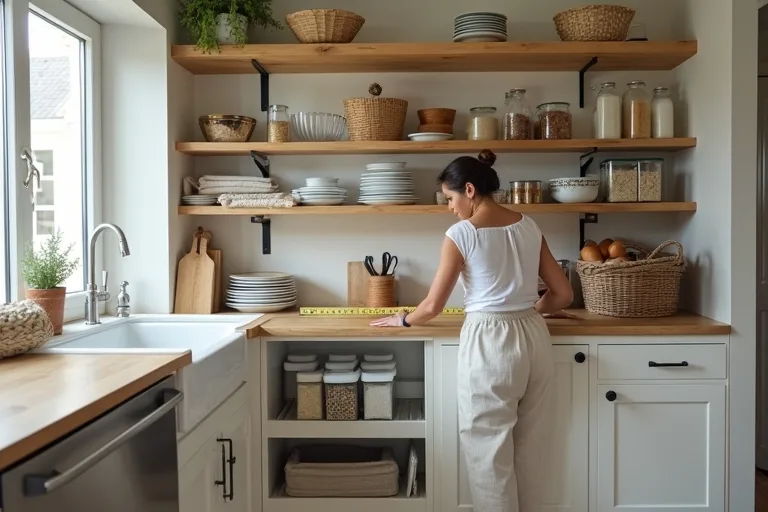
If your pantry feels disorganized, the answer is usually not to buy more containers right away. The better first step is to check the space, the way you shop, and how often you reach for each item.
A calm pantry plan saves money and makes the room easier to keep up. Once you know what needs to fit, you can choose bins, shelves, cabinets, or a flexible cart with much more confidence.
Measure your pantry, sort what you store, and choose storage based on access and flow before buying anything. The right setup depends less on how stylish the containers look and more on whether daily items are easy to reach, awkward corners are usable, and the whole space works without constant reshuffling.
Measure the space and the daily load
Start with the parts of the pantry that affect every decision: width, depth, shelf spacing, door swing, and any clearance you need to open drawers or pull out baskets. A pantry can look roomy until you account for a door that blocks one side or shelves that are too deep to see into.
Then make a simple list of what lives there. Separate daily staples from occasional items. Coffee, cereal, snacks, and cooking basics need faster access than holiday platters or bulk paper goods. That difference tells you whether you need open shelving, closed cabinets, or a mixed setup.

If your pantry is narrow or shallow, a neat-looking system can still fail if you cannot see what is behind the first row. In that case, think about shallow bins, labeled zones, or a cart that can hold overflow without taking over the room.
The real decision is not “What storage looks best?” It is “What will still feel easy on a busy weekday?” If a bin is hard to pull out, a shelf is too deep to reach, or a cabinet hides everything at the back, the system will not stay calm for long.
Match storage to what you actually keep
Once you know the space, match the storage to the items. Tall pasta jars, snack packs, canned goods, baking supplies, and appliances all behave differently. A single uniform container system can look tidy, but it is not always the most useful.
A simple way to sort the decision is to work from the items outward:
- Group the foods and tools you use every day.
- Check which items are better stored upright, stacked, or visible at a glance.
- Set aside anything bulky, odd-shaped, or only used occasionally.
- Decide where labels will actually help instead of adding clutter.
Airtight containers can be helpful for dry goods, but they make more sense after you know what you are storing and how quickly you use it. If you buy them first, you may end up with too many sizes or a shape that wastes shelf space.

This is also where a rolling kitchen cart with storage can be useful. It works well if you need a flexible home for overflow, produce, snacks, or items that move between pantry and prep area. It is not the right answer for every pantry, but it is often the easiest solution when fixed storage is limited.
Choose fixed or movable storage with access in mind
Before you commit to shelves or cabinets, think about how often the pantry changes. A fixed system is better when the inventory is stable and the layout is already efficient. Movable storage is better when you need flexibility, rental-friendly options, or a way to adapt as shopping habits change.
Use this decision order:
- Keep fixed shelving if the pantry is already well-sized and easy to reach.
- Choose cabinets when you need to hide visual clutter and can still access items without digging.
- Use bins and containers to group smaller items and stop them from spreading across the shelf.
- Add a rolling cart when you need a practical overflow zone or a movable landing spot.
For many homes, the best pantry is a mix of storage types rather than one perfect system. A couple of open shelves for everyday use, a few containers for dry goods, and one movable piece can be easier to maintain than a fully built-out setup.
If you are working with a small or awkward kitchen, the small spaces storage guide is a good next reference before you buy a larger cabinet system.
Set up the pantry so it stays easy to use
Good pantry organization is less about the shopping day and more about the month after. The system should make it simple to put groceries away, find what you need, and reset the shelves without a big effort.
Start with zones: breakfast, snacks, baking, dinner staples, and backup stock. Keep the most-used category at eye level and the least-used items higher up or lower down. This is especially helpful if your pantry is shallow or if you share the kitchen with other people.

Labels should support the routine, not overcomplicate it. Clear names on bins, shelves, or baskets are enough for most homes. If you already know what belongs where, the main job is making the system obvious enough that everyone can follow it.
If you want a simple way to plan the whole refresh before buying, a layout or budget tool can help you stay realistic. The Styling Homes tools hub is a good place to compare ideas before you commit.
Best next step
If you are deciding between bins, shelves, cabinets, or a more flexible setup, compare your pantry with a practical planning tool before you spend money. A movable option like a rolling kitchen cart with storage can be especially useful when the layout is tight or the pantry needs overflow space.
- Buying containers before measuring shelf depth and door clearance.
- Using deep bins that hide items and make the back of the shelf unusable.
- Mixing everyday staples with occasional items in the same hard-to-reach zone.
- Choosing a fixed cabinet when a movable cart would solve the real storage problem.
- Labeling everything before the layout is settled.
The smartest pantry plan starts with what the space can actually hold and how you use it day to day. Measure first, sort your items second, and then choose storage that makes access easier rather than prettier. In many kitchens, a simple mix of shelves, containers, and a rolling cart is more practical than one large purchase.
Helpful next tools and planners
If you want to make the decision easier before you buy
These options can help you plan the pantry with less guesswork, especially if you are trying to balance storage, flexibility, and budget.
FAQ
How do I know whether I need bins or shelves first?
Start with the pantry structure. If the shelves are awkward, too deep, or badly spaced, bins will not fix the layout. If the shelves work well, bins can help organize smaller items and keep categories from spreading.
What should I buy for a small pantry?
Choose a small number of tools that improve access: shallow bins, clear containers for dry goods, and possibly a rolling cart if you need extra flexible storage. Avoid buying too many matching pieces before you know what fits.
Are airtight containers worth it?
They can be useful for flour, pasta, cereal, and other dry goods, but only if they suit your shelf size and the way you shop. They are best chosen after you have decided on zones and storage depth.
When is a rolling cart better than cabinets?
A rolling cart is often better when you need movable storage, a rental-friendly solution, or a place for overflow items. Cabinets make more sense when you want hidden storage and the pantry layout already supports easy access.
Three sensible next steps
Some links in this article may be affiliate links. Read more in the Affiliate Disclosure.