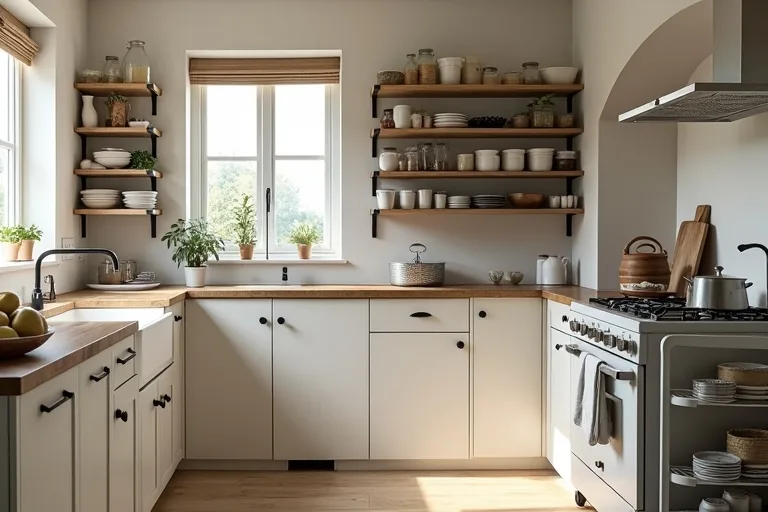
Pantry storage gets complicated fast when shelves are too deep, corners are awkward, or food ends up spread across counters, cupboards, and the floor of a utility nook. The choice is usually not between “organized” and “disorganized.” It is between a flexible budget fix and a more permanent built-in solution.
If you are trying to make the right call before buying containers or starting a project, it helps to compare how each option works in real daily use. The best answer depends on your layout, how often you cook, and how much change you want to take on at once.
Choose budget fixes for flexibility and speed; choose built-in storage when you want a more permanent, space-efficient pantry solution. If your kitchen layout is still changing, start with low-cost organization first. If the space is settled and the pantry is hard to use no matter how you sort it, a built-in upgrade may be worth the effort.
What budget pantry fixes can do without changing the room
Budget pantry organization ideas are the easiest place to start when you need better control without committing to construction. They work especially well in kitchens where shelves already exist, but the contents are messy, hard to reach, or not grouped in a sensible way.
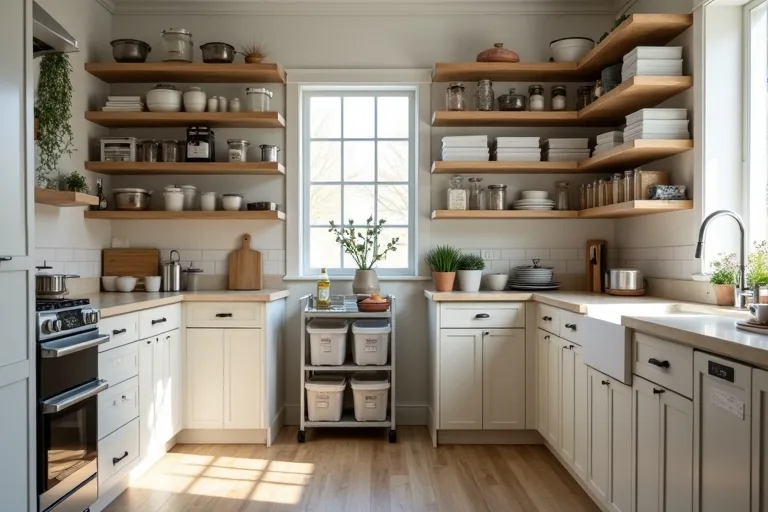
Simple fixes can include labeled airtight containers, shelf risers, bins, baskets, over-the-door storage, and a rolling kitchen cart with storage for overflow items. These pieces do not change the room itself, but they can make a pantry feel more manageable very quickly.
A budget approach is usually best when you want to test an arrangement before you spend more. It is also useful in rentals, shared homes, or smaller kitchens where storage needs may change later. For more ideas that work in tight layouts, see small-space storage solutions and the main Kitchen & Dining hub.

If you can improve access, label categories clearly, and stop duplicate purchases with a few low-cost changes, a full remodel may be unnecessary. The real question is whether the pantry is cluttered, or whether the layout itself is the problem.
What a built-in storage upgrade changes
A built-in pantry upgrade goes beyond tidying. It changes the way the space functions. That can mean custom shelving, deeper integration with cabinetry, better use of vertical height, or a pantry wall that is designed around your actual cooking habits.
This option usually makes sense when the room plan is fixed and the current storage is wasting too much usable space. Built-in storage can improve reach, reduce dead corners, and create a more consistent place for dry goods, appliances, and bulk items. It can also help when a kitchen feels visually busy because too many items have nowhere defined to live.
The tradeoff is commitment. Built-ins usually cost more, take longer, and matter more to the room’s final layout. Before you move in that direction, it helps to compare how the pantry connects to traffic flow, prep space, and nearby cabinetry. A layout-first approach keeps the upgrade from solving one problem while creating another.
How to compare space, access, and daily use
Instead of asking which option sounds better, compare how each one handles the way your kitchen is actually used. A pantry should make common items easier to reach, not just look more organized behind closed doors.

Use this simple order of thinking:
- Measure the space you already have and note where access feels awkward.
- List the items you need to store every week, not just the items you rarely use.
- Check whether shelves, drawers, or carts would improve reach more than a fixed build.
- Decide whether you need a temporary solution or a more permanent room change.
For many households, airtight containers are a small upgrade that keeps both routes useful. They help with visibility, reduce wasted space, and keep dry goods easier to group. If that is your next step, consider an airtight pantry food storage containers set as a practical foundation.
If you are still unsure about the layout, the Room Layout Planner can help you think through shelf placement, nearby circulation, and how much storage the room can reasonably support.
A sensible way to choose your next step
If you want a calm decision, start with what is fixed and what is flexible. Walls, plumbing, and cabinet runs are fixed. Containers, carts, bins, and labels are flexible. The more uncertain the room is, the more useful it is to stay flexible for now.
If the pantry space is already built and only needs better order, budget organization is often enough. If the room keeps failing because the storage itself is poorly shaped or too limited, a built-in upgrade may repay the effort over time. That is especially true in kitchens where every inch matters and you want storage to feel like part of the architecture rather than an afterthought.
For a low-risk planning step, use the Room Makeover Planner, Home Layout Budget Spreadsheet before you buy anything major. It is especially helpful if you want to compare the cost of storage pieces against a larger built-in project and keep the decision grounded in your actual layout.
Best next step
Before you commit to containers or construction, measure the pantry area, note what is hard to access, and decide whether the space needs organizing or redesigning. If the layout is still unclear, a simple planning tool can make the choice much easier.
- Buying containers before deciding what should be stored together.
- Choosing built-ins without checking how the pantry connects to the rest of the kitchen.
- Using deep shelves without any way to see or reach items at the back.
- Adding more storage pieces when the real problem is layout, not capacity.
- Ignoring the difference between everyday items and overflow items.
Budget pantry organization ideas are the right move when you need speed, flexibility, and a lower-risk fix. A built-in storage upgrade makes more sense when the pantry space is settled and the layout itself is limiting how well the kitchen works. If you are still weighing the two, start with measuring, sorting, and budgeting first so the next purchase supports the room instead of guessing at it.
Helpful next tools and planners
If you want to make the decision easier before you buy
These are simple planning and storage options that fit the two main paths in this guide: a flexible budget reset, or a more permanent pantry upgrade. Start with the one that matches your current layout stage.
FAQ
What is the cheapest way to organize a pantry?
Start by grouping like items together, using labels, and adding a few containers or bins only where they solve a real access problem. A cart or shelf riser can also help if the pantry needs more visible storage.
When is a built-in pantry worth it?
It is worth considering when the existing layout wastes space, the pantry is difficult to access every day, and you want a long-term solution that feels built into the kitchen rather than added onto it.
Should I organize first or remodel first?
Organize first if the room is still flexible or you are not sure how much storage you truly need. Remodel first only when the layout is clearly the issue and lower-cost fixes will not solve it.
Do airtight containers really help?
Yes, if you use them to group dry goods, improve visibility, and reduce half-open packaging. They work best as part of a broader organization plan, not as a stand-alone fix.
Three sensible next steps
Some links in this article may be affiliate links. Read more in the Affiliate Disclosure.