
A calm pantry usually starts with subtraction, not shopping. When every shelf is trying to do too much, the room feels busy even if it is technically organized.
The simplest fixes are often the most effective: fewer container types, clearer groupings, and one small overflow zone for the items that do not belong on the main shelves all the time.
Use fewer container types, keep labels simple, and group pantry items by use so the space stays clear and easy to maintain.
Start with what the pantry actually needs to hold
Before you buy bins or decant everything into matching jars, look at the real job of the pantry. Some pantries hold only dry goods. Others also need room for snacks, backstock, serving pieces, paper goods, or appliances that do not fit elsewhere. If the storage plan does not match the load, clutter comes back quickly.
Begin by sorting the pantry into three simple groups: everyday items, occasional items, and overflow. Everyday items should be easiest to reach. Occasional items can sit higher or lower. Overflow items are the ones you keep, but not all at once on open shelves.
Once you can see the categories, decide which shelf zones deserve the best access. That is often more useful than trying to make every shelf look identical.

If your pantry feels busy, the problem is often not the number of containers. It is the mix of container styles, the lack of clear categories, and the absence of a real overflow spot. Fix the layout first, then buy only the storage that fills a gap.
Choose storage types that keep the look calm
The most effective pantry storage is usually the least visually complicated. Clear containers help when they are used selectively. Baskets help when you want to hide odd shapes. Opaque bins work well for bulky packaging and items you do not need to inspect at a glance.
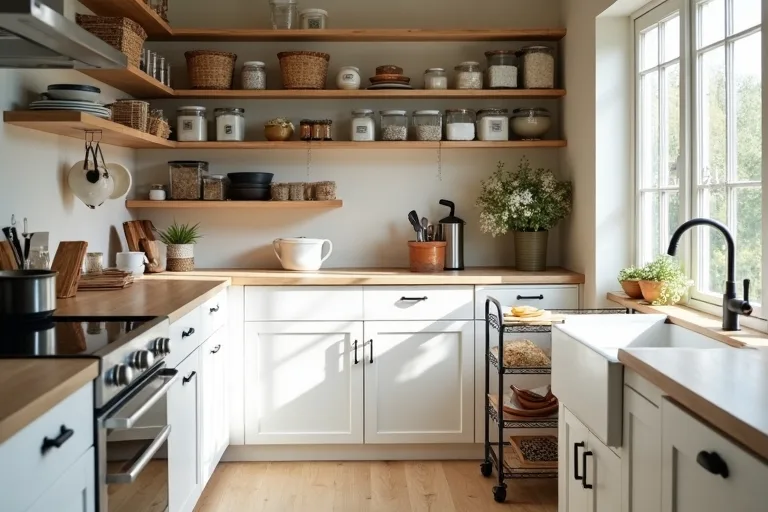
If you want the pantry to look calmer, do not try to use every container type at once. Pick a small system and repeat it. For example, use airtight containers for dry staples, woven baskets for loose snack packaging, and one or two deeper bins for backup items.
This is also where labels matter. A simple label on a container is enough. You do not need decorative typography or overly detailed wording. The goal is quick recognition, not display.
- Keep staples in airtight containers only if you refill them regularly.
- Use baskets for items that are easy to grab as a group.
- Reserve bins for supplies that are useful but not attractive.
- Leave some open space so shelves do not look packed edge to edge.

Use a rolling cart when the pantry needs overflow storage
A rolling kitchen cart can be a smart answer when the pantry is short on depth, awkward in shape, or already crowded with the basics. Instead of forcing every item onto the same shelves, the cart gives you a controlled overflow zone for extra bags, backup pantry goods, produce, or items that rotate in and out.
That is why a cart works better than random stacking on the floor or on the nearest shelf. It creates a separate place for items that need access, but not permanent shelf space. In a small kitchen, that difference matters.
Look for a cart that fits beside the pantry or near the kitchen work zone without blocking movement. Open shelving can help keep the cart from feeling heavy, while lower shelves or a drawer can hold the less attractive items you still need close by.
If you are already reorganizing a tight pantry, it can help to think about the whole kitchen layout, not just the cabinet opening. A small-space storage approach often makes the best use of the room you already have. For more planning ideas, see small space storage and the broader Kitchen & Dining hub.
Keep clutter from building back up
Most pantries become messy again because they slowly absorb unrelated things. A quick reset each week is usually enough to prevent that. Put return items back in the same category, remove packaging that has no job, and consolidate half-used items before they spread across multiple shelves.
It also helps to keep one rule for purchases: only buy storage when you know what problem it solves. If a shelf is awkward, measure the available space first. If you are short on access, add a cart or a bin. If dry goods are decanted too often, switch to fewer airtight containers rather than adding more styles.
For readers who like to plan before they buy, a simple layout and budget sheet can be useful. The Room Makeover Planner, Home Layout Budget Spreadsheet (Digital Download) is a practical way to map what you already have and decide what is actually worth adding.
The right pantry system should feel easy to keep up, not impressive for one afternoon and impossible later.
Best next step
Before buying containers, take a quick look at your pantry layout and storage capacity. If the shelves are doing too much, choose one practical upgrade that solves the real problem instead of adding more visual noise.
- Buying matching containers before checking shelf depth and height.
- Decanting everything, even items that are easier to store in the original packaging.
- Using too many bins, which makes the pantry feel busier instead of calmer.
- Forgetting to leave an overflow zone for bulk items or backstock.
- Mixing snacks, dry goods, and supplies in the same shelf area without a simple grouping system.
The calmest pantry is usually the one with the fewest decisions built into it. Group items by use, keep the container system simple, and reserve one practical overflow solution for the items that do not need prime shelf space every day.
Helpful next tools and planners
If you want to make the decision easier before you buy
A calm pantry plan usually starts with layout, then moves to storage choices. These tools and products can help you check the space first and choose only the upgrades that will genuinely help.
FAQ
How do I make a pantry look less cluttered fast?
Start by removing duplicate items, grouping similar foods together, and limiting the number of container styles on view. Even a small reset can make the space feel calmer.
Should I decant everything into jars or containers?
No. Decant only the items you use often or the items that store better in airtight containers. Some packaging is already practical enough to keep.
When does a rolling kitchen cart make sense?
It helps when the pantry does not have enough shelf space, when the room has an awkward layout, or when you need a separate place for overflow and backstock.
What is the easiest pantry system to maintain?
The easiest system is the one with a few clear categories, simple labels, and enough open space to put things back without reshuffling everything.
Three sensible next steps
Some links in this article may be affiliate links. Read more in the Affiliate Disclosure.