
Patio layout decisions are easier when you begin with the space you already have, not the furniture you wish would fit. A few simple checks can tell you whether the patio should lean toward dining, lounging, or a smaller flexible setup.
That matters because outdoor pieces are expensive to move, return, or live with in the wrong scale. If you map the footprint first, the rest of the layout becomes much calmer and more practical.
Measure the patio, map traffic flow, define zones, then buy only pieces that fit the plan.
Start with the patio footprint, fixed features, and real limits
Before you move anything, measure the patio’s usable area and note what you cannot change: doors, steps, railings, posts, hose bibs, outdoor outlets, and any built-in edges. Those details decide how much room you actually have for seating and how easily people can move through the space.
It also helps to sketch the patio as a simple shape on paper or in a layout tool. Once the fixed points are marked, you can see whether the patio is best treated as one open zone or divided into a couple of smaller ones.
For a more structured planning pass, the room layout planner is a useful next step before you commit to furniture. If you want to stay within the broader outdoor category while you plan, the Outdoor Living hub gives you a clear place to continue.

The real decision is not “What looks nice?” It is “What can sit here without blocking doors, crowding walkways, or forcing awkward furniture sizes?” If the patio only works when pieces are pushed tightly together, the layout probably needs to be simplified before shopping.
Map traffic flow before you decide where the chairs go
Good patio layout ideas usually start with movement. People need a clear path from the door to the seating area, and from one side of the patio to another without stepping around table legs or planter corners. If the walkway feels squeezed, the whole space will feel smaller than it is.
To test the flow, mark the route that people will naturally take most often. Then place seating and tables around that path instead of forcing the path through the furniture. This is especially important on smaller patios, where even one awkward piece can interrupt the whole space.
- Stand at the main door and trace the route to the patio’s farthest point.
- Mark where chairs would open, where doors swing, and where people pause.
- Keep the main path clear before you add anything decorative.
- Only then decide whether you need more seating, a better table shape, or fewer pieces overall.
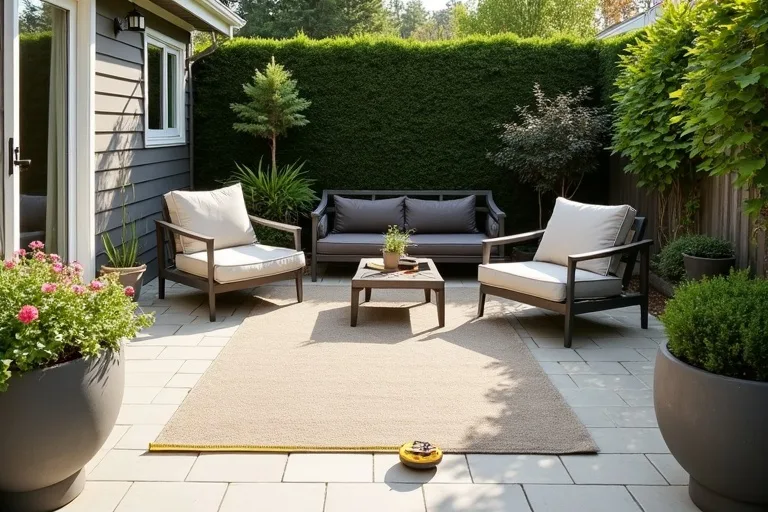
Choose zones for dining, lounging, or planting
Once the flow works, think about zones. A patio does not need to do everything at once. In many homes, the best layout is a simple one: a place to sit, a place to set drinks or food, and a visual anchor that keeps the arrangement from feeling random.
If you want the patio to serve more than one purpose, use the zones to decide what stays close to the house and what can sit farther out. A dining area usually needs the most efficient path. A lounge area can be softer and more relaxed. Planters can help define the edges without making the space feel closed in.
This is where product choices become easier. Instead of buying items separately and hoping they work together, you can choose pieces that support the zone you already decided on. A set of large outdoor planters can help outline the edges of a seating area, while a waterproof outdoor rug 5×7 can make a compact seating zone feel intentional rather than scattered.
Use one anchor piece to confirm the scale before you order
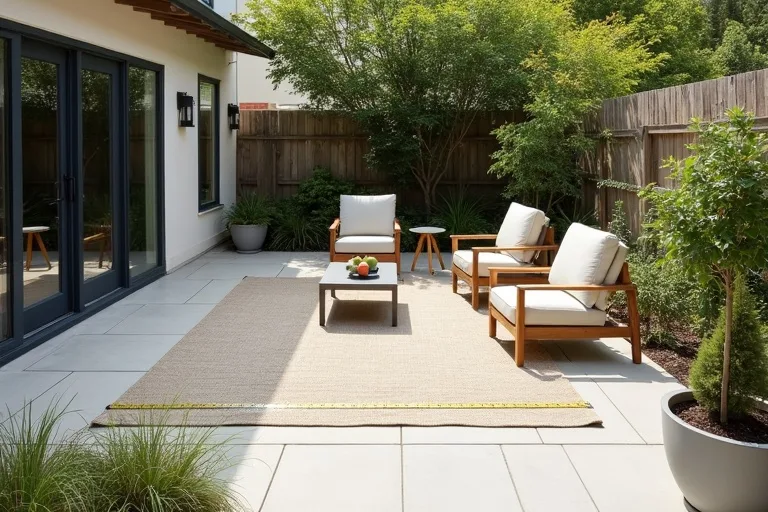
When the layout is still uncertain, start with one anchor item rather than a full set. On many patios, that anchor is a rug, because it shows whether the seating group feels proportioned to the space. In other layouts, planters or a table can do the same job.
The goal is not to decorate first. It is to confirm scale. If the anchor piece looks too small, the patio can feel unfinished. If it is too large, the layout can start to feel tight. That is why a waterproof outdoor rug 5×7 is often a sensible middle step for a modest patio: it gives you a size check before you buy more pieces.
Use the rug or anchor piece to answer a simple question: does this size help the patio feel organized, or does it expose that the furniture plan still needs work? If it is the second option, pause and revise the layout before ordering the rest.
Best next step
If you want to avoid buying the wrong size pieces, use a layout tool or worksheet before you shop. That gives you a clearer answer on what fits, what should stay, and whether a rug, planter set, or table is the right first purchase.
- Buying furniture before checking the patio’s usable footprint.
- Ignoring the path from the door to the seating area.
- Choosing too many pieces and leaving no room to move.
- Using a rug or planter that is too small to anchor the layout.
- Planning for storage or dining without first deciding which zone matters most.
The safest patio layout approach is simple: measure the space, protect the walking route, define the main zone, and then buy only the pieces that support that plan. If you are unsure where to start, a layout worksheet, the Outdoor Living hub, and a size check for a waterproof outdoor rug 5×7 can save you from expensive guesswork.
Helpful next tools and planners
If you want to make the decision easier before you buy
These links are most useful after the layout is clear. Start with planning, then use product sizes and budget tools to narrow down what truly fits your patio.
FAQ
How do I know if my patio is too small for a furniture set?
If the set leaves no clear path to the door, forces chairs into tight corners, or only fits when pushed against every edge, it is probably too large for the space.
Should I buy a rug first or the furniture first?
For a patio layout decision, it is usually better to confirm the footprint and seating plan first. Then a rug can help verify scale before you buy the rest.
What is the best way to divide a patio into zones?
Use the patio’s natural flow. Keep dining near the easiest access point, place lounging where there is room to relax, and use planters to define edges without blocking movement.
What if I am not sure whether to keep or replace my current pieces?
Start by placing what you already own into the plan. If a piece blocks flow, feels too small, or leaves the zone unfinished, it may be better to replace it after the layout is set.
Three sensible next steps
Some links in this article may be affiliate links. Read more in the Affiliate Disclosure.