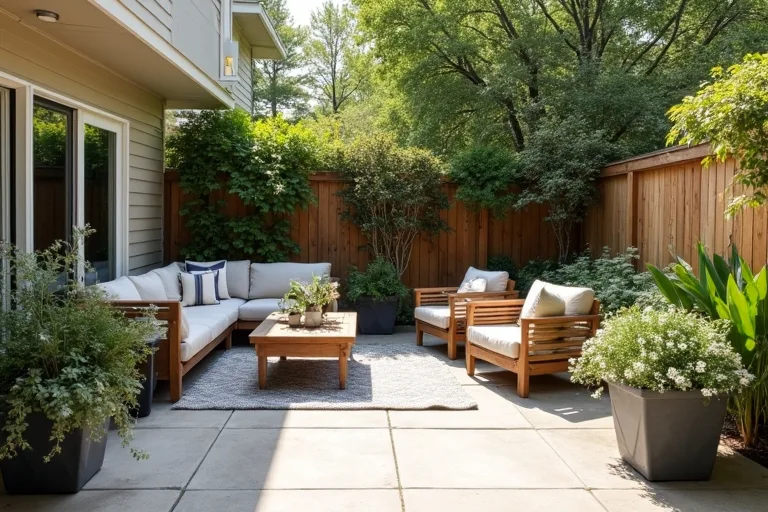
A patio can look finished and still feel awkward if people have to squeeze around chairs, step around corners, or cross through the seating area to get anywhere. Most layout problems are not about style. They come from circulation, spacing, and balance being handled after the furniture is already in place.
The easiest way to avoid that is to treat the patio like a plan first and a shopping list second. Once the walk paths, seating zones, and visual weight are mapped out, it becomes much easier to choose the right pieces and avoid buying something that makes the space harder to use.
The biggest patio layout mistakes are blocking walk paths, crowding furniture, and ignoring balance between open space and grouped seating. If you map circulation first, then size the seating area around it, the patio usually feels calmer and works better day to day.
Why circulation should be decided before furniture
Patio circulation is simply the route people need to take to move through the space without awkward detours. That might mean a path from the back door to the garden gate, a clear line around a dining set, or enough room to pass behind a chair without turning sideways. If those routes are not protected, even attractive furniture can make the patio feel cramped.
When planning patio layout ideas, start by marking the traffic pattern first. Then place the main seating or dining zone so it supports movement instead of interrupting it. This matters most on small and medium patios, where one oversized piece can take over the entire plan.
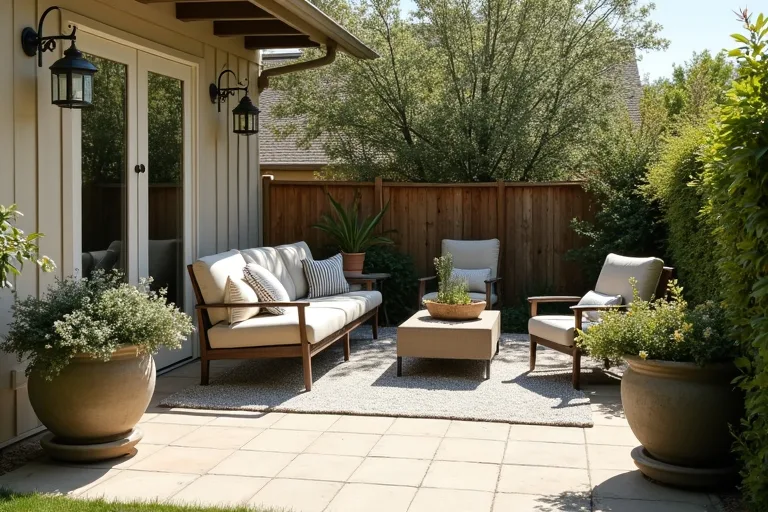
It helps to think in zones. One zone is for sitting, one is for moving, and sometimes one is for visual framing with plants or a side table. When those zones overlap too much, the space starts to feel tight even if the furniture itself is not especially large.
If you can only make the patio work by asking people to squeeze, turn, or step around furniture every time they move, the layout is the problem, not the decor. A better plan usually means fewer pieces, cleaner edges, and clearer walking lines.
How oversized furniture changes the whole feel
One of the most common patio layout mistakes is choosing furniture before checking scale. A sofa or chair that looks reasonable online can dominate a real patio once it is placed next to a door, railing, planter, or grill. Large pieces do not just use floor space; they also create visual bulk that can make the area feel more crowded than it is.
If the seating group feels too heavy, the patio usually needs a smaller arrangement with better spacing around it. That may mean one sofa and two chairs instead of a full set, or a round table instead of a rectangular one if corners are disrupting movement.
A simple planning sequence helps:
- Mark the main walking path.
- Measure the footprint of the largest item you want to buy.
- Leave space for chair pull-out and natural movement around the set.
- Check whether the remaining open space still feels usable, not just empty.
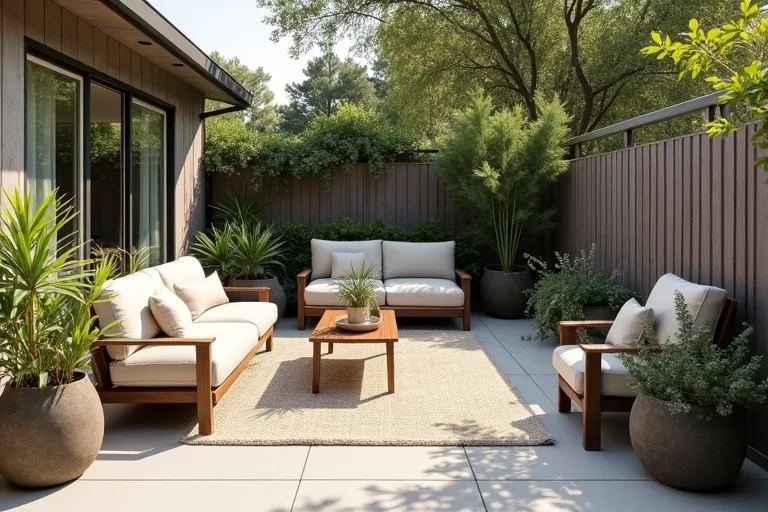
If you are planning to buy soon, this is where a planning tool pays off. Mapping the layout first can stop you from spending on a beautiful piece that works against the patio shape.
Balance is not about symmetry alone
A patio can be balanced without being perfectly symmetrical. What matters is whether the visual weight feels even across the space. A large sofa on one side with nothing to anchor the other side can make the patio feel unfinished, while too many small items scattered across the area can make it look busy and unsettled.
Balance also depends on how the eye moves through the patio. Grouping seating, keeping one side more open, and using planters or a rug to anchor the arrangement can help the space feel intentional. The goal is not to fill every corner. The goal is to make the patio feel readable at a glance.
Large outdoor planters can help with that when they are used as structure rather than decoration. A pair of planters can define an edge, soften a blank wall, or help a seating area feel grounded. The same idea applies to rugs: the rug should support the seating zone, not fight the walkway or split the space in an awkward way.
Rugs, planters, and the final layout check
Rugs and planters are often the last items people add, but they should still be part of the layout decision. A waterproof outdoor rug 5×7 can be a useful anchor for a compact seating area, but only if it fits the furniture group without crowding the path beside it. If the rug is too small, the seating looks disconnected. If it is too large, it can swallow the circulation space.
Planters work the same way. They are useful for defining zones, but they should not sit where people naturally walk. Place them where they support the room shape rather than narrowing the route through it.
Before buying anything, check the patio against this simple list:
- Can people walk through the space without turning sideways?
- Does the main seating area leave enough breathing room at the edges?
- Does the layout feel anchored by one clear zone rather than several competing ones?
- Will the rug and planters support the traffic pattern instead of blocking it?
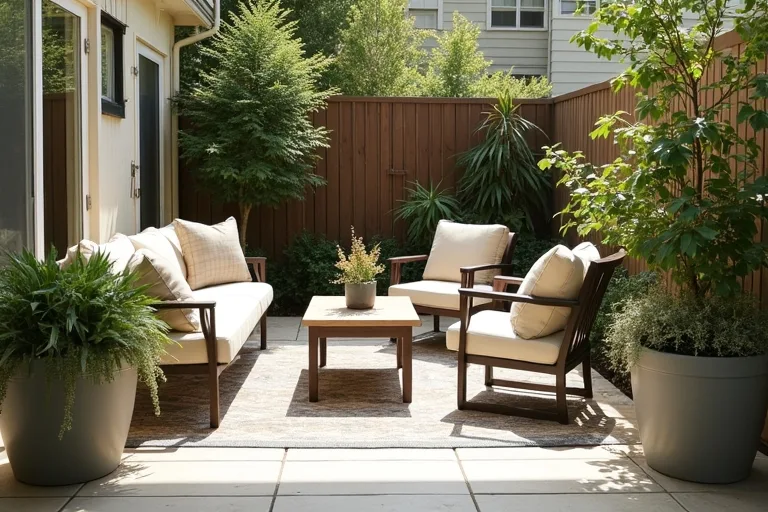
Once those answers are clear, shopping becomes much easier. You are no longer guessing whether a rug or planter will work. You are choosing pieces that fit a plan you already trust.
Best next step
Before you buy patio furniture, rugs, or planters, map the space first. A layout planner helps you test circulation, spacing, and balance on paper so you can make calmer decisions and avoid expensive mismatches.
- Placing the seating set first and leaving circulation to whatever space is left.
- Choosing oversized furniture that blocks doors, paths, or chair movement.
- Using a rug that is too small to anchor the seating group properly.
- Adding planters in walk zones instead of at the edge of the layout.
- Trying to make the patio symmetrical when the shape works better with one clear focal zone.
- Buying pieces before checking whether the full arrangement still feels open enough.
Good patio layout is less about filling the space and more about protecting the flow through it. If circulation comes first, furniture stays proportional, and the rug and planters support the structure, the patio will usually feel more comfortable and much easier to use.
Helpful next tools and planners
If you want to make the decision easier before you buy
These are useful if you are still working out the patio plan and want a simple way to compare layout options before ordering anything.
FAQ
How do I know if my patio walkway is too tight?
If people need to turn sideways, step around chair legs, or move through the seating area to get from one door to another, the walkway is too tight. The route should feel obvious and unobstructed.
Should I choose furniture before I plan the layout?
No. It is better to map the space first, then choose furniture that fits the circulation and balance you already need. Otherwise, the most attractive piece may become the thing that causes the problem.
Can a small patio still feel balanced?
Yes. Small patios often feel better when they have one main seating zone, fewer items, and clear edges. Balance comes from proportion and placement, not from filling every corner.
Where do rugs and planters fit in the planning process?
They should be part of the layout plan, not the finishing guess. A rug can anchor the seating area, and planters can define the edge, but both should support the flow through the patio.
Three sensible next steps
Some links in this article may be affiliate links. Read more in the Affiliate Disclosure.