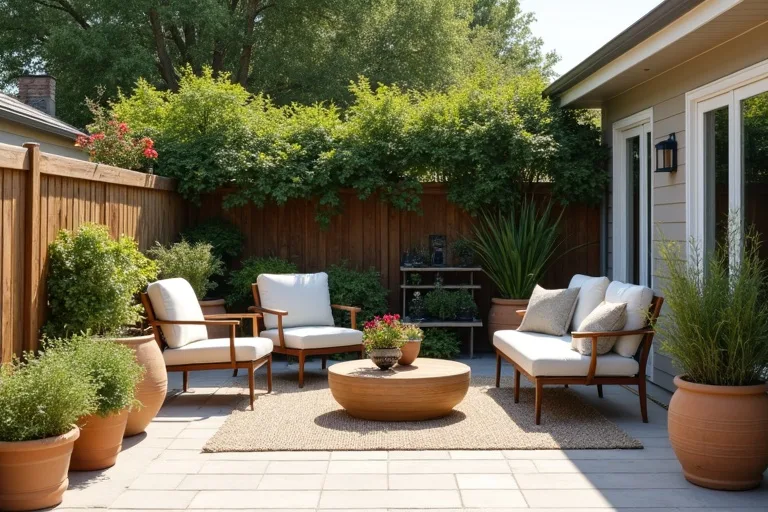
Patio updates are easier to plan when you separate the layout problem from the styling problem. A space can look unfinished because it needs one or two practical changes, or because the whole seating flow is fighting the way people actually move through it.
If you decide that first, the spending usually gets clearer too. Some patios only need a better rug, better scale, or a couple of planters. Others need a fresh arrangement before any decor makes sense.
Start with the layout problem first: if the patio flow works, make small budget updates; if it does not, reset the layout before buying decor.
How to tell what the patio really needs
The easiest way to decide between a budget refresh and a full reset is to look at how the patio is used, not how it looks in photos. If chairs are too close together, pathways feel awkward, or the seating area sits in the wrong part of the space, those are layout problems. If the patio is functional but looks sparse, hard, or visually unfinished, that is usually a styling problem.
Budget patio layout ideas work best when the footprint already makes sense. In that case, the goal is to improve comfort and definition without changing everything. A full layout reset is more appropriate when the current arrangement wastes space, blocks movement, or leaves no clear place for dining, lounging, or a small conversation setup.

When you are unsure, stand at the door and trace the route people actually take. If the path cuts through the middle of the seating zone, the problem is usually flow. If the path is fine but the area feels bare or disconnected, you can often improve it with a few targeted pieces.
If you would not move the furniture just to walk through the patio comfortably, the layout is probably doing enough. If you keep shifting chairs around every time you use the space, the layout is the thing to fix before you shop.
Small budget changes that can work well
A low-cost refresh makes sense when the patio already has a clear center point and the furniture scale is close enough. In that case, a few practical changes can make the space feel finished without starting over.
The most useful budget updates tend to do one of three things: define the seating zone, soften hard surfaces, or create better balance around the furniture. A weatherproof rug can help anchor the main area. A pair of larger planters can add weight and structure. Simple outdoor cushions, a side table, or one stronger focal item can also improve the room without changing the layout.
For a budget-friendly approach, try this order:
- Keep the existing seating positions if the flow still works.
- Add one anchor item, such as a waterproof rug, to define the zone.
- Use planters to shape edges and guide the eye.
- Only add smaller decorative pieces after the main layout feels stable.

This is also the stage where a rug size calculator can save you from guessing. A rug that is too small makes the seating zone feel disconnected, while one that is close to the right scale can make the whole patio feel more intentional.
When a full layout reset is worth it
A full reset is usually the smarter choice when the current arrangement is built around the wrong assumption. Maybe the seating faces the least useful direction, maybe the dining area is too close to the entry, or maybe the patio has enough square footage but no clear zones at all. In those cases, buying decor first only delays the real fix.
You do not need a dramatic redesign for this to count as a reset. Sometimes it means turning the main seating group, moving the dining corner closer to the house, or creating one stronger circulation path. The point is to make the space easier to use before you think about styling.
Use a reset when you keep noticing one of these signs:
- People have to step around furniture to get through the patio.
- There is no clear place for conversation, dining, or lounging.
- The patio feels crowded in one area and empty in another.
- Accessories never seem to fix the overall balance.
If that sounds familiar, it helps to sketch the patio before buying anything. A simple plan can show whether you need a new arrangement, a different rug shape, or a better mix of furniture sizes. The layout choice comes first; the shopping list comes after.
A simple planning step before you buy
The calmest way to spend less is to decide what the patio must do, then choose the few items that support that job. That is where planning tools are useful. They help you test the layout on paper before you commit to a rug, planters, or furniture that may not fit the space well.
For many readers, the easiest next step is to map the patio in the room layout planner and note the main measurements in a budget sheet. That gives you a clearer answer on whether the space needs a small refresh or a more complete reset. If the layout works, you can move forward with confidence. If it does not, you will know that the money should go toward flow first.
If you want a simple purchase path after that planning step, a waterproof outdoor rug 5×7 and a set of large outdoor planters are sensible first buys because they help define scale and shape without adding clutter. They are not the whole plan, but they often make the layout decision visible.

Best next step
Before you buy anything for the patio, map the space and decide whether you are making a small refresh or a full reset. The room layout planner and a simple budget sheet can help you make that call with less guesswork.
- Buying decor before the patio flow is clear.
- Choosing a rug that does not match the seating zone size.
- Using too many small accessories when the space needs one strong anchor.
- Calling a layout problem a styling problem and trying to solve it with more shopping.
- Skipping a simple plan and hoping the furniture will sort itself out once it arrives.
If the patio already works, a budget refresh can go a long way. If the flow, zones, or circulation are wrong, a full layout reset is the better use of money. Decide that first, then buy the pieces that support the plan rather than covering up a layout problem.
Helpful next tools and planners
If you want to make the decision easier before you buy
These are the most useful next steps if you want to compare layout options, set a budget, and choose products only after the patio plan is clear.
FAQ
How do I know if my patio needs a budget update or a full reset?
If the flow is comfortable and the space only feels unfinished, start with small updates. If movement feels awkward or the patio has no clear zones, reset the layout first.
What should I buy first for a simple patio refresh?
Start with one anchor piece, usually a weatherproof rug or a pair of large planters, then add only what supports the layout.
Is a rug useful if I am not redecorating the whole patio?
Yes. A rug can define the seating area and make the space feel more intentional without requiring a full makeover.
What planning tool helps most before shopping for outdoor pieces?
A layout planner is the most useful first step because it shows whether you need a small refresh or a more complete reset before you spend.
Three sensible next steps
Some links in this article may be affiliate links. Read more in the Affiliate Disclosure.