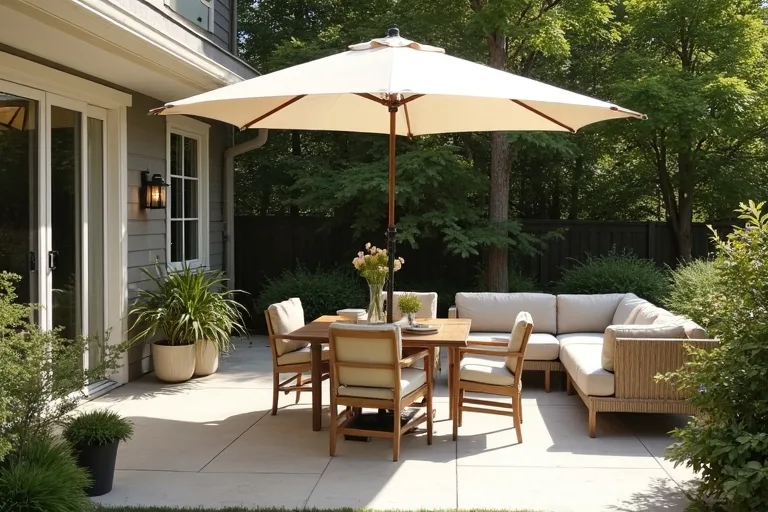
A patio can look finished and still feel uncomfortable if the sun is in the wrong place. Shade is what turns an outdoor area into something you can actually use for lunch, coffee, reading, or an evening conversation.
The best approach is not to start with the prettiest structure. Start with how the sun moves across the patio, where people sit, and which spots need the most relief. Once that is clear, the right shade choice becomes much easier.
The best patio shade is the one that fits your layout, sun direction, and how you use the space.
Why shade changes how a patio works
Shade does more than reduce glare. It decides where people naturally gather, which seat feels comfortable first, and whether a dining table can stay in regular use during the warmer months. On smaller patios, even a simple shade solution can make the difference between a space that looks nice and one that earns its footprint.
It also helps define zones. A shaded dining spot feels separate from a sunnier lounging corner, even without walls or dividers. That is useful when you want a patio to do more than one job.
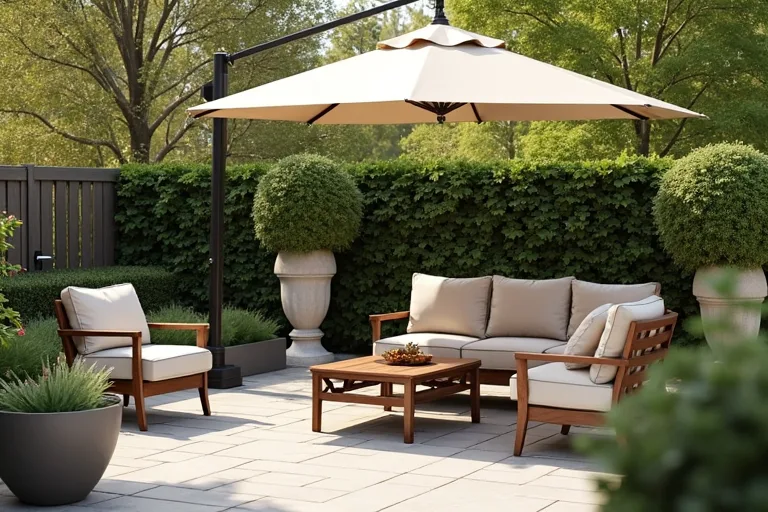
If you are planning the patio from scratch, it helps to think about shade in the same way you would think about room layout indoors: it supports flow, comfort, and use. For broader outdoor planning ideas, the Outdoor Living hub is a useful place to start. If you like to compare spaces by style as well as function, see Design Styles.
Before you buy anything, ask a simple question: do you need shade for one fixed spot, or do you need coverage that can move with the sun? That single answer will often narrow the choice more than any product feature list.
Compare the main shade options
Different patio shade ideas solve different problems. Some are flexible, some are more permanent, and some are best when you only need help in one area.
- Patio umbrellas work well when you need targeted shade over a table or small seating group. A 9 ft patio umbrella with base is a practical starting point for many compact outdoor setups.
- Shade sails can cover awkward corners or wide open areas, but they need thoughtful anchor points and a layout that makes sense before installation.
- Pergolas bring more structure and can support climbing plants, fabric panels, or retractable covers. They are a better fit when the patio is a regular part of daily life.
- Awnings are useful when you want shade from a wall or door side without giving up floor space, though they depend on the building and may need more planning.
- Plants and trees offer softer, natural shade, but they usually work as part of a longer-term garden plan rather than an instant fix.

For many households, an umbrella is the most forgiving first step because it is easier to move, test, and replace if your layout changes. A more structured setup makes sense when you already know where the dining and seating areas will stay.
Choose shade for dining and seating zones
The right solution depends on how each part of the patio is used. Dining areas usually need cleaner overhead coverage so the table stays comfortable at midday. Seating areas often benefit from partial shade, because too much coverage can make the space feel enclosed.
Use the layout to guide the choice:
For dining zones: aim for shade that reaches across the full table surface and leaves enough room for chairs to pull out without hitting the support pole or frame.
For seating zones: think about where people sit for the longest stretch. A conversation set often works well with a shade source offset to one side, so the seating feels protected without becoming too dark.
If you are building a comfortable outdoor corner, the 4 piece outdoor patio conversation set is the kind of furniture layout that pairs naturally with a flexible shade plan. It gives you a clear seating zone to work around instead of trying to shade an undefined area.
When the goal is a calmer, more usable patio, the best setup is usually the one that protects the spot you use most often. That may mean one umbrella over dining and another lighter shade element near the lounge side, rather than trying to cover everything at once.
Sizing, placement, and upkeep
Shade decisions get easier when you check a few practical details before buying. Start with the footprint of your table or seating group, then look at where the strongest sun lands during the hours you actually use the patio. A patio that feels fine in the morning may need very different coverage in late afternoon.
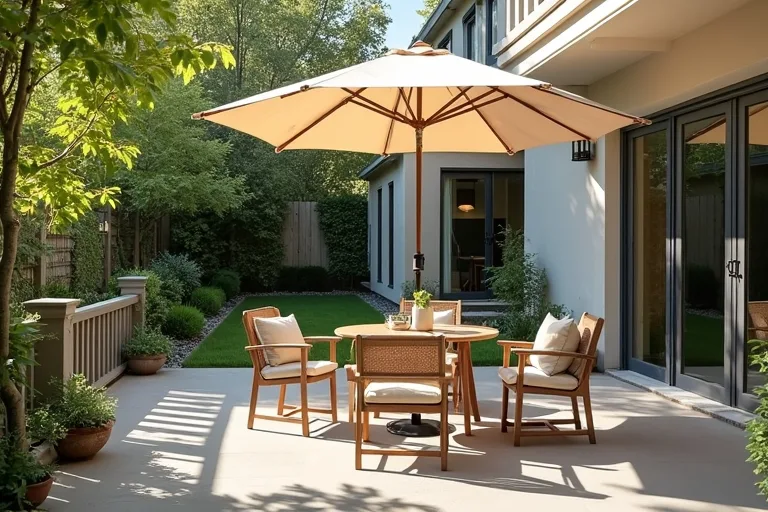
Placement matters just as much as size. An umbrella can be perfectly adequate and still fail if the pole blocks chairs or the canopy misses the table edge. A larger structure can also feel awkward if it cuts too much of the patio into shadow when you want light and open space.
Maintenance should stay simple. If a solution will need frequent adjustment, seasonal storage, or extra cleaning, be honest about whether you will keep up with it. The easiest shade to live with is often the one that matches your routine, not just your wish list.
If you want a more orderly way to compare patio options, a planning tool can help you think through sizes and layout before you commit. The Room Layout Planner is especially useful when you are trying to fit shade, dining, circulation, and seating into one outdoor plan. If budgeting is part of the decision, the remodel budget area can help you keep the project realistic.
Best next step
Choose the shade solution that matches your seating or dining layout, then shop with measurements in hand. If you are still deciding, map the patio first so you know exactly how much coverage you need and where it should land.
- Choosing shade before deciding where the table or seating group will sit.
- Buying coverage that is too small for the area you actually use.
- Forgetting chair pull-out space and circulation around the support point.
- Expecting one shade solution to handle every hour of the day equally well.
- Ignoring maintenance, storage, or wind exposure until after installation.
The smartest patio shade choice is the one that fits your layout first and your style second. If the space is mainly for dining, prioritize coverage over the table and chair zone. If it is for lounging, think about flexible shade that keeps the seating area comfortable without making it feel closed in. Measure first, then shop.
Helpful next tools and planners
If you want to make the decision easier before you buy
A simple planner, a layout tool, and a practical shade option can save you from buying the wrong setup for your patio. These are useful if you want to compare ideas before committing.
FAQ
What is the easiest patio shade idea to start with?
An umbrella is usually the easiest starting point because it is flexible, relatively simple to place, and works well for one defined seating or dining spot.
How do I know what size shade I need?
Measure the area you want to protect, then make sure the shade covers the usable part of the table or seating group, not just the center point.
Is a pergola better than a patio umbrella?
Not always. A pergola is better for a more permanent outdoor plan, while an umbrella is better when you want flexibility or are still testing the layout.
Can shade help a small patio feel more usable?
Yes. Even one well-placed shade solution can make a small patio more comfortable, define a seating zone, and reduce glare where people spend the most time.
Three sensible next steps
Some links in this article may be affiliate links. Read more in the Affiliate Disclosure.