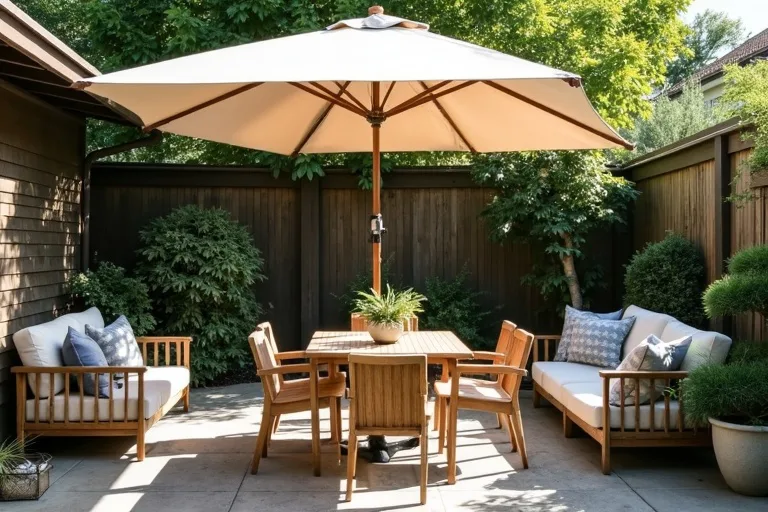
If your patio feels too hot to use, the first question is not what looks best. It is what will make the space comfortable enough to sit, eat, or relax outside without fighting the sun.
That is why the right answer is often simpler than it seems. A low-cost shade fix can solve the problem quickly, but a larger outdoor upgrade may be worth it if you need better coverage, better flow, or a space that works for longer parts of the year.
Start with the cheapest shade that solves your comfort problem; upgrade only if you need more coverage, structure, or year-round use.
Start with the comfort problem, not the shopping list
Most patio shade decisions become clearer when you name the exact issue. Is the sun hitting your dining table at lunchtime? Is the seating area pleasant in the morning but unusable in the afternoon? Or do you need one shaded zone that can serve both eating and lounging?
Once you know the problem, you can match the solution to the space. A small table for two may only need a flexible shade source. A larger seating area may need more coverage and a layout that keeps the shade where people actually sit.
For a simple backyard setting, a neutral umbrella can be enough to turn a bright spot into a usable one. In the example below, the shade is doing exactly that: making a seating and dining zone practical without changing the whole patio.
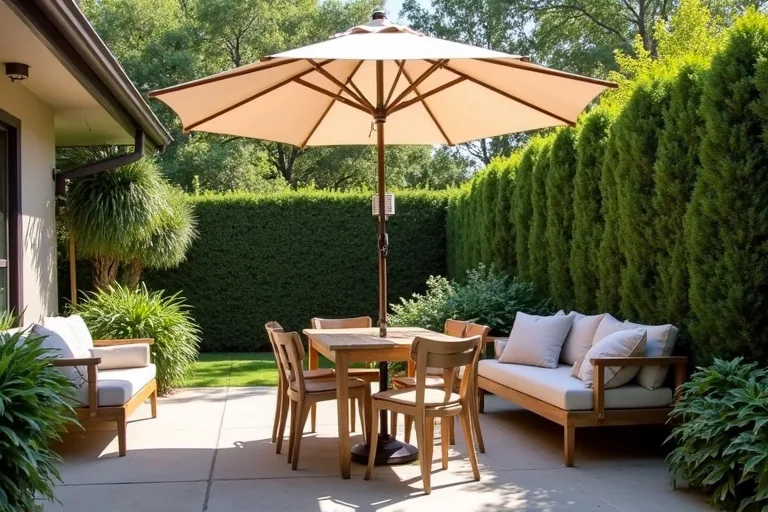
If one shade choice makes the space usable for daily meals or sitting, it may be enough. If you still avoid the patio because the shade shifts, feels too small, or does not cover the right zones, the real need may be a structural upgrade rather than another small accessory.
Budget shade ideas that solve the problem fast
Low-cost shade options are best when you want more comfort without committing to a major build. They are also useful if you rent, expect to move things around, or are still testing how you use the patio.
The main advantage of a budget solution is flexibility. You can place shade where the sun is strongest, move it as the season changes, and avoid tying the whole patio to one fixed layout.
- Patio umbrellas: Good for dining tables and smaller seating areas when you need targeted shade.
- Portable shade pieces: Helpful if you want to experiment before investing in something permanent.
- Simple furniture grouping: Sometimes the best improvement is rearranging the table and chairs so the shaded zone works better.
If you are comparing options, a 9 ft patio umbrella with base is a sensible starting point for a sunny table or seating corner. It is often the easiest way to add a comfort layer without changing the whole outdoor plan.
When a bigger outdoor upgrade is worth it
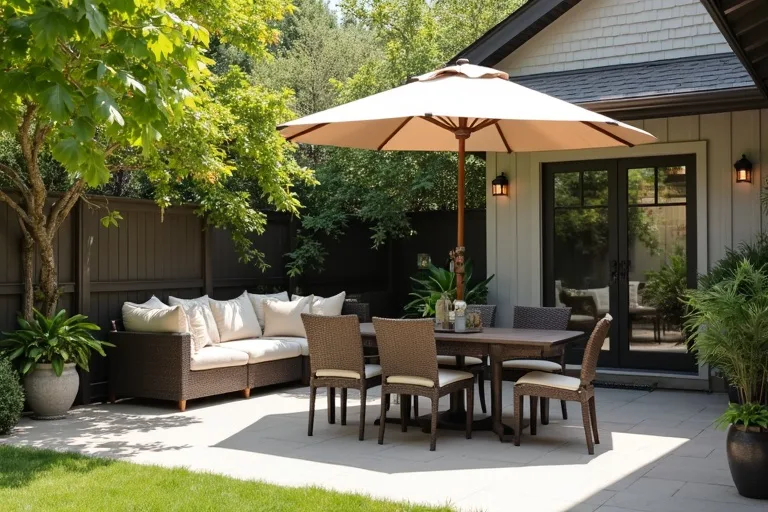
A bigger upgrade makes sense when shade is only part of the problem. If the patio needs a clearer layout, better circulation, or a stronger focal zone for entertaining, a more permanent change can do more than a portable fix.
This is often the case when you want the shaded area to support both seating and dining at the same time. In that situation, a larger arrangement can help the space feel settled instead of pieced together.
A more complete upgrade may include furniture that anchors the zone, better placement of the table, or a conversation set that gives the patio a stronger everyday function. If you are building a more defined outdoor area, a 4 piece outdoor patio conversation set can help create a clear seating destination under or near the shaded area.
The key is not to upgrade just because the patio feels unfinished. Upgrade when the space needs more than sun protection and when the layout itself is limiting how you use it.
How to choose the right option without overspending
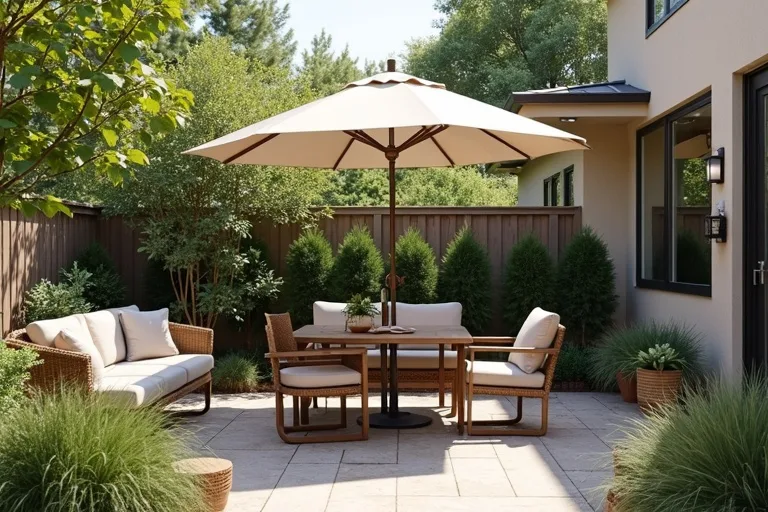
A calm decision usually comes down to three questions: how much shade you need, how fixed the layout should be, and how often you will use the space.
If you only need to solve a hot dining corner, start small. If you want the patio to function like a second living area, spend more on structure, furniture fit, and flow. The more often you use the space, the more important it becomes that the layout feels intentional.
A simple decision rule helps:
- Choose budget shade if your main problem is direct sun and you are still testing the layout.
- Choose a bigger upgrade if the patio needs better zoning, more stable coverage, or a more permanent entertaining setup.
- Plan the full zone first if you are buying both shade and furniture, so the pieces work together instead of competing for space.
Before you buy, it helps to map out the area on paper or in a simple budget sheet. That way, you can see whether the shaded zone really fits the table, chairs, and walking space you need. A planning tool like the Room Makeover Planner, Home Layout Budget Spreadsheet (Digital Download) can be useful when you want to compare shade, seating, and spend in one place.
Best next step
Before you buy shade or outdoor furniture, map the patio zone and budget it as one project. That makes it much easier to see whether a quick fix is enough or whether a bigger upgrade will actually solve the layout.
- Buying shade before checking where the sun actually lands during the hours you use the patio most.
- Choosing a large upgrade when a smaller, movable solution would have solved the real problem.
- Forgetting walking space between the table, chairs, and the edge of the shaded area.
- Focusing on appearance before deciding whether the space needs flexibility or permanence.
- Mixing shade and furniture without planning how the full seating or dining zone will work together.
Choose the smallest shade solution that makes the patio comfortable enough to use. Move to a bigger outdoor upgrade only when you need more coverage, stronger structure, or a layout that supports the way you actually live outside. Planning the zone first will usually save both money and frustration.
Helpful next tools and planners
If you want to make the decision easier before you buy
These options are most useful when you are working out the patio layout, the budget, and the comfort level you want from the shaded zone.
FAQ
How do I know if I need an umbrella or a bigger patio upgrade?
If the issue is mainly direct sun, start with an umbrella or another movable shade solution. If the space also feels awkward, cramped, or incomplete, a larger upgrade may be the better long-term choice.
Is a budget shade idea worth it if I may upgrade later?
Yes, if you need to use the patio now. A good temporary solution can make the space comfortable while you decide whether a permanent change is really necessary.
What should I plan first: shade or furniture?
Plan the layout first. Shade and furniture should work together, especially if you want both dining and seating in the same zone.
What is the safest way to avoid overspending?
Set the use case first, then choose the simplest option that solves it. Only spend more if the patio needs stronger coverage, better flow, or a more permanent setup.
Three sensible next steps
Some links in this article may be affiliate links. Read more in the Affiliate Disclosure.