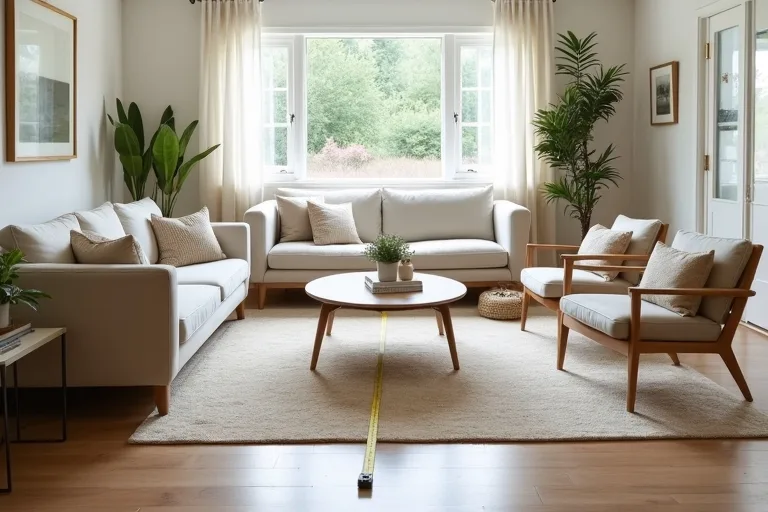
Choosing a living room rug is easier when you treat it as a layout decision first. The right size depends less on what looks nice in a shop photo and more on how your sofa, chairs, table, and traffic paths actually fit together.
If you measure the seating zone first, the rest becomes much clearer. You can quickly see whether a smaller rug will feel disconnected, whether an 8×10 rug makes sense, and whether you also need a rug pad to keep everything steady.
Measure the seating area first, then choose a rug size that fits the furniture layout and leaves balanced space around it. In many living rooms, an 8×10 neutral rug is a practical starting point if it can sit under the front legs of the main seating pieces and still leave sensible floor space at the edges.
Start with the seating zone, not the rug
Before you compare rug sizes, stand back and look at the room as a whole. The rug needs to support the seating area, not fight it. That means the first question is simple: what part of the room should feel connected?
For most living rooms, the answer is the main conversation area. That might be a sofa with two chairs, or a sectional with a coffee table and one accent seat. Mark that zone on the floor mentally, then check how much open space remains for walking around it.
Keep traffic paths in mind. If people regularly walk between the sofa and a doorway, or across the front of the room, the rug should not block that movement or sit so close to furniture that it feels squeezed.
This is the point where a quick visual check helps more than guesswork. If the room feels split into two unrelated zones, the rug is probably too small. If the furniture can sit on the rug comfortably and the room still feels open, you are closer to the right size.
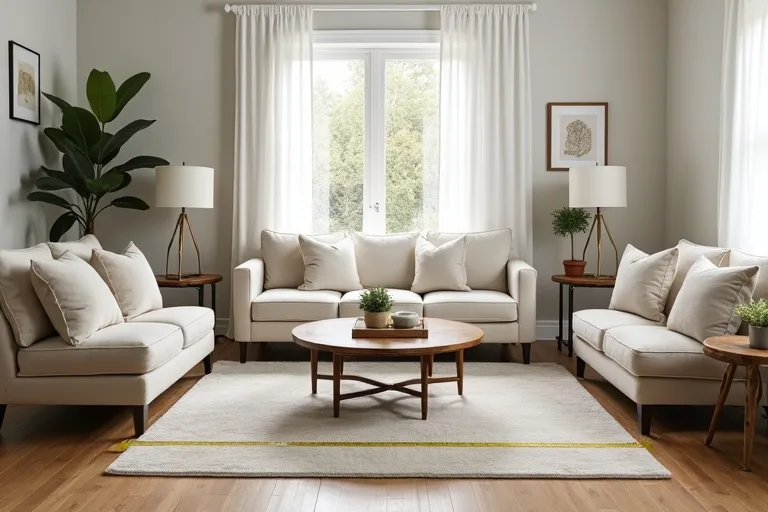
The real decision is not whether a rug is large enough in theory. It is whether the rug connects the seating pieces, respects the walkways, and still leaves the room feeling balanced. If you can answer those three things, you are much closer to the right purchase.
Compare common rug sizes against your layout
Once the seating zone is clear, compare the main rug sizes against the way your room is arranged. The best choice is usually the one that fits the furniture relationship first and the room dimensions second.
A smaller rug can work in a compact room if the furniture is tight and the seating area is simple. A larger rug often works better when you want the whole conversation area to feel anchored instead of floating in the middle of the floor.
Use this simple order of thinking:
- Check whether the front legs of the sofa and chairs can sit on the rug.
- See whether the coffee table still has comfortable clearance.
- Leave balanced floor space around the rug edges.
- Make sure the rug does not block doors, walkways, or cabinet access.
An 8×10 rug is often the practical middle ground in a standard living room because it can connect multiple seating pieces without overwhelming the floor. If your room is smaller, a large rug may crowd the edges. If your room is bigger, an 8×10 may still work if the furniture grouping is centered and the layout is contained.
For a faster check, use the Styling Homes rug size calculator before you buy. It is a useful way to confirm whether the proportions make sense before you commit to a specific rug.
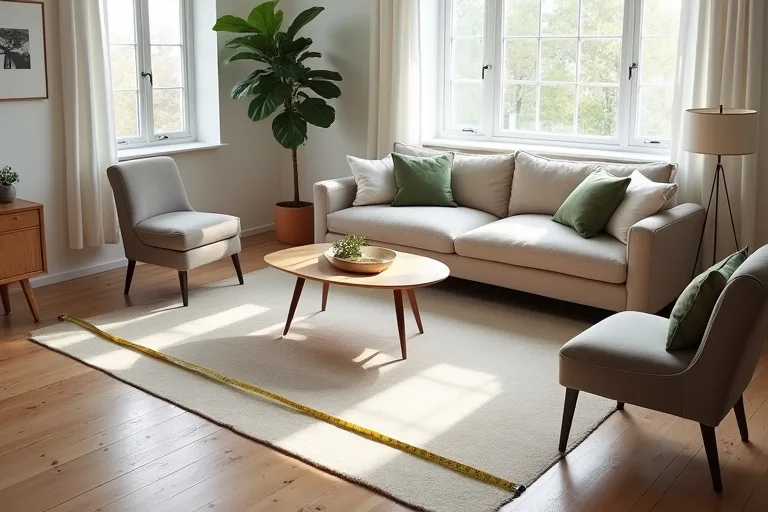
Test the sofa and chair layout before you order
A rug size can look right on paper and still feel off in the room. That is why it helps to test placement with the actual furniture arrangement before you buy.
Use painter’s tape, newspaper, or a folded sheet to trace the rug footprint on the floor. Then sit, stand, and walk around the space. You will usually notice very quickly whether the room feels grounded or cramped.
Pay attention to the relationship between the rug and the main furniture pieces. A rug that ends too far in front of the sofa can make the seating area feel detached. A rug that runs too close to the walls can make the room feel smaller than it is.
If you are deciding between sizes, compare how the layout feels with the rug slightly smaller and slightly larger. In many rooms, the better choice is the one that gives the seating area a clearer border without taking over the entire floor.
Confirm the rug pad and final purchase details
Once the rug size is settled, decide on the pad at the same time. A rug pad is not just an extra. It can help the rug stay in place, feel more stable underfoot, and sit more cleanly on hard flooring.
For many buyers, the practical question is whether the pad should match the full rug size. If you are buying an 8×10 rug, a matching non slip rug pad 8×10 is a straightforward option to compare. It keeps the planning simple when the rug footprint is already confirmed.
If your layout supports an 8×10 rug, a neutral style is often the safest choice because it lets the room decision stay focused on proportion and placement. A 8×10 neutral living room area rug is a sensible option to review once the layout works. If you are planning the room more broadly, the room layout planner can help you step back and make sure the furniture arrangement still feels right before you order.

Best next step
If you are still deciding, use the rug size calculator to confirm the dimensions before you buy. It is the quickest way to check whether an 8×10 setup fits your room plan, and it can help you avoid ordering a rug that is too small or too crowded for the seating area.
- Buying a rug before measuring the seating area.
- Choosing a size that only fits under the coffee table and not the furniture around it.
- Ignoring traffic paths and door clearance.
- Skipping the rug pad and ending up with movement or bunching.
- Picking a size that looks good online but feels too small once it is on the floor.
The easiest way to choose a living room rug is to measure the seating zone first, then test how the rug works with your sofa and chairs. If the layout supports it, an 8×10 rug is often a practical, balanced choice. Confirm the pad size at the same time, and use the rug size calculator before you order so the purchase matches the room plan.
Helpful next tools and planners
If you want to make the decision easier before you buy
Start with the sizing tool, then compare a practical rug and pad only after the layout makes sense. If you are planning more than the rug, the room planner can help you avoid a larger furniture mismatch.
FAQ
How do I know if a rug is too small for my living room?
If the rug only fits under the coffee table and does not connect the sofa and chairs, it is probably too small. The seating area should feel anchored as one group.
Is an 8×10 rug a good size for most living rooms?
It often is, especially in standard rooms with a separate seating zone. It can be a strong middle-ground size when you want the front legs of the furniture on the rug.
Do I need a rug pad under a living room rug?
In most cases, yes. A rug pad can help with grip, stability, and general wear, especially on hard floors or in busy seating areas.
Should the rug match the furniture or the room size first?
Room size and furniture layout should come first. Once the proportions are right, you can choose a rug color or pattern that works with the rest of the room.
Three sensible next steps
Some links in this article may be affiliate links. Read more in the Affiliate Disclosure.