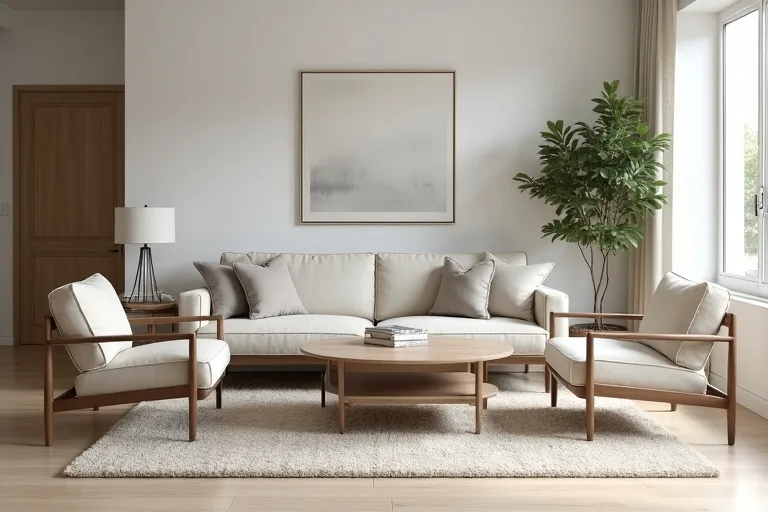
Rug size affects more than floor coverage. It changes how connected the furniture feels, how open the room reads, and whether the seating area looks intentional or scattered.
That is why the best rug choice usually starts with the layout, not the color or pattern. If the rug supports the seating zone cleanly, the whole room feels calmer and better scaled.
Choose a rug that fits the seating area, not just the room perimeter—an 8×10 works well for many standard living rooms.
Why rug size changes the feel of a living room
A rug acts like a visual boundary. When it is too small, the furniture can look like it is floating separately on the floor. When it is sized to anchor the seating group, the room feels more stable and easier to read at a glance.
In practical terms, that means the rug should help define the main conversation area. In many living rooms, that includes at least the front legs of the sofa and chairs resting on the rug, with the coffee table centered between them.

If you are unsure where to begin, the safest approach is to think in zones. The rug should support the zone you use most, not try to cover every inch of the room. That is especially helpful in open-plan homes where the living area needs definition without feeling boxed in.
The real question is not “What rug fits the room?” It is “What rug fits the seating layout I actually want?” If the sofa, chairs, and table feel connected on paper, the rug size is usually working. If the furniture sits outside the rug edge with no clear anchor, the room often feels smaller, not larger.
When an 8×10 rug is the right choice
An 8×10 rug is often a useful starting point for standard living rooms because it gives enough surface area to connect a sofa, one or two chairs, and a coffee table without crowding the room.
It is especially worth considering when you want the room to feel grounded but still show a sensible amount of floor around the edges. That balance can make the room feel cleaner and more deliberate.
- Your sofa is medium-sized and the rug can extend under the front legs.
- You have a coffee table that should sit fully inside the seating zone.
- You want the room to feel finished without using wall-to-wall coverage.
- You need enough scale for the furniture, but still want visible floor space.
If your room is smaller, larger, or unusually shaped, the answer may shift. The point is not to force an 8×10 into every room. The point is to check whether it supports the layout better than a smaller option would.
How to measure and test the layout before you buy
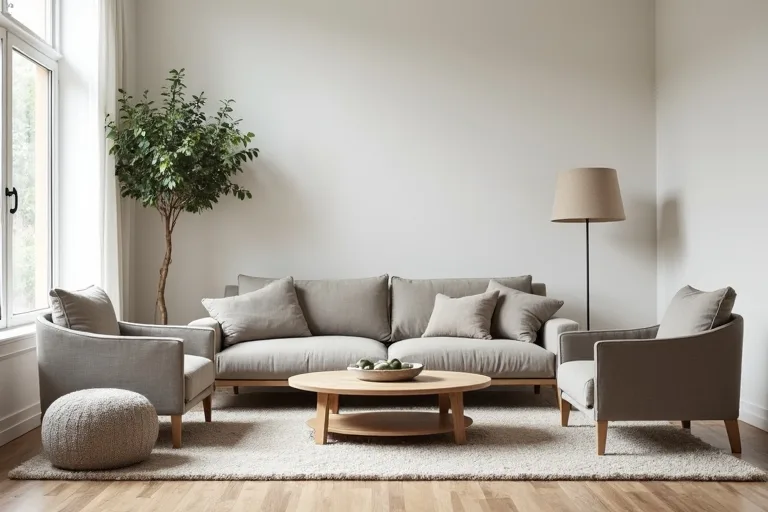
The easiest way to avoid the wrong size is to measure the furniture group first. Start with the sofa, then include the chairs and coffee table if they belong to the same conversation area. Once you know the footprint, you can compare rug sizes against the full seating zone instead of guessing from memory.
A simple process helps:
- Measure the width and depth of the seating area.
- Mark the rug footprint on the floor with tape or paper.
- Check whether the front legs of the sofa and chairs can sit on the rug.
- Leave visible border space around the rug so the room does not feel overfilled.
- Confirm that walkways still feel easy and uncluttered.
This kind of dry run is worth doing before you buy because rug size errors are hard to ignore once the rug is in place. If you want a faster way to compare options, use the rug tool first and then shop with more confidence.
Rug pads, finish, and the details that improve the fit
Once the size is right, the supporting pieces matter more than most people expect. A rug pad helps keep the rug in place, improves the feel underfoot, and can make the edges sit more cleanly on the floor. In a seating area, that stability matters.
A non-slip pad is especially useful on hard flooring, where a rug that shifts even slightly can make the whole setup feel less settled. If the rug is doing the job of grounding the room, it should stay visually and physically in place.

For shoppers who want a simple, low-risk path, a neutral 8×10 rug is often the easiest starting point because it works with many sofa styles and makes scale easier to judge. If you are mapping the whole room at once, a layout planner can also help you see how the rug fits alongside the rest of the furniture and budget.
Best next step
Before you buy, confirm the rug footprint against your seating layout. If the room feels like a good fit for a larger anchor, move from the calculator to a practical 8×10 shopping step. If you are planning the full room, map the layout and budget together so the rug choice fits the rest of the furniture plan.
- Choosing a rug by room size alone instead of the seating layout.
- Going too small, which can make the furniture look disconnected.
- Ignoring walkways and forcing the rug into traffic paths.
- Skipping a rug pad and letting the rug shift out of place.
- Buying before testing the footprint on the floor.
The best rug size is the one that makes the seating area feel unified and proportionate. For many living rooms, that means an 8×10 rug is a strong and practical option, especially when the sofa and chairs need a clear visual anchor. Measure the layout first, check the fit with a tool, and then buy with the room plan in mind.
Helpful next tools and planners
If you want to make the decision easier before you buy
These are useful when you are moving from layout planning to a purchase. Start with the sizing tool, then use a neutral rug and rug pad if the room calls for a straightforward setup. If you are planning the full space, the budget spreadsheet can help keep the rest of the room decisions organized.
FAQ
How do I know if a rug is too small for my living room?
If the rug sits under only the coffee table and leaves the seating group looking separate, it is probably too small for the layout.
Is an 8×10 rug good for a living room with a sofa and two chairs?
Often yes, especially when the rug can connect the front legs of the sofa and chairs while still leaving floor space around the edges.
Should the coffee table fit completely on the rug?
Usually it should. That helps the seating area feel like one coordinated zone instead of several pieces placed at random.
Do I need a rug pad for an area rug in the living room?
In most cases, yes. A rug pad helps the rug stay in place and makes the layout feel more secure and finished.
Three sensible next steps
Some links in this article may be affiliate links. Read more in the Affiliate Disclosure.