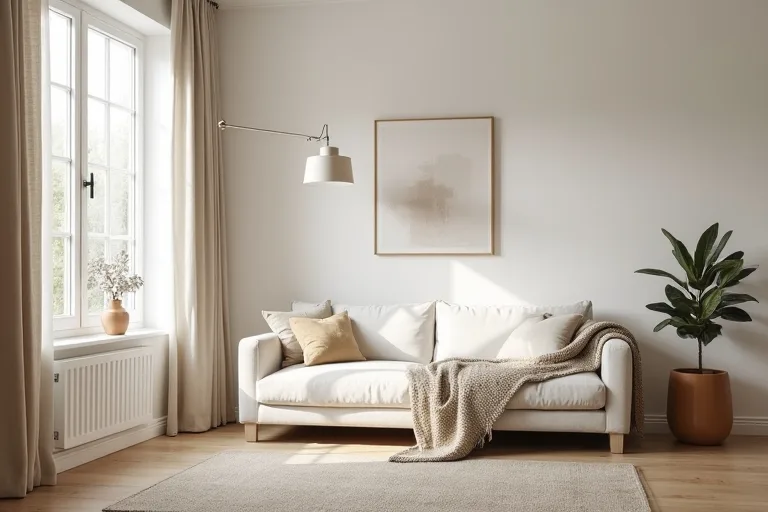
Scandinavian style is often described as simple, white, and minimal, but that version misses the point. The best rooms in this style feel calm because every choice has a job to do: brighten the space, support the layout, and make daily life easier.
If you want the look without ending up with a room that feels sparse or impractical, start with planning rather than shopping. Light, proportion, texture, and comfort all matter more than copying a few photos.
Use light neutrals, clean lines, warm textures, and simple, functional furniture. Keep the room uncluttered, but not bare, and choose finishing pieces that soften the space rather than flatten it.
What Scandinavian style actually means in a real home
Scandinavian interior design is not just a color palette. It is a way of arranging a room so that it feels bright, useful, and easy to live in. The style usually relies on natural light, simple forms, and a restrained mix of materials, but it only works when comfort is built into the plan.
That means a sofa that fits the room, storage that reduces visual clutter, and surfaces that are easy to keep tidy. In a small room, especially, the Scandinavian look works best when the furniture is scaled correctly and the layout leaves clear walking paths. If the room already feels tight, a cleaner plan will do more for the style than adding new decor.
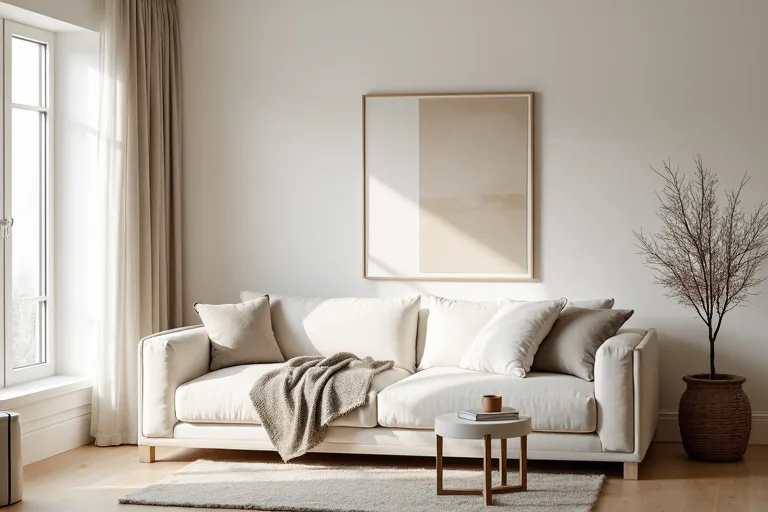
Before you buy anything, ask one question: is the room missing style, or is it missing structure? If the problem is flow, scale, or storage, fix that first. Scandinavian decor should refine the room, not cover up a planning issue.
Choose a palette, layout, and furniture that work together
The easiest Scandinavian rooms usually begin with a quiet base. White is common, but it does not have to be stark. Soft ivory, warm beige, pale gray, and light wood tones often create a gentler result than a flat bright white. The goal is contrast without heaviness.
Furniture should follow the same logic. Look for low-profile pieces, simple legs, and uncomplicated silhouettes. A bulky sectional, heavy cabinetry, or oversized accent pieces can quickly make the room feel less open. In a Scandinavian room, the furniture should appear light even when it is sturdy.
A simple order helps when you are planning from scratch:
- Measure the room and note the main walkway.
- Place the largest piece first, usually the sofa or bed.
- Leave breathing room around doors, windows, and storage.
- Add only the pieces that support daily use.
- Finish with a few soft layers instead of many small objects.
If you are working on a bedroom, the same logic applies there too. A clear path, a properly sized bed, and enough storage will make the room feel more restful than decorative extras ever could. For more room-specific ideas, see bedroom ideas.
Add warmth with texture, not clutter
One reason Scandinavian rooms sometimes feel cold is that the basics are right, but the finishing layers are missing. Texture is what makes the style feel human. Linen, wool, wood, matte ceramics, and woven materials all help soften the clean lines without making the room busy.
Start with one or two noticeable soft elements rather than many small ones. Linen curtains can change the whole mood of a room by diffusing daylight and adding movement. A neutral abstract framed print can bring structure to a blank wall without making the space feel crowded. These finishing choices are especially useful when the room needs a calm visual anchor.
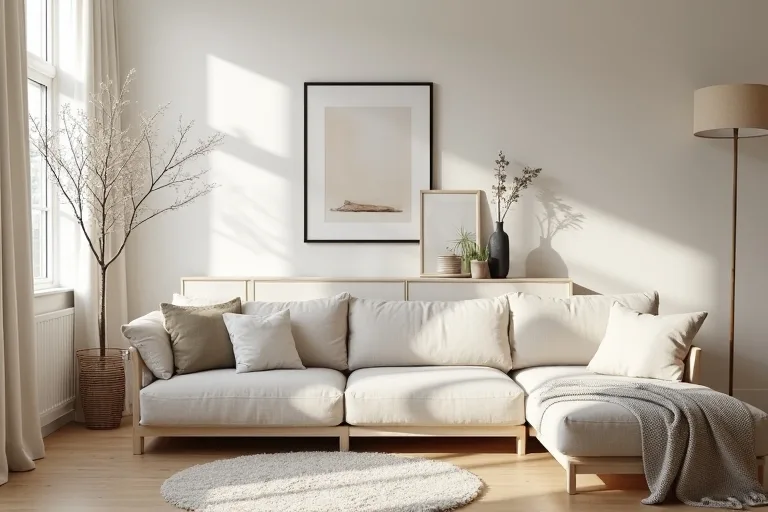
Good Scandinavian styling usually feels edited rather than empty. One textured throw, one natural rug, a few useful accessories, and one or two wall pieces are often enough. If everything is neutral but nothing has depth, the room can feel unfinished. If everything is textured, it can feel busy. The balance matters more than the number of items.
What to avoid, plus room-by-room cues that keep the style livable
Scandinavian style becomes easier when you know what to leave out. Avoid harsh contrast for its own sake, too many small accessories, and furniture that is visually heavy. A room does not need complete emptiness to feel calm. It needs restraint and purpose.
In the living room, prioritize comfort at the seating level. A sofa that fits the wall space, a rug sized to hold the main furniture group, and lighting that works in the evening will do more than decorative objects. In the bedroom, keep the palette softer and the surfaces simpler. Neutral bedding, a practical bedside setup, and curtains that control light without feeling dense usually suit the style well.
When in doubt, use the room’s function as the filter. If an item does not improve comfort, movement, storage, or light, it probably does not belong. That is the difference between a Scandinavian room that looks styled and one that genuinely works.
Best next step
If you are trying to get the Scandinavian look in a real room, start with the layout and sizing first. Once the plan is clear, use a few finishing pieces to complete the mood instead of buying decor at random.
- Choosing too much white and not enough warmth.
- Buying furniture before checking scale and traffic flow.
- Using too many small decor items instead of a few strong pieces.
- Forgetting texture, so the room feels flat or cold.
- Trying to make every surface minimal, which can make the room less usable.
The Scandinavian look works best when it supports everyday life. Keep the palette light, the lines simple, and the layout practical. Then add warmth with a few well-chosen textures and finishing pieces so the room feels calm, not bare.
Helpful next tools and planners
If you want to make the decision easier before you buy
These picks fit the planning-first approach: measure first, then finish the room with a few restrained, useful details.
FAQ
Is Scandinavian style the same as minimalism?
No. Scandinavian style uses simplicity, but it is meant to feel warmer and more livable than strict minimalism.
What colors work best in a Scandinavian room?
Soft neutrals such as ivory, beige, warm white, pale gray, and light wood tones usually work well.
How do I keep the room from feeling cold?
Use texture through linen, wool, wood, and soft layers, and avoid making every surface hard or bare.
What should I check before buying decor?
Check room size, furniture scale, and layout first so the styling choices support the space instead of competing with it.
Three sensible next steps
Some links in this article may be affiliate links. Read more in the Affiliate Disclosure.