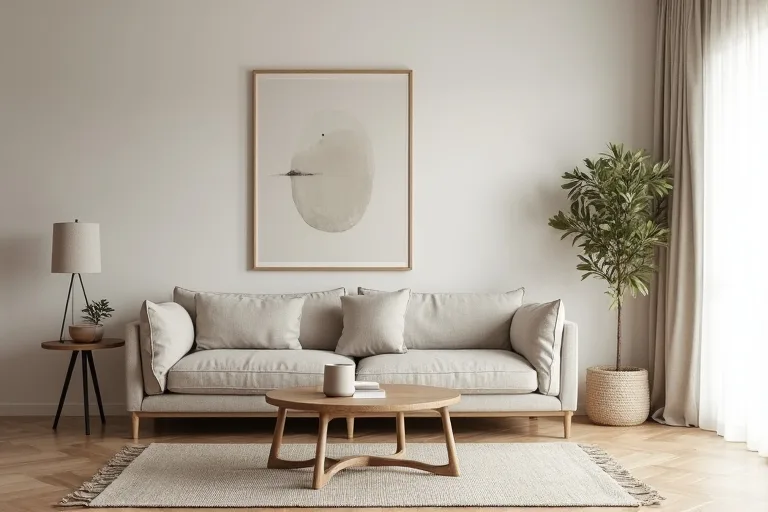
Scandinavian interiors are often described as simple, but that simplicity only works when the room plan is clear. If the layout is awkward, the styling gets expensive quickly because you end up buying around the problem instead of solving it.
The good news is that Scandi style can be done well at very different budget levels. The real question is not whether you need a premium version, but which parts of the room deserve attention first and which parts can stay modest.
Budget Scandi focuses on layout, light, and a few key finishes; premium Scandi adds better materials, custom details, and longer-lasting pieces.
What makes Scandinavian style feel right
Scandinavian design works because it keeps the room calm, light, and easy to use. The base usually includes pale walls, simple furniture shapes, natural textures, and a layout that leaves breathing room around the main pieces. When those basics are in place, even a modest room can feel intentional.
The style is less about buying a certain look and more about removing friction. That means you are usually making decisions about traffic flow, visual weight, storage, and daylight before you start thinking about decorative objects. If you skip those steps, the room may still look fine in a photo, but it will not feel as easy to live in.
For readers comparing style directions, it can help to look at the bigger picture first on the Design Styles hub, then narrow the choice to the room you are actually planning. If the space is a bedroom, the planning decisions become even more important because scale and softness matter more than most people expect.
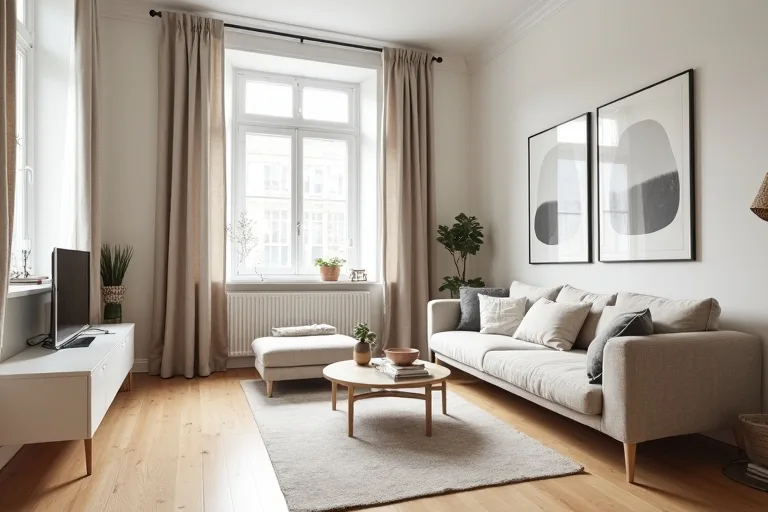
Before you spend on furniture or decor, ask whether the room has enough visual calm already. If the answer is no, the biggest gain usually comes from layout, sizing, and light control rather than from adding more items.
The budget version: where to keep it simple
A budget-friendly Scandinavian room starts with restraint. Choose a neutral wall color, keep the furniture count low, and use pieces that are clean-lined rather than highly decorative. You do not need expensive materials to create the basic feeling of the style if the room already has good proportions and decent daylight.
This is where a lot of spending can be avoided. A simple sofa, a modest wood table, a well-sized rug, and a few practical storage pieces may be enough if the room is arranged carefully. In a bedroom, the same thinking applies: keep the bed scale sensible, reduce visual clutter, and let textiles do the softening work.
Budget Scandi usually looks best when the money goes to the most visible working parts of the room and not to everything at once.
- Get the layout right so circulation feels easy.
- Choose one main neutral base for walls and large furniture.
- Use texture, not excess, to add warmth.
- Save decor for the final layer, after the room functions properly.
If you want a structured way to check whether your furniture plan fits the room before buying, the Room Layout Planner is the most useful next step.
The bigger investment: where quality shows
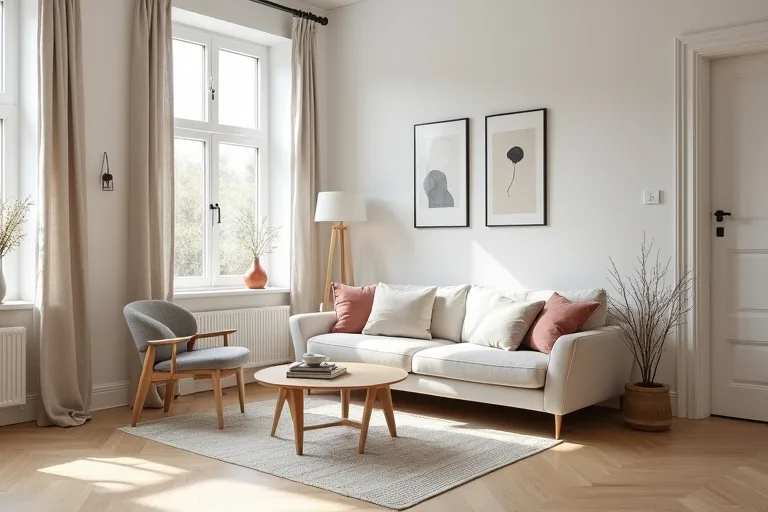
When the budget is higher, Scandinavian style becomes more about refinement than basics. Better wood finishes, custom storage, higher-quality textiles, and layered lighting can make the room feel quieter and more permanent. The difference is usually not dramatic at first glance, but it becomes obvious in how the room holds up over time.
This is the level where details start to matter. A fitted storage run can remove visual noise. Better curtain fabric can soften the room without looking heavy. A well-proportioned lamp plan can make evening light feel warm instead of flat. These changes do not just decorate the room; they improve how the space works day to day.
If you are deciding where a bigger spend belongs, focus on the pieces that are hardest to replace later. Built-ins, flooring, and staple upholstered furniture usually deserve more care than small accessories.
A larger investment makes sense when the room needs durability, custom sizing, or a more tailored finish. If the space is already functioning well, spend carefully and keep the budget for the pieces that will be seen and used most.
Where the style-finishing details matter most
Many Scandinavian rooms are improved by a few finishing moves rather than a complete overhaul. Neutral linen curtain panels can soften daylight and make the room feel more finished without adding visual clutter. A framed neutral abstract wall art set can give a blank wall a little structure without breaking the calm palette.
These are useful because they sit at the point where style and function meet. Curtains affect light, privacy, and softness. Wall art affects balance and the way the room reads from across the space. If the furniture is already sensible, these details can lift the room without making it feel overdesigned.
For a practical, low-pressure styling update, look for items that support the room instead of competing with it. That is often the easiest way to make budget Scandinavian design feel complete.
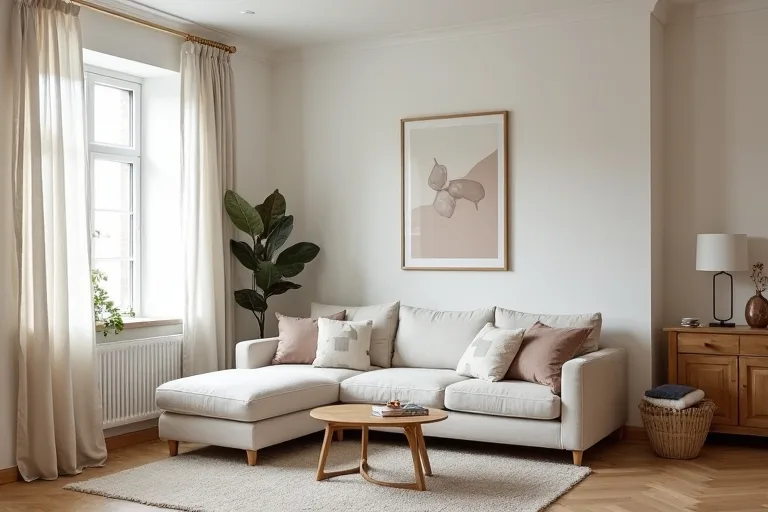
If you want to browse useful finishing pieces, these can be a sensible starting point: linen curtain panels neutral and neutral abstract wall art framed set. If you are planning a full room refresh, a structured digital system can help you keep the decisions in order, such as the Home Planning System Bundle, Room Makeover, Small Space, Budget Tool.
Best next step
Before you start shopping, confirm the room size, layout, and spending level that actually fit the space. That will tell you whether a budget approach is enough or whether one or two bigger upgrades will do more good than a long list of small purchases.
- Buying decor before the layout is settled.
- Mixing too many warm and cool neutrals without a clear base.
- Choosing furniture that is too large for the room, then trying to correct it with styling.
- Spending heavily on small accents while the lighting or storage still feels weak.
- Adding texture without keeping the overall palette calm.
Scandinavian style does not need a large budget to work, but it does need a clear plan. If your room already has good flow, you can keep the spend modest and focus on neutral foundations, sensible sizing, and a few calm finishing pieces. If the room needs built-in function, better materials, or a more tailored finish, a larger investment will be easier to justify. Either way, start with the plan before you buy.
Helpful next tools and planners
If you want to make the decision easier before you buy
These links are useful if you are still deciding how much to spend, what to prioritize, or how to size the room correctly before shopping.
FAQ
Is Scandinavian style cheaper to create than other design styles?
It can be, because the look depends more on restraint, layout, and a limited palette than on decorative excess. The cost rises when the room needs better materials or custom solutions.
What should I buy first for a budget Scandinavian room?
Start with the biggest functional pieces: sofa or bed, lighting, and storage. After that, use curtains, rugs, and wall art to soften and finish the room.
Which upgrades are worth paying more for?
Good wood finishes, upholstered staples, fitted storage, and layered lighting are often worth the extra spend because they affect both function and the overall feel of the space.
How do I know if I need a premium approach?
If the room has awkward proportions, poor storage, or visible wear that will not be fixed by decor alone, a higher-investment approach is usually more sensible.
Three sensible next steps
Some links in this article may be affiliate links. Read more in the Affiliate Disclosure.