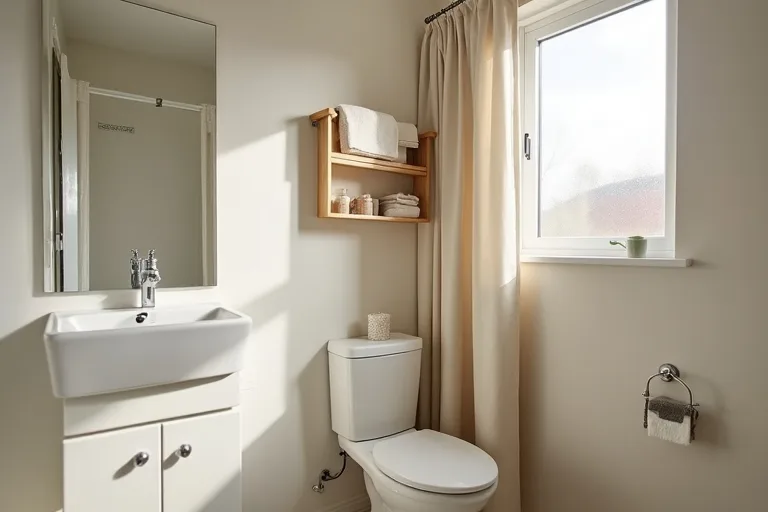
Small bathrooms usually feel tighter for a few practical reasons: the layout interrupts movement, storage takes up too much wall space, and the finishes add visual noise where the eye has nowhere to rest.
The good news is that you do not need a full remodel to improve the room. A better plan for storage, a simpler shower setup, and a few calmer material choices can make the space feel easier to use almost right away.
The biggest mistakes are poor layout, too much visual clutter, oversized fixtures, and dark or busy finishes. Fix the traffic path first, then reduce what sits on counters and walls, and only after that decide whether lighting, curtains, mirrors, or storage need to change.
Why layout changes how spacious a bathroom feels
A small bathroom can look cramped even when it is clean and organized if the main route into the room is awkward. If the door swings into the vanity, the toilet feels too close to the shower, or you have to step around baskets and bins just to get to the sink, the room feels smaller than it is.
The first question is not what to buy. It is how the room works. Stand at the door and trace the path to the sink, toilet, and shower. If you need to turn sideways, squeeze past storage, or move items every day to open a drawer, the layout is doing more harm than the decor.
For many bathrooms, the best improvement is simply making the floor area feel open again. That can mean removing one unnecessary piece, replacing a bulky item with a slimmer version, or moving storage higher so the lower half of the room reads as clear space.
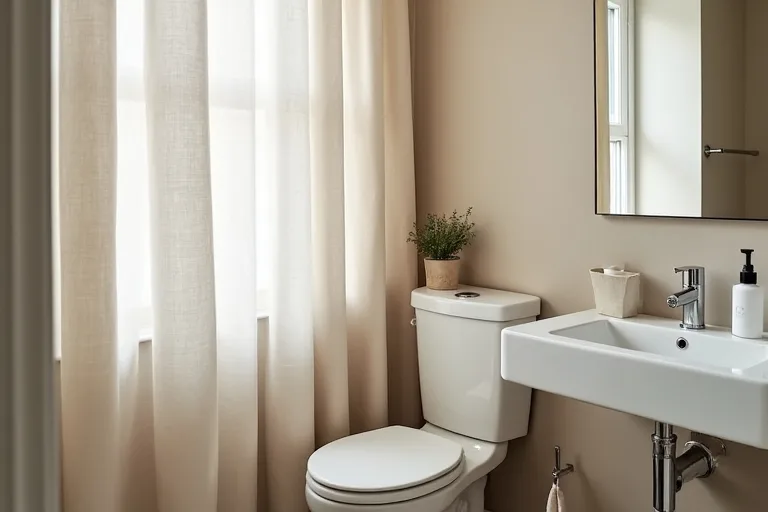
Before changing finishes, ask whether the room has a traffic problem or a storage problem. If movement is awkward, fix layout first. If movement is fine but surfaces are crowded, storage is the issue. That one distinction saves a lot of unnecessary shopping.
Storage mistakes that crowd the walls and counters
Storage is essential in a small bathroom, but the wrong storage can make the room feel busier instead of more functional. Big freestanding cabinets, too many small containers, and half-used baskets on every surface add weight without really improving the plan.
A better approach is to use storage that follows the room, not storage that fights it. Tall, narrow pieces usually work better than wide, deep ones. Wall-mounted options often feel lighter than floor units. And open shelves only help when they are edited carefully, not packed full.
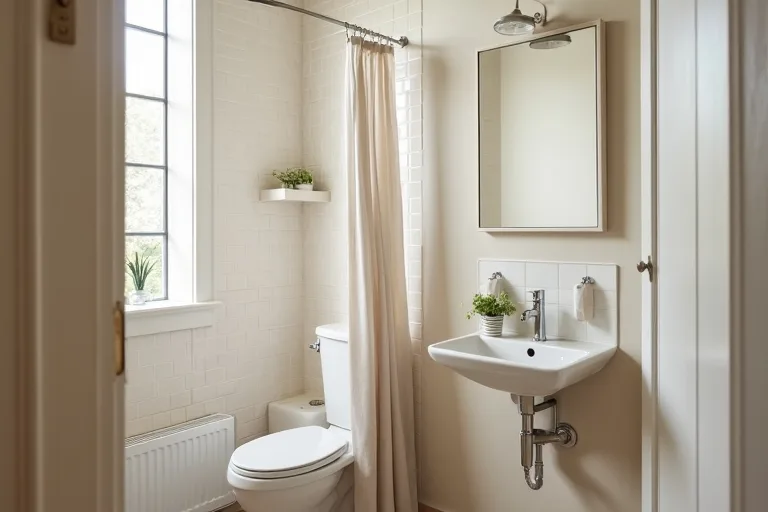
If you are deciding what to keep, think in layers:
- Keep everyday items closest to where you use them.
- Move backup stock to higher or less visible storage.
- Remove duplicate containers, half-empty products, and items you rarely reach for.
- Use one simple basket or tray to contain loose items instead of spreading them across the room.
That kind of sorting does more for a small bathroom than buying three matching sets of containers. It also makes it easier to notice whether you actually need more storage or just better storage.
If your bathroom shares space with towels, toiletries, or cleaning supplies, the broader storage question may belong in a larger whole-home plan too. A calm, compact layout is often easier to solve once you see how the room fits into the rest of the house, which is why the small spaces storage guide can be a helpful next read.
Shower, mirror, and finish choices that shrink the space
Some of the most common small bathroom mistakes are visual ones. Heavy shower curtains, overdecorated mirrors, and busy finishes can all make the room feel more crowded than it needs to be.
A shower curtain does not have to disappear, but it should feel light enough for the room. A neutral fabric shower curtain set is often a good choice because it adds softness without introducing more pattern or contrast than the room can handle. In a small bathroom, that calmer surface usually helps the walls feel less chopped up.
Mirrors follow the same logic. A mirror that is too small, too ornate, or placed awkwardly can make the vanity area feel compressed. A simple shape that relates to the width of the vanity usually looks cleaner and more intentional.
Finish choices matter too. When every surface competes for attention, the room feels busier. When finishes share a restrained palette, the bathroom tends to feel more settled. That does not mean everything must be white. It means the room works best when the materials do not all demand equal attention.
Light, color, and softer swaps that make the room feel calmer
Lighting is one of the easiest ways to improve a small bathroom without changing the structure. Harsh light can make every edge feel sharper, while dim light can make the room feel enclosed. The goal is even, useful light that supports the room instead of flattening it.
Color works the same way. Dark, high-contrast combinations can look strong in photos, but in a tight space they may emphasize boundaries rather than soften them. Calmer tones with a little texture often feel more forgiving, especially when the room is already short on natural light.
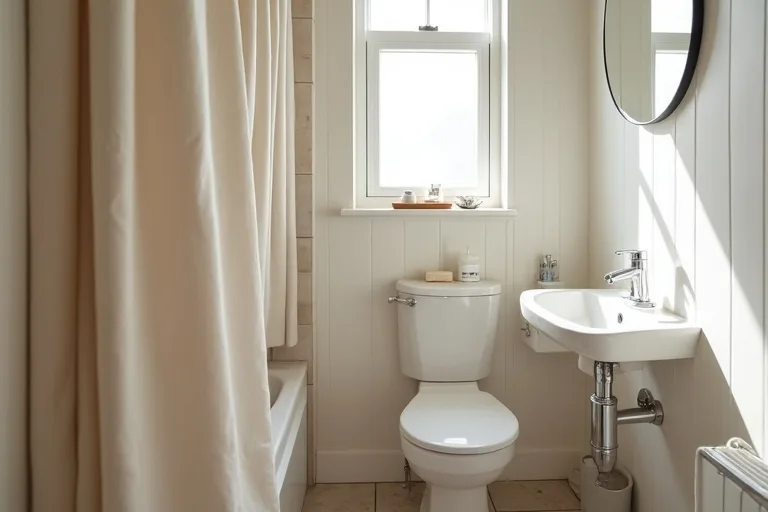
One of the best ways to keep the space from feeling overdesigned is to choose a few softer, quieter pieces rather than many decorative ones. A simple fabric curtain, a compact bath mat, and a lighter storage piece can do more for the room than layered accessories.
If you want a more concrete way to decide what should change first, the bathroom remodel cost estimator can help you separate the easy refreshes from the upgrades that need a larger budget. For readers planning a more complete update, the tools hub is a sensible place to compare next steps before buying anything.
Best next step
Before you shop for new storage or decor, check the room plan first. A small bathroom usually improves fastest when you decide what is crowded, what is missing, and what can be simplified. If you want a calmer way to map that out, use a planning tool before you buy.
- Buying storage before checking whether the layout is the real problem.
- Filling walls and counters with too many small containers and accessories.
- Using a shower curtain, mirror, or shelf that feels visually heavy for the room.
- Choosing dark or busy finishes that make the room feel more closed in.
- Skipping the budget decision and starting with products instead of priorities.
Small bathrooms feel larger when the room has a clear path, edited storage, and calm visual choices. Start with layout and clutter, then look at the shower, mirror, lighting, and finishes. If you need to make a soft refresh rather than a full remodel, a neutral fabric shower curtain and a simple over-toilet shelf can be practical first moves. If the room still feels tight, use a planner or budget tool before making bigger purchases.
Helpful next tools and planners
If you want to make the decision easier before you buy
These are useful when you are trying to clarify layout, storage, and budget before committing to a bathroom refresh.
FAQ
What makes a small bathroom feel even smaller?
Usually it is a mix of blocked movement, too much visible storage, and finishes that add more contrast or clutter than the room can comfortably hold.
Should I buy storage first or fix the layout first?
Check the layout first. If the room is hard to move through, storage alone will not solve the problem. If the layout is fine, then storage becomes the main issue.
Are shower curtains better than glass in a small bathroom?
Either can work. A simple curtain often feels softer and less visually heavy, while glass can feel more open if the rest of the room is already well organized.
What is the easiest way to make a small bathroom feel calmer?
Reduce what sits on surfaces, simplify the shower area, and keep the color and texture palette restrained so the room does not feel busy.
Three sensible next steps
Some links in this article may be affiliate links. Read more in the Affiliate Disclosure.