
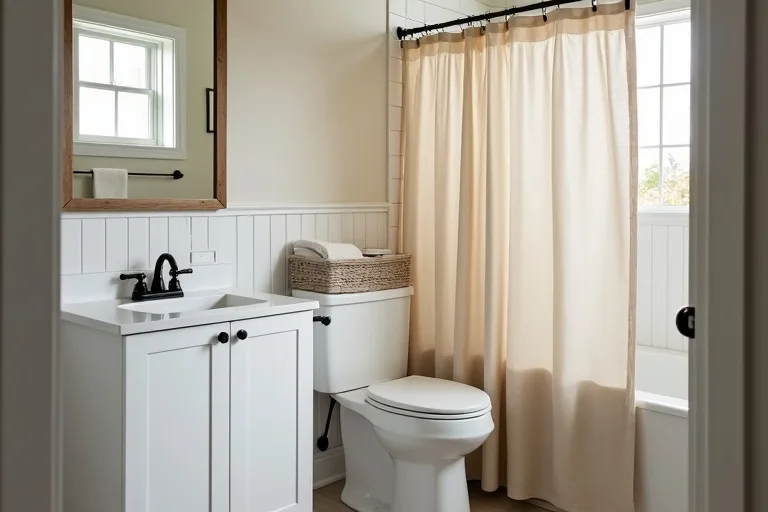
Small bathroom purchases are easy to get wrong because the room asks for more than style. A shelf, cabinet, curtain, or vanity can look right online and still crowd the doorway, block a drawer, or make the room feel busier than it needs to be.
This checklist keeps the decision simple. Check the layout first, then storage needs, then the finish and budget. That order usually saves money and makes the room feel calmer from the start.
Check measurements, clearances, storage needs, and traffic flow before you buy anything.
Why a checklist matters before you buy
In a small bathroom, one wrong purchase can change how the whole room works. Furniture that is too deep can narrow the walkway, and storage that looks efficient in photos may not leave enough room for doors, towels, or daily movement.
A checklist helps you slow the process down just enough to make better choices. It is not about adding rules. It is about making sure the things you buy solve the real problem: where people stand, where items go, and how the room stays easy to use.
If you are comparing a few possible layouts, it can help to start with a room planner before you shop. That makes it easier to see whether a slim cabinet, wall shelf, or over-toilet unit actually belongs in the space.
The real decision is not whether a piece looks good on its own. It is whether it fits the room, supports the daily routine, and leaves enough clear space to move without feeling squeezed.
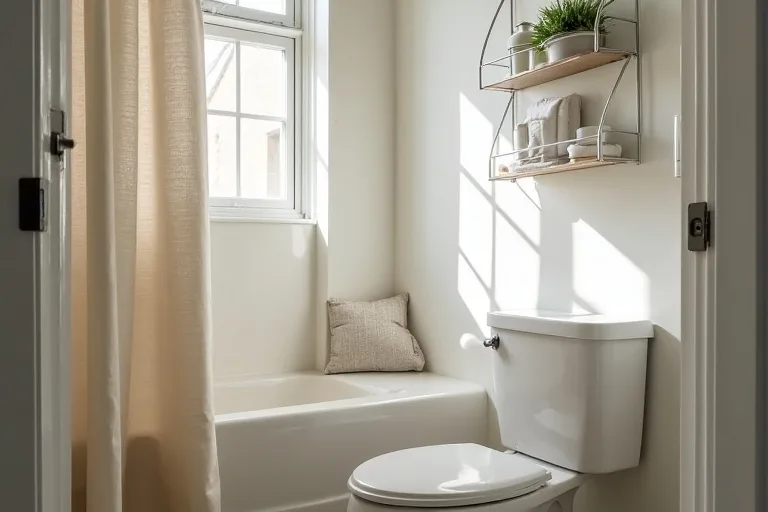
Measure the room, door swing, and clearances
Start with the basics: wall lengths, fixture positions, and the way the door opens. In a small bathroom, those details matter as much as the item you plan to buy.
Look at the whole path through the room. Ask where your feet naturally land when you enter, where the door moves, and which areas need to stay open for the sink, shower, and toilet.
- Measure the wall where the furniture or storage will go.
- Check the door swing and any drawer or cabinet opening nearby.
- Mark the space needed for daily movement.
- Confirm that towels, bins, or baskets will not block the route.
If you want a clearer way to test the layout before buying, the Room Layout Planner is a useful next step. It helps you see whether the piece belongs in the room or needs to be smaller, slimmer, or wall-mounted instead.
Decide what storage you actually need
Small bathrooms feel cluttered faster when storage is chosen before the contents are understood. A better approach is to list what the room really has to hold and then match the storage type to that list.
Think in categories: everyday items, backup supplies, towels, cleaning products, and anything that should stay hidden. Once you know the load, you can decide whether you need closed storage, open storage, or a mix of both.
For many small bathrooms, one of these options will make the most sense:
- Wall-mounted storage when floor space is tight
- An over-toilet unit when the wall above the toilet is unused
- A slim cabinet when you need enclosed storage but do not have much depth
- Simple open shelving when you want easier access and a lighter visual feel
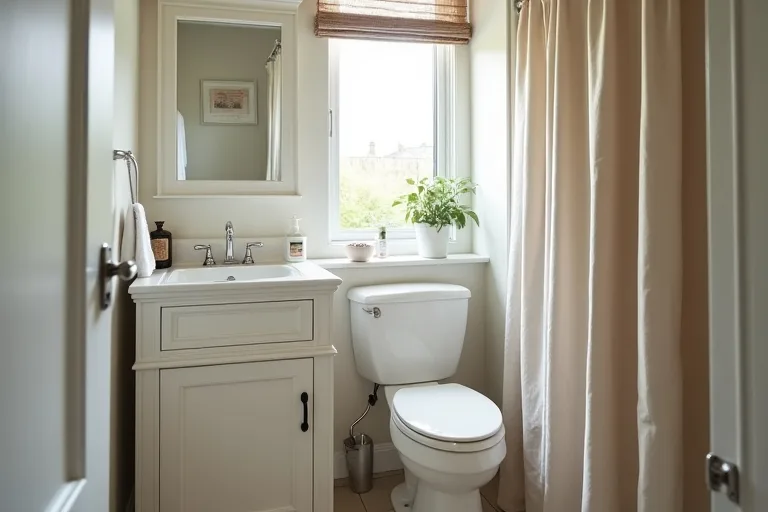
For more ideas on using limited room well, see Small Spaces Storage. If your room mostly needs one practical update, an over toilet storage shelf bathroom can be a sensible option because it uses vertical space without taking over the floor.
Choose calm materials and confirm budget before you order
Once the layout and storage type are clear, the finishing choices get easier. In a small bathroom, softer materials and lighter visual weight usually help the room feel more settled. That might mean a fabric shower curtain, a simple mirror, or storage that does its job without looking bulky.
If you are refreshing the room rather than remodeling it, a few restrained changes can make a noticeable difference. A neutral fabric shower curtain set can soften the room, while a calm palette keeps the space from feeling overworked. If you are testing a bigger update, use a planner or cost tool before you place the order so the project stays within budget.
The Bathroom Remodel Cost Estimator is the most useful final check if the purchase is part of a wider bathroom update. It helps you confirm whether a furniture buy is really the right move now, or whether it is better to wait and combine it with a fuller plan.
Best next step
If you are still deciding what will fit, use a planning tool before you buy. That gives you a clearer read on layout, storage type, and budget, so you can shop with less guesswork.
- Buying storage before measuring door swing and walkway space
- Choosing a cabinet that is too deep for the room
- Adding open storage without a plan for what it will hold
- Ignoring how much visual weight the finish adds
- Skipping the budget check until after the purchase is already underway
Small bathroom purchases work best when you start with measurements, then decide what storage the room really needs, and only then choose the style. A calm, light, practical finish can make the room feel easier to use, but the fit always matters first. If you want to plan the room with less stress, use a layout tool or cost estimator before buying.
Helpful next tools and planners
If you want to make the decision easier before you buy
These options are useful when you are still working out what belongs in the room. One is for planning the layout, one helps with budget clarity, and one can support a simple storage-led refresh.
FAQ
What should I measure before buying small bathroom furniture?
Measure the wall space, door swing, fixture positions, and the clear walking path. Those measurements matter more than the product dimensions alone.
Is over-toilet storage a good choice for a small bathroom?
It can be, as long as it does not crowd the toilet area or make the room feel top-heavy. It works best when the wall above the toilet is truly unused.
How do I know if I need closed storage or open shelves?
Choose closed storage if you want to hide clutter and reduce visual noise. Choose open shelves if you need quick access and already have a tidy routine for the items you store there.
What is the safest first step if I am still unsure?
Use a room planner or cost estimator before you shop. That usually makes the choice clearer and prevents buying something that looks right but does not fit the room or the budget.
Three sensible next steps
Some links in this article may be affiliate links. Read more in the Affiliate Disclosure.