
Small bathroom storage gets easier when you treat it like a planning problem first and a shopping problem second. The wrong cabinet or basket can block a door, crowd the floor, or make everyday cleaning harder than it needs to be.
This checklist helps you slow down and check the basics before you buy furniture or storage. If you want a calmer way to decide, start with the space, then work outward from what the room has to hold.
Measure first, then choose storage that fits clearances, traffic flow, and daily bathroom use. In a small bathroom, the best storage is usually the one that clears doors, stays out of the walking path, and matches what you need to reach every day.
Start with the space you actually have
Before you look at shelves, cabinets, or baskets, measure the room in a way that reflects real use. Floor area matters, but so do wall space, door swing, toilet placement, and how far drawers or cabinet doors need to open. A storage piece can look compact online and still feel oversized once it is in the room.
Check the places where furniture is most likely to create friction. Look at the gap beside the vanity, the area above the toilet, the path from the door to the sink, and any place where a bin or hamper would need to sit. If the room already feels tight, leave a little extra room for cleaning and movement rather than trying to fill every corner.
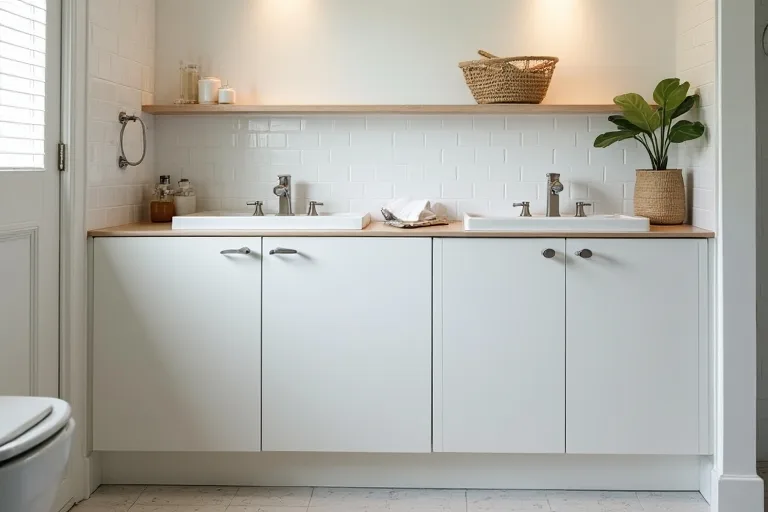
The real decision is not just what fits. It is what fits without making the room harder to use, harder to clean, or harder to open when the bathroom is busy.
Sort what needs to be stored every day
Storage works better when it matches your habits. A small bathroom rarely needs every item on display or within arm’s reach. Start by separating daily essentials from occasional extras.
Use this simple order:
- Keep daily items close to the sink or shower where you naturally reach for them.
- Move backup supplies, spare toiletries, and duplicate products to closed storage.
- Reserve open shelves for the things you can keep neat without constant tidying.
- Decide where towels, toilet paper, and cleaning products will live before choosing furniture.
This step often changes the type of storage you need. If most of your bathroom items are small and used quickly, drawers or bins may make more sense than a large open shelf. If the room also has to store towels and paper goods, a taller piece or a cube organizer can give you more useful volume without taking over the floor.
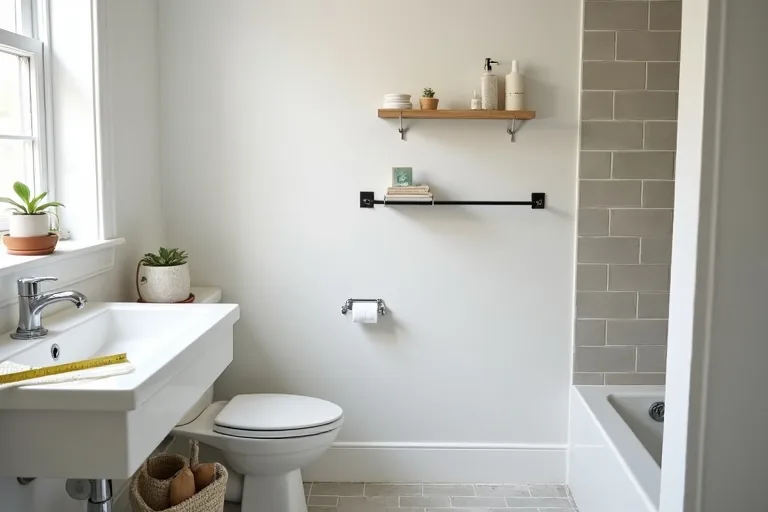
Choose storage by access, not just appearance
The best storage choice depends on how you use the room. Open storage feels lighter, but it also asks you to keep things tidy. Closed storage hides clutter, but it needs door clearance and enough depth to be useful. Over-toilet storage can make sense in a small bathroom, but only if it does not interfere with ventilation, fixtures, or the space you need to stand comfortably.
If you are comparing options, think about these tradeoffs:
Open storage is useful for towels and frequently used items, but it can look busy quickly.
Closed storage is better for visual calm and backup supplies, but it needs room to open and close.
Cube storage works well when you need flexible, modular space for bins and folded items.
For tight rooms, a simple organizer such as an 8 cube storage organizer can be a practical option if the layout supports its footprint. Pairing it with fabric storage bins set for cube organizer can make the setup easier to live with when you want to separate towels, toiletries, and spare supplies. The key is to treat it as a storage system, not just a piece of furniture.
Test the layout before you buy
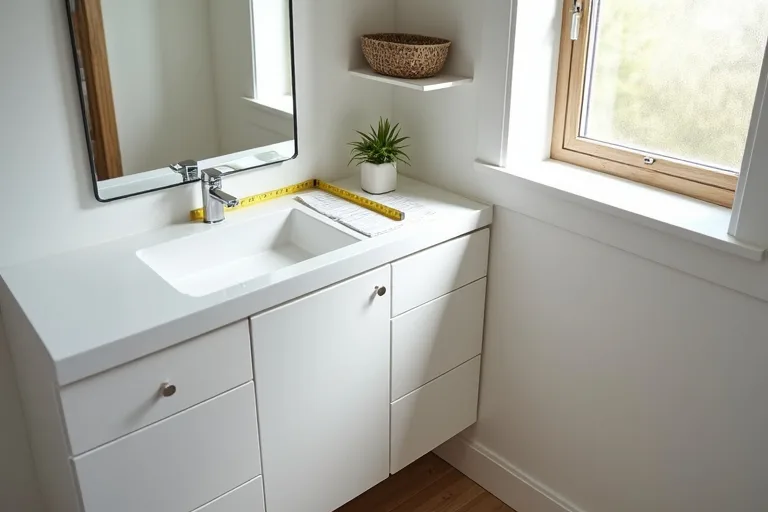
Once you know what the room needs to hold, test the layout on paper or in a spreadsheet before you spend money. This is the step that prevents most bad purchases. A planner helps you see whether a cabinet will block the door, whether a basket will crowd the floor, or whether an open shelf will feel too shallow for the items you want to store.
If you prefer a quick digital check, a simple room layout tool can make the decision clearer. It is especially useful when you are choosing between a few pieces that all seem close enough in size. Testing the footprint before purchase also makes it easier to compare storage against the room’s real clearances instead of guessing from product photos.
If you want a more structured planning step, the Small Space Furniture Planner, Room Layout Spreadsheet (Digital Download) is a practical way to map furniture and storage before you buy. For broader layout help, use the Styling Homes tools and the small spaces storage hub when you want to compare options with less guesswork.
Best next step
If you are still unsure what will fit, use a layout planner before you shop. It is the easiest way to avoid buying storage that looks right online but does not work in the room.
- Buying storage before measuring door swing or walking space.
- Choosing a piece that fits the wall but blocks access to plumbing or outlets.
- Forgetting to separate daily-use items from backup supplies.
- Filling every corner so the room becomes harder to clean.
- Picking open storage when you do not have time to keep it tidy.
Small bathroom storage should be chosen around use, access, and clearance first. Measure the room, decide what needs to be stored, test the layout, and only then buy furniture or organizers. That sequence keeps the room calmer and reduces the chance of an expensive mismatch.
Helpful next tools and planners
If you want to make the decision easier before you buy
A few practical tools can help you compare storage options without turning the bathroom into a guessing game. Start with planning, then use products only where they support the layout.
FAQ
What should I measure before buying small bathroom storage?
Measure floor space, wall space, door swing, clearance around the toilet, and the depth of any cabinet or shelf you are considering.
Is open storage a good idea in a small bathroom?
It can be, but only if you can keep it tidy. Open storage works best for items you use often and do not mind seeing.
What type of storage is usually easiest in a tight bathroom?
Closed storage or a cube-style organizer often works well because it can hide clutter and separate items into simple sections.
Why use a planner before buying furniture?
A planner helps you test fit, avoid clearance problems, and compare storage choices before you spend money.
Three sensible next steps
Some links in this article may be affiliate links. Read more in the Affiliate Disclosure.