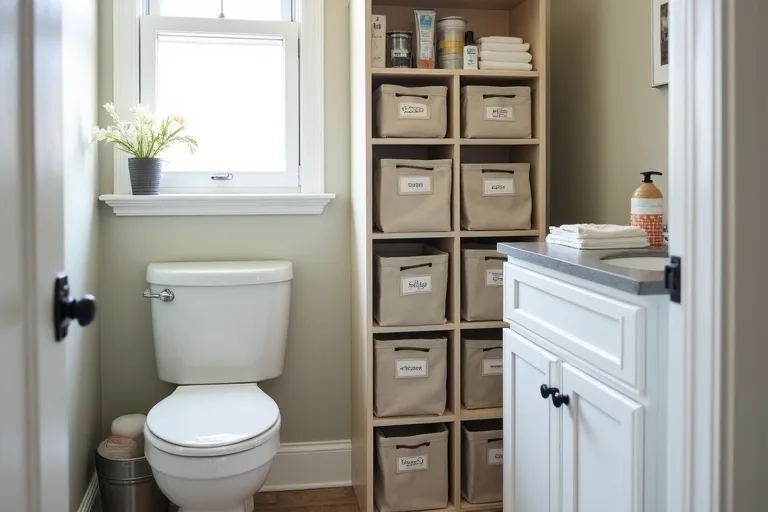
Small bathroom storage usually feels harder than it should because the room has to hold daily essentials in very little space. The problem is rarely a lack of products; it is usually a lack of clear storage zones.
Once you understand what needs to live where, it becomes much easier to choose shelves, bins, and compact organizers that actually fit the room instead of crowding it.
Use vertical space, hidden storage, and compact organizers that fit your exact bathroom layout.
Start with the real storage problem
Before buying anything, look at what the bathroom is failing to hold. In many small bathrooms, the issue is not total storage capacity, but awkward storage. Towels end up on the vanity, toiletries spread across the sink, and backup supplies take over the floor.
That usually means the room needs a simple plan: daily items within easy reach, extras stored out of the way, and cleaning supplies separated from grooming items. When those roles are clear, even a very small room can feel calmer.
If you are planning a bathroom refresh, it helps to look at the room as a layout problem first. The goal is to match storage to the space you already have, not force the room to fit a shopping list.

The real decision is not whether you need more storage. It is whether you need better placement, better sizing, or a different storage type altogether. A small vanity, a wall shelf, and a bin set can solve very different problems.
Use wall space and vertical zones first
In small bathrooms, wall space is usually the easiest place to gain storage without shrinking movement space. Tall shelving, slim wall cabinets, and over-toilet storage can hold everyday items without taking over the floor.
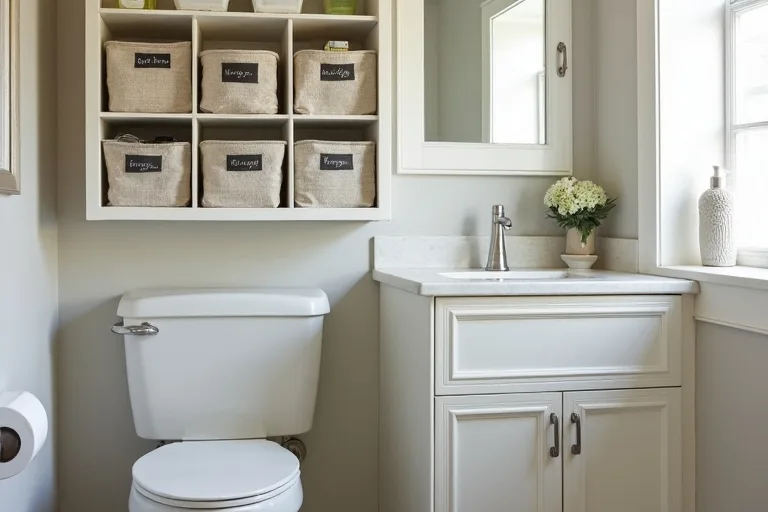
Think in zones rather than single pieces. The area above the toilet can hold backup products. The wall near the sink can hold daily toiletries. A narrow shelf near the shower can hold the items you use most often. When storage is grouped by use, the room is easier to keep tidy.
A simple order of planning helps:
- List what you need to store every day.
- Separate those items from backup supplies.
- Choose wall-mounted or tall storage before adding floor pieces.
- Check door swing, walking clearance, and visual clutter.
That last step matters. A shelf that technically fits can still make the room feel tighter if it interrupts movement or blocks light.

Make corners, doors, and under-sink space work harder
The overlooked parts of a small bathroom are often the most useful. Corners can hold narrow shelves or a slim cabinet. The back of a door can sometimes take hooks or shallow storage. Under the sink can handle baskets, stacking bins, or a small organizer if the plumbing leaves room.
These spaces work best when they are not overloaded. A corner shelf should store the items you reach for regularly, not become a catch-all. Under the sink is useful, but only if you can see and remove what is inside without unpacking the whole cabinet.
This is also where fabric bins can help. They soften the look of open storage, keep like items together, and make awkward compartments easier to use. A cube organizer can be especially helpful in a bathroom if it sits outside the wet zone and holds backup towels, paper goods, or closed containers.
If you want a simple way to keep the room from feeling busy, assign each awkward space one job only. That keeps the storage useful without turning the bathroom into a storage closet.
Choose compact organizers that fit the room
Compact organizers work best when they match the scale of the bathroom. Oversized baskets and deep containers often waste space or create clutter. Smaller, clearer systems are usually easier to maintain.
An 8 cube storage organizer can be a practical choice if you need one simple unit to sort towels, toiletries, or backup supplies in a nearby bedroom, hallway, or utility area that supports the bathroom. Add fabric storage bins set for cube organizer if you want the contents hidden and easier to group.
If you are still working out what should go where, a layout tool can save you from buying the wrong size. A room plan helps you test storage ideas against real dimensions before you spend money.
For people who prefer to map the room first, a digital planner can also help you decide whether a tall shelf, a cube unit, or a smaller drawer system is the better fit for the space.
Best next step
Before buying shelves or bins, check your bathroom layout and storage zones against real dimensions. That makes it much easier to choose pieces that fit the room instead of crowding it.
- Buying storage before measuring the space it needs to fit.
- Using too many small containers, which makes the room feel busier rather than more organized.
- Filling every wall and corner so tightly that cleaning becomes difficult.
- Choosing storage that looks neat but does not match how the bathroom is actually used.
- Mixing daily-use items with backup stock in the same hard-to-reach spot.
Small bathroom storage works best when you start with the room layout, then assign each zone one job. Use wall space first, make corners and under-sink areas pull their weight, and choose compact organizers only after you know the dimensions you are working with. That way, the room stays practical instead of crowded.
Helpful next tools and planners
If you want to make the decision easier before you buy
Use a simple planner or a compact organizer system once you have measured the room. These options are most useful when you already know what needs to fit and where it will live.
FAQ
What is the best first step for small bathroom storage?
Start by listing what must stay in the bathroom every day, then separate those items from backup supplies. That makes it easier to choose the right storage type.
Is wall storage better than floor storage in a small bathroom?
Usually yes, because wall storage saves floor space and keeps the room easier to move around in. Floor storage only makes sense if the piece fits without blocking circulation.
Can cube organizers work in bathroom planning?
They can, especially for items stored outside the wet zone or in a nearby support space. They are most useful when paired with bins so the contents stay sorted and covered.
What should I avoid buying first?
Avoid buying storage that has not been sized to the room. Oversized baskets, deep cabinets, and too many small containers can create more clutter than they solve.
Three sensible next steps
Some links in this article may be affiliate links. Read more in the Affiliate Disclosure.