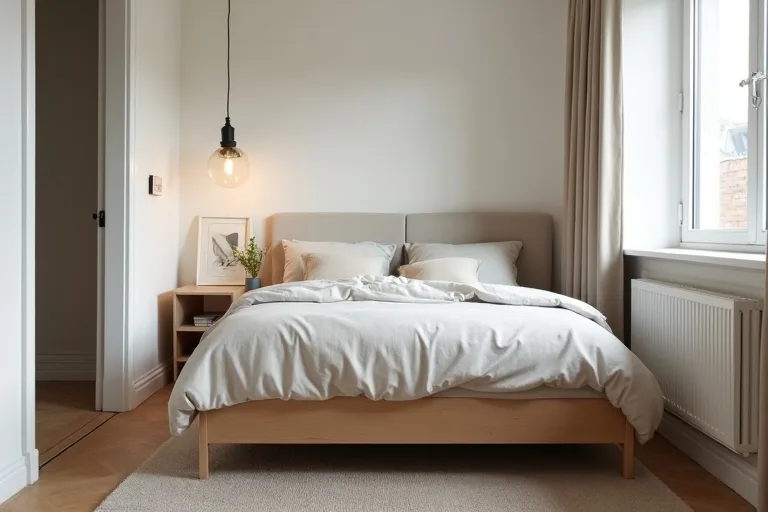
A small bedroom can feel even tighter when the layout is working against you. The problem is not always the room size itself. It is often the furniture scale, the placement choices, and the amount of visible clutter competing for space.
If you want the room to feel calmer, the first step is not buying more storage pieces. It is checking what the room actually needs to function well, then removing the decisions that make it feel crowded before you add anything new.
The biggest mistake is overcrowding the room with oversized furniture and no clear storage plan. In a small bedroom, better flow usually comes from fewer pieces, simpler bedside setups, and hidden storage that keeps surfaces clear.
Start with scale, not style
Many small bedrooms feel cramped because the furniture is simply too heavy for the room. A wide bed frame, bulky bedside tables, or a tall chest can take over the space before you have even added bedding or lighting. When that happens, the room starts to feel narrow and busy, even if it is technically large enough to fit everything.
It helps to think in terms of proportion. A smaller room usually needs furniture with slimmer visual weight, cleaner lines, and enough breathing room around each piece. That does not mean the room has to look sparse. It means each item should earn its place.
Simple changes often make the biggest difference. A bed with a lighter frame, compact nightstands, and less floor-level bulk can open up the room without changing the footprint.
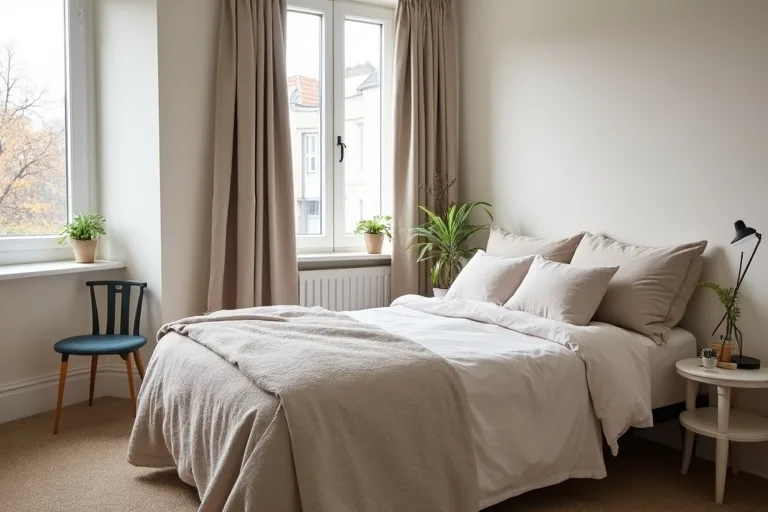
If you are planning a bedroom update, it is worth looking at the room as a whole before you shop. The Styling Homes Bedroom Ideas hub is a helpful place to step back and compare layout choices first.
Before buying a new piece, ask one question: does it make the room easier to move through, or does it just fill space? If the answer is not clearly easier, the room probably needs a smaller or simpler option.
Protect walking space and door swing
One of the quickest ways to make a small bedroom feel smaller is to block the natural path through it. If you have to turn sideways to move around the bed, open a wardrobe carefully, or edge past a chest of drawers, the room starts to feel cramped even when the furniture technically fits.
Door swing matters too. A door that knocks into a nightstand, opens into the bed, or makes a corner unusable can waste the very space you need most. In small rooms, the goal is not to place every piece where it fits physically. The goal is to keep the room easy to use.
A simple planning order can help:
- Measure the bed and the largest furniture pieces first.
- Mark the door opening and wardrobe clearance.
- Check the main walking route from the door to the bed.
- Only then decide where bedside storage should go.
If storage is part of the problem, the small spaces storage hub can help you think through hidden options before you commit to visible furniture.
Reduce visual clutter at the bedside
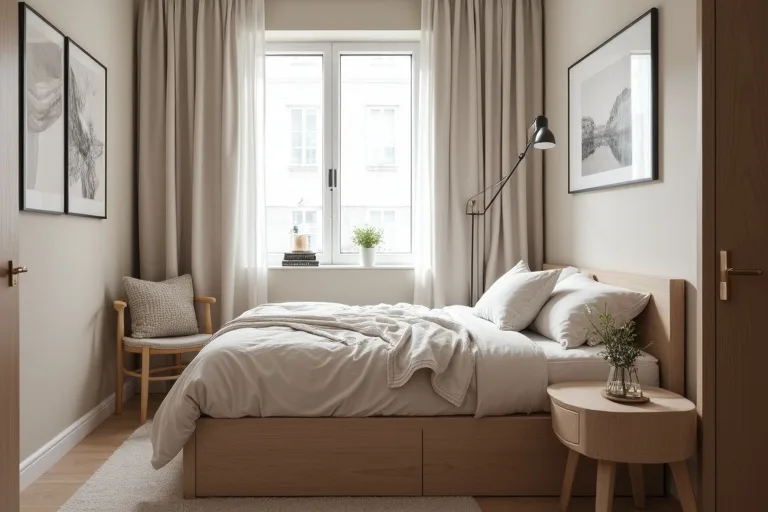
Even a tidy room can feel busy if every surface is carrying something. Mismatched lamps, extra chargers, stacks of books, and oversized decor can make the bedside area feel heavier than it needs to be. In a small bedroom, the eye reads that busyness as clutter, and clutter makes the room feel smaller.
The easiest fix is to simplify what lives on the nightstand. Keep only what you use every day, and move the rest into a drawer, basket, or hidden storage spot. A pair of compact nightstands often works better than one large piece because they keep the layout balanced without dominating the room.
If you are choosing bedside furniture, a simple nightstands set of 2 bedroom can be a practical option when the room needs matching pieces with a lighter look. The point is not to add more furniture. It is to keep the bedside area visually quiet.
Clear surfaces also make the bed feel like the main feature again, which helps the whole room feel less crowded.
Use hidden storage and a simple plan before shopping
When a bedroom feels cramped, more visible furniture is usually not the answer. Hidden storage often works better because it solves the real problem without adding more visual weight. Under-bed containers, storage drawers, and closed baskets can keep seasonal items and spare bedding out of sight while preserving an open feel.
That is why a storage-first plan matters. If you know what needs to be stored, what should stay visible, and where the walking space must remain clear, it becomes much easier to buy only what the room can comfortably hold. A small bedroom usually improves more from better planning than from more decor.
If you want something simple under the bed, under bed storage containers with wheels can help reduce floor clutter without making the room look overfilled. For a more structured approach to layout and budget decisions, the Room Makeover Planner, Home Layout Budget Spreadsheet is useful if you want to map what fits before you spend.
Best next step
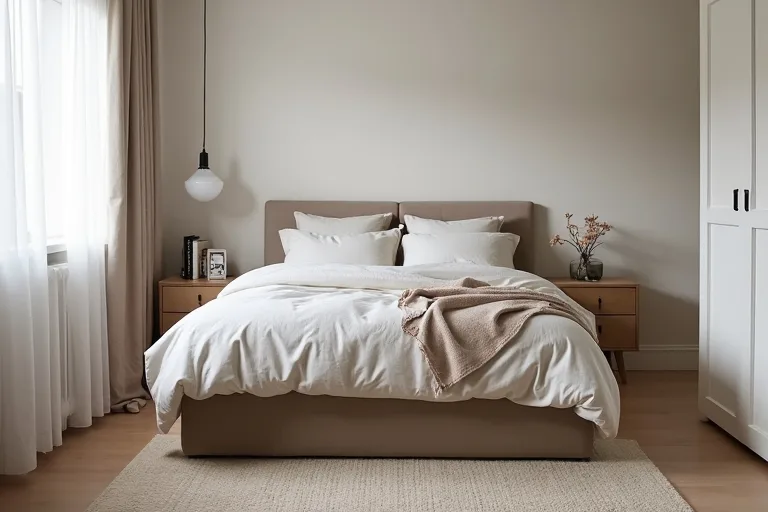
Before you buy anything else, check the room layout and storage plan together. That makes it easier to see what the bedroom can actually hold, where the walking space needs to stay clear, and which pieces should be hidden instead of displayed.
- Choosing oversized furniture because it looks good in the store.
- Placing pieces so tightly that the room loses an easy walking path.
- Ignoring door swing, wardrobe clearance, and drawer pull-out space.
- Keeping too many items on the nightstand and dresser.
- Using open storage for everything, which adds visual clutter.
- Buying decor before deciding what storage the room actually needs.
Small bedrooms usually feel smaller because of avoidable layout mistakes, not because the room has failed you. If you choose furniture by scale, keep walking space clear, and rely on hidden storage instead of visible clutter, the room becomes easier to live in right away. The smartest next step is to measure the space, map the furniture, and decide what should stay visible before you shop.
Helpful next tools and planners
If you want to make the decision easier before you buy
These are the most relevant next steps if you are trying to keep a small bedroom calm, functional, and free of unnecessary clutter.
FAQ
What makes a small bedroom feel the smallest?
Usually oversized furniture, blocked walking space, and too much visible clutter. When the room has no clear path or storage plan, it starts to feel tighter than it really is.
Should I use fewer pieces in a small bedroom?
Often yes. Fewer, better-sized pieces usually work better than trying to fit in every item you want. The room should still function comfortably, but it should not feel packed.
Are matching nightstands a good idea?
They can be, especially if they are compact and visually light. Matching pieces often help a small room feel calmer because they reduce visual noise.
What is the best first step before buying bedroom furniture?
Measure the room and map the layout first. Once you know the bed position, door swing, and storage needs, it becomes much easier to choose furniture that fits the space properly.
Three sensible next steps
Some links in this article may be affiliate links. Read more in the Affiliate Disclosure.