
A small bedroom usually feels cramped for one of two reasons: the layout blocks movement, or too many pieces compete for attention. When those problems are fixed first, the room often feels calmer without needing a full makeover.
The goal is not to make a compact bedroom look empty. It is to make it easier to move through, easier to store things in, and easier to keep tidy day to day.
Use a simpler layout, hidden storage, and fewer bulky pieces to make a small bedroom feel bigger and work better.
Start with the layout, not the decor
The fastest way to improve a small bedroom is to decide where the bed belongs before you think about bedding, art, or extra furniture. In many compact rooms, the best choice is the one that protects the walking path and keeps access to the bed simple from both sides if possible.
If the room feels awkward, the issue is often not the bed itself but the way everything else is forced around it. A bed placed too close to the door, closet, or window can make the room feel tighter than it really is. A slightly less symmetrical layout is often better than a layout that blocks the floor.
Before buying anything, sketch the room or test it in a room layout planner so you can see where the bed, nightstands, and storage actually fit. That small step can prevent expensive mistakes and helps you spot what the room genuinely needs.
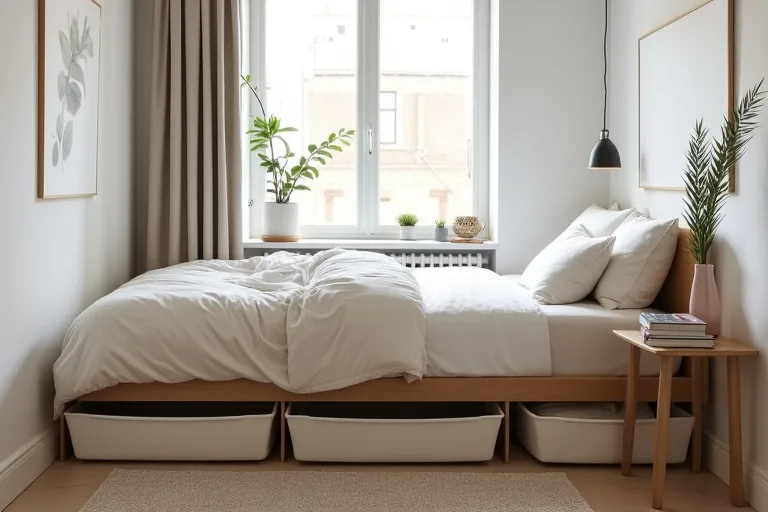
Ask one simple question: does the current layout make it easy to open doors, reach storage, and walk around the bed without squeezing past furniture? If not, layout is the first thing to change.
Use hidden storage to clear the floor
Visible clutter makes a small room feel busier than it is. That is why hidden storage usually has a bigger impact than adding more decorative pieces. The more you can move everyday items out of sight, the lighter the room feels.
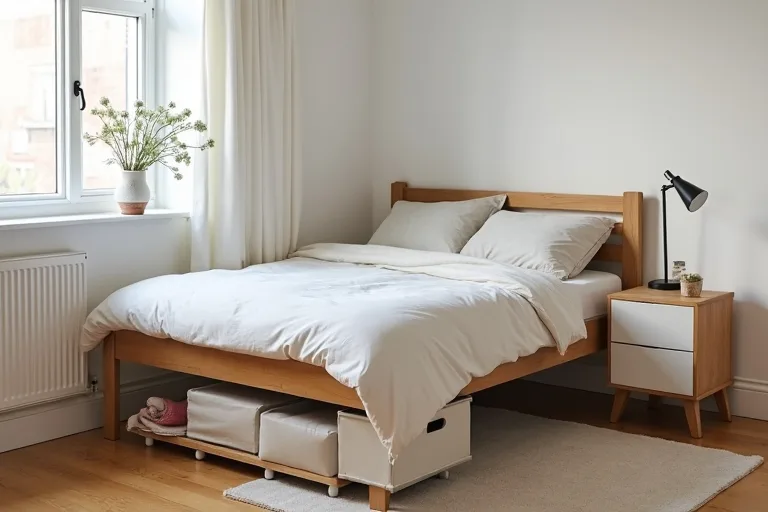
Under-bed space is especially valuable in a compact bedroom because it uses an area that is often wasted. Under bed storage containers with wheels are useful when you want seasonal clothes, spare bedding, or less-used items close by without filling the room with another cabinet.
Storage works best when it supports the way you actually live. If you reach for the same items every day, keep them in an easy place. If something is only used occasionally, hide it. The goal is not maximum storage everywhere. It is the right storage in the right spot.
For a fuller approach to this kind of planning, see small-space storage ideas before you start shopping.
Choose slimmer furniture and lighter shapes
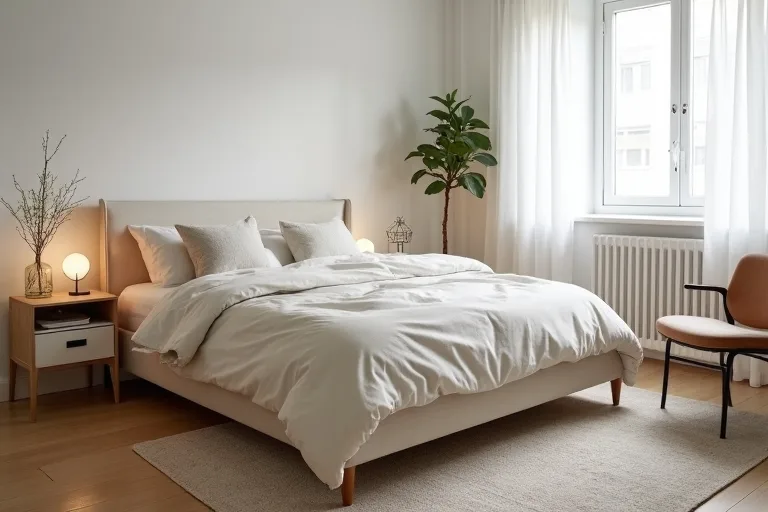
Bulky furniture is one of the main reasons small bedrooms feel closed in. A compact room usually does better with pieces that have visible legs, simple lines, and a smaller visual footprint. That does not mean everything has to be minimal. It just means each piece should earn its place.
Nightstands are a good example. A matching pair of nightstands can still feel light if they are narrow and uncomplicated. Search for a nightstands set of 2 bedroom only after you have checked the width and height against the bed and wall space. A style that looks good online can still feel too heavy in a small room.
Light finishes, soft neutral bedding, and fewer decorative items can also help the room feel less crowded. The aim is not a bare room. It is a room where the main pieces are easy to read at a glance.
- Measure the bed wall first.
- Check clearance for walking and opening drawers.
- Choose the smallest nightstands that still feel useful.
- Leave at least one surface area clear.
Keep the room easy to live with
A small bedroom works best when it stays simple after the styling is done. That means leaving room to open drawers, pull storage in and out, and move around without having to shift things first. If the room is hard to use, it will usually become cluttered again.
Keep styling restrained. One rug, a practical lamp, and a few calm textiles are often enough. If you want to add something else, make sure it supports the room plan rather than interrupting it. In a small bedroom, every extra object has a cost in space and visual noise.
If you are still working out the best setup, a planning tool can help you compare bed placement, storage, and budget before you buy. A simple room plan is often the difference between a bedroom that feels cramped and one that feels easy to maintain.
Best next step
Before you buy furniture, test the room layout and storage needs on paper or in a planner. That will tell you whether the space needs a different bed position, fewer pieces, or better hidden storage.
- Buying furniture before deciding where the bed should go.
- Using oversized nightstands that crowd the walking path.
- Leaving storage visible when it could be tucked under the bed or behind closed doors.
- Adding too many decorative pieces and losing the calm feel the room needs.
- Ignoring door swing, drawer clearance, and access to outlets.
The best small bedroom ideas are usually the simplest ones: choose a layout that protects flow, hide storage wherever you can, and keep furniture slim and purposeful. When the room plan comes first, a compact bedroom feels bigger, calmer, and much easier to use.
Helpful next tools and planners
If you want to make the decision easier before you buy
These picks are useful when you are moving from planning to action. Start with layout and storage, then use shopping links only for pieces that fit the room you have already mapped out.
FAQ
How do I make a small bedroom feel bigger without buying all new furniture?
Start by clearing the layout, reducing visual clutter, and making storage more hidden. Those changes usually have more impact than replacing every piece in the room.
Where should the bed go in a small bedroom?
Place it where it preserves the easiest walking path and does not block doors, drawers, or daily access. The best position is usually the one that makes the room simplest to use.
What kind of storage works best in a compact bedroom?
Hidden storage works best, especially under-bed storage, closed nightstands, and any solution that keeps the floor clear.
Should I choose fewer pieces or smaller pieces?
Usually both matter. Fewer pieces reduce crowding, and smaller pieces help the room keep its scale. Start with the minimum set that still works for daily life.
Three sensible next steps
Some links in this article may be affiliate links. Read more in the Affiliate Disclosure.