
Small bedroom storage gets easier when you stop thinking about what to buy first and start with how the room needs to work. In a tight bedroom, every storage decision affects movement, access, and how calm the room feels day to day.
The best setup is usually simple: measure the room, protect walking space, then choose storage that fits the way you actually live. That approach helps you avoid buying furniture that looks useful online but becomes awkward once it is in the room.
Start with layout, then choose storage that fits the room without blocking movement. In most small bedrooms, that means using under-bed space, one well-sized wardrobe or dresser, and a vertical option such as a cube organizer or shelf for overflow items.
Start with the room layout, not the storage product
Before you compare wardrobes, bins, or drawer units, map the room itself. A small bedroom usually has only a few realistic storage zones, and the wrong furniture can make the room feel crowded even when it technically holds more.
Measure the bed footprint, the door swing, the window area, and the clear path you need to move around the room. If there is a wall that can handle taller storage, use it. If one side of the bed has more clearance than the other, reserve that side for the item you need to reach most often.
In practice, the best storage plan is often a mix of three zones: what lives under the bed, what needs to stay at arm’s reach, and what can move to a taller or less central spot. That way, the room stays usable instead of becoming a storage room with a bed in it.
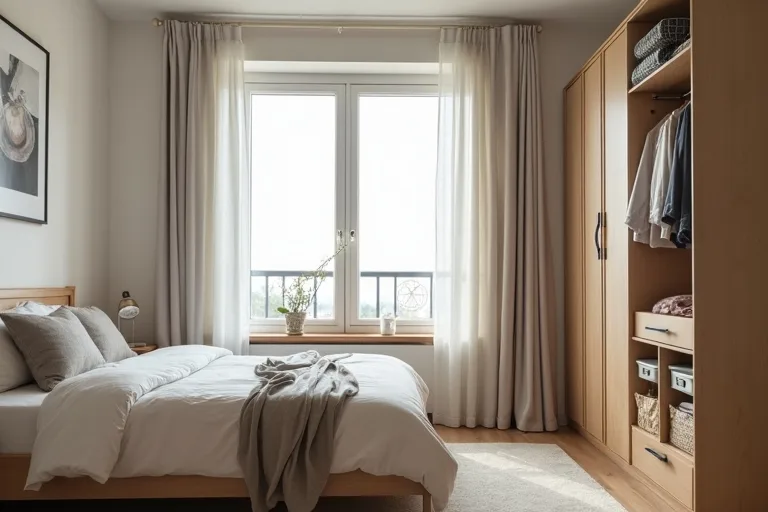
If a storage piece blocks the path to the bed, window, or closet, it is probably too large for the room. Small-bedroom storage should make the room easier to use, not just increase capacity on paper.
Choose storage zones for clothes, linens, and overflow items
Once the room layout is clear, assign each category of belongings a sensible home. Small bedrooms work best when the items you reach every day are easiest to access, and the things you use less often move to the edges of the room.
A simple order of priority helps:
- Daily clothes: keep these in drawers, a wardrobe, or open cubes that are easy to reach.
- Linens and spare bedding: store these in a lower shelf, under-bed box, or labelled bin.
- Seasonal items and overflow: move these to higher shelves or less convenient storage spots.
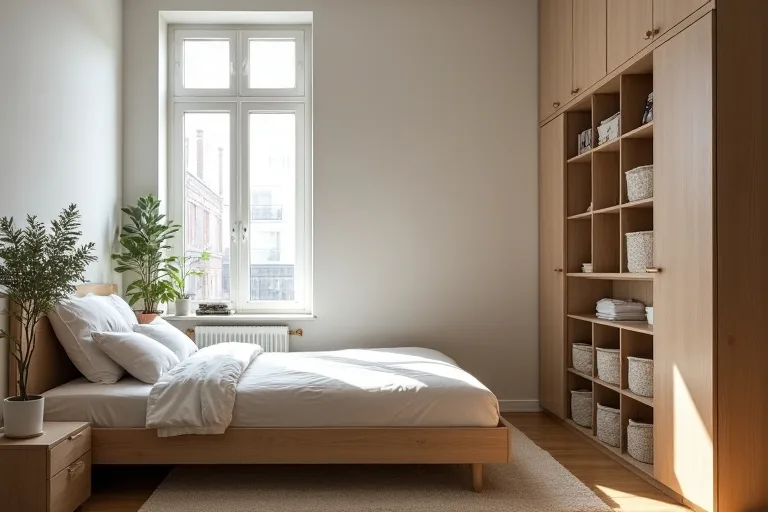
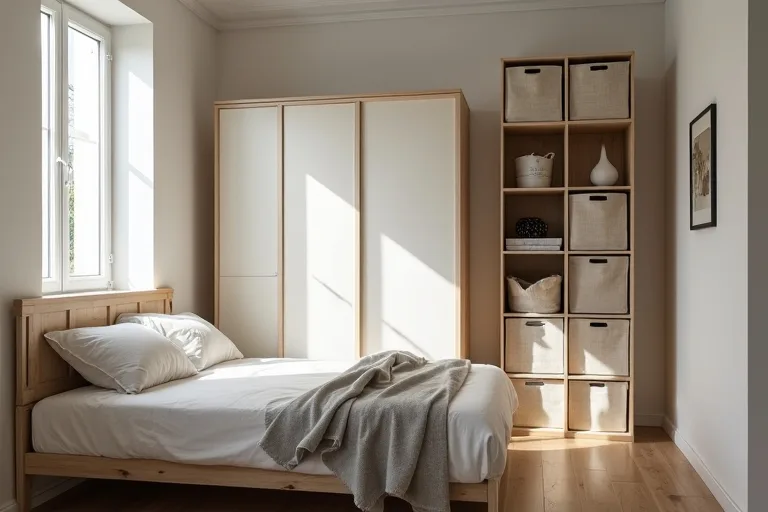
This is also where a cube organizer can make sense. An 8 cube storage organizer works well when you need flexible storage for folded clothes, books, accessories, or baskets, and you want something more open than a closed wardrobe. It is especially useful when the room needs a storage wall that still feels visually light.
If you want the cubes to work harder, use matching fabric storage bins set for cube organizer so smaller items do not become visual clutter. That is often the difference between storage that feels tidy and storage that becomes a catch-all.
Compare the main furniture choices before you buy
Small bedroom storage usually comes down to a tradeoff between capacity, access, and footprint. A taller wardrobe can hide more, but it can also dominate the room. A dresser may be easier to live with, but it takes more floor space. Open shelving feels lighter, but it asks for more visual discipline.
That is why it helps to compare the main options against the way you use the room, not just against the amount of storage they offer. A good small-bedroom choice should keep the room comfortable to walk through, simple to clean, and easy to use on a busy morning.
If you are unsure where to start, a planning tool can be more useful than another furniture search. The Room Layout Planner helps you test the arrangement before you commit, and the Small Space Furniture Planner, Room Layout Spreadsheet (Digital Download) is a practical option if you want a clearer buying plan before spending money.
For broader inspiration and room-by-room ideas, it also helps to look at the bedroom ideas hub and the main small spaces storage hub. Those pages are useful when you want to compare solutions without losing sight of the room as a whole.
Use vertical space and simple organizers to keep the room calm
When floor space is tight, vertical storage usually gives you the most practical gain. Wall-mounted shelves, taller units, and stacked bins can all work, as long as they stay aligned with the room’s traffic flow and do not make the bedroom feel closed in.
Simple organizers matter more than decorative extras. Labels help if multiple people use the room or if storage is divided by category. Bins help when you need to hide small items that would otherwise spread across surfaces. And if you have an open cube unit, keeping the contents consistent usually matters more than matching every object perfectly.
The goal is not to fill every inch. The goal is to make the storage easy to maintain. If a system only works on the day you set it up, it is not a good small-bedroom system. The best ones are easy to reset after laundry, easy to find in the dark, and easy to live with when the room is busy.
Best next step
If you are still deciding what will actually fit, plan the room before you shop. A layout-first step saves time and usually prevents the most common small-bedroom mistake: buying storage that looks right but works badly in the room.
- Buying storage before measuring door swings, bedside clearance, or walkway space.
- Using oversized furniture that makes the room feel narrow and difficult to use.
- Mixing too many open storage pieces so the room looks busy even when it is organised.
- Storing everyday items in places that are hard to reach.
- Filling every wall with storage and leaving no visual or physical breathing room.
Small bedroom storage works best when layout comes first and furniture comes second. Measure the room, protect the walking path, decide where each category of belongings belongs, and then choose the storage piece that fits that plan. For many rooms, an 8 cube storage organizer with a few fabric storage bins is a practical, flexible answer — but only if the room layout can support it.
Helpful next tools and planners
If you want to make the decision easier before you buy
These are useful if you want to test the room layout, organise your categories, and avoid a storage purchase that creates more clutter than it solves.
FAQ
What is the first thing to do when planning small bedroom storage?
Start by measuring the room and identifying the clear walking path, door swing, and bed clearance. That tells you what size of storage the room can actually handle.
Is a cube organizer good for a small bedroom?
Yes, if you need flexible, medium-capacity storage and the unit will not crowd the room. It works especially well for folded items, baskets, books, and accessories.
Should I choose a wardrobe or a dresser in a small bedroom?
Choose the one that fits the room’s shape and your daily routine. A wardrobe may hold more vertically, while a dresser can be easier to access and may feel less dominant.
How do I keep small bedroom storage from looking messy?
Use consistent bins, limit open storage to the items you use often, and keep the most visible areas simple. The goal is easy maintenance, not perfect display.
Three sensible next steps
Some links in this article may be affiliate links. Read more in the Affiliate Disclosure.