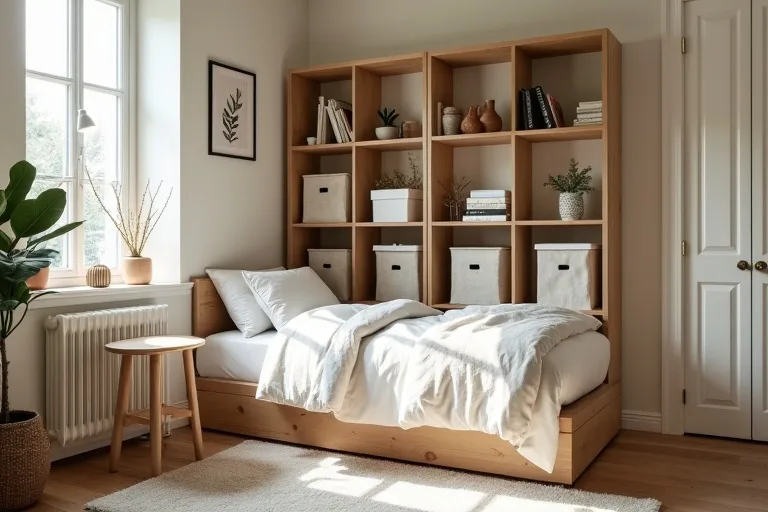
If a small bedroom feels messy, the problem is often not “too much stuff” so much as poor storage balance. The room may need one practical piece, better containers, or a layout that gives the bed and storage a clear place to live.
The choice usually comes down to this: do you need a low-cost fix that improves order right away, or is the room asking for a larger storage upgrade that protects floor space and makes the whole layout work better? That is easier to answer once you look at the room as a plan, not just a shopping list.
Start with a budget cube organizer setup; upgrade only if the room still lacks clear floor space or storage capacity after you have used the wall area well and the layout still feels tight.
What budget storage really solves in a small bedroom
A budget approach works best when the room already has a usable layout and only needs better organization. In that case, an 8 cube storage organizer can do a lot of practical work without asking you to redesign the room. It gives you one compact place for folded clothes, accessories, books, or seasonal items, and it usually fits neatly against a wall.
Adding fabric storage bins set for cube organizer makes that setup calmer to look at, because the eye sees one tidy surface instead of a mix of loose items. That matters in a small bedroom, where visual clutter can make the room feel smaller than it is.
This kind of fix is strongest when you want:
- clearer storage without replacing other furniture
- a simpler way to sort everyday items
- better use of vertical or wall-adjacent space
- a low-risk upgrade that can be changed later
If you are trying to improve a room that already functions, budget storage is often enough. It is the most forgiving choice when you are still learning what the bedroom actually needs.
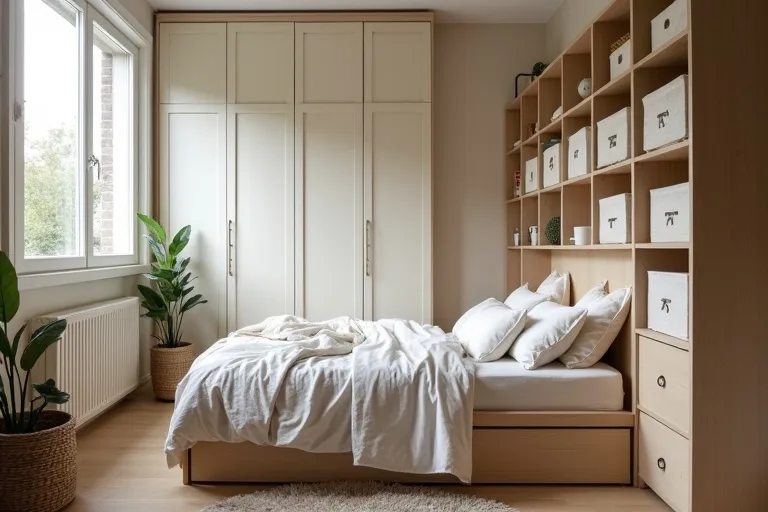
Ask whether you need more organization or more room to move. If the bed, doors, and drawers already work but clutter is the issue, a cube organizer and bins may be enough. If the room feels blocked even when it is tidy, the problem is probably the furniture footprint, not just storage.
When a bigger upgrade is worth the extra spend
A larger space-saving upgrade makes sense when the room is fighting you every day. That usually shows up as blocked walking paths, awkward door swings, or furniture that forces storage into odd corners. In that situation, a more substantial piece can be worth it because it improves both storage and flow.
This is where the decision becomes less about style and more about layout. A better bedroom plan may need a narrower dresser, a taller piece with a smaller footprint, or a multi-purpose item that frees up the floor area around the bed. If the current storage only works by making the room feel crowded, the upgrade may save more stress than money.
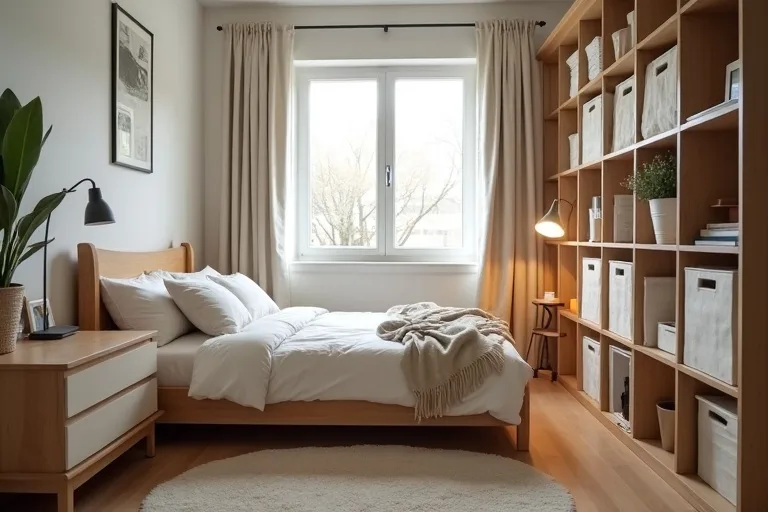
- You have already used the obvious wall space.
- The room still feels tight even after decluttering.
- Everyday items need to be stored in a way that is easier to reach.
- The current solution creates clutter, not just storage.
When those points line up, a bigger upgrade is easier to justify. It does not have to be expensive to be worthwhile, but it should clearly improve how the room works.
How to compare footprint, capacity, and cost without guessing
The safest comparison is not “cheap versus expensive.” It is footprint versus capacity versus convenience. A cube organizer is usually easier to place and easier to change later. A larger upgrade may cost more, but it can sometimes replace multiple smaller pieces and reduce visual clutter at the same time.
Before you choose, compare the room in three practical ways:
- Footprint: how much floor and wall space the piece will take
- Capacity: how much the room will realistically store there
- Access: how easily you can open, reach, and maintain it
If you want a cleaner, more hidden look with a budget setup, bins help. If you want a more built-in feel and the room can handle it, a larger upgrade may be the better long-term answer. The important thing is to choose the option that matches how the bedroom is actually used, not how it looks in a product photo.
For people who want a simple planning aid, the Small Space Furniture Planner, Room Layout Spreadsheet (Digital Download) can help before any purchase is made. It is especially useful if you are deciding between one compact organizer and a bigger piece that changes the whole arrangement.
Use layout planning to avoid buying the wrong piece
Small bedrooms are rarely solved by shopping first. They are solved by confirming where each piece can go, what needs to stay clear, and whether the storage will still feel easy to live with after a few weeks. A quick layout plan can save you from buying something that fits on paper but fails in the room.
That is why it helps to pair storage decisions with broader bedroom planning. If you are still working through how the room should flow, the bedroom ideas guide is a useful place to step back and think about the room as a whole. For a wider view of small-room organization, the small spaces storage hub can help you compare other practical approaches too.
If you want to move from “this might fit” to “this is the right choice,” use a room layout tool before you buy. A planner makes it easier to check whether a cube organizer is enough, whether bins will solve the visual clutter, or whether the room really needs a larger upgrade to work properly.

That one step keeps the decision grounded. It also reduces the chance of spending twice: once on the wrong storage piece, and again on the one you needed in the first place.
Best next step
Before you buy, map the room and compare the storage footprint with the space you actually have. A simple planner will tell you whether an 8 cube organizer is enough or whether a larger upgrade is justified.
- Buying a storage piece before checking the bed, door, and drawer clearances.
- Choosing capacity without thinking about how the room will feel to walk through.
- Using open storage for everything and ending up with more visible clutter.
- Assuming a larger unit is better even when it makes the room harder to move around in.
- Skipping planning and trying to solve a layout problem with one product.
For most small bedrooms, a budget cube organizer with bins is the best first move because it improves storage without forcing a major change. If the room still feels blocked or underused after that, a bigger space-saving upgrade may be worth it. The calmest way to decide is to plan the layout first, then buy only the piece that the room truly needs.
Helpful next tools and planners
If you want to make the decision easier before you buy
These options are most useful when you are still comparing fit, capacity, and layout. Start with the tool that helps you answer the room question first, then look at storage products that match the plan.
FAQ
Is a cube organizer enough for a small bedroom?
Often, yes. If the main problem is scattered items rather than a bad layout, a cube organizer with bins can solve a lot without taking over the room.
When should I choose a bigger storage upgrade instead?
Choose the bigger upgrade when the room still feels cramped after decluttering and the current furniture makes movement awkward.
Do storage bins really make a difference?
They do if you want a neater visual finish and easier sorting. Bins turn open cubes into calmer, more consistent storage.
What should I check before buying anything?
Check floor space, door swing, drawer clearance, and the path you need to walk through the room. A layout planner makes that much easier.
Three sensible next steps
Some links in this article may be affiliate links. Read more in the Affiliate Disclosure.