
Small kitchens rarely need a full makeover to feel better. More often, they need one clear decision: what problem are you actually trying to solve before you buy anything?
If you skip that step, it is easy to bring home a cart, shelf, or container set that looks useful but does not fit the layout, block the walkway, or solve the storage issue you were trying to fix in the first place.
Check your measurements, traffic flow, and storage needs first, then buy only pieces that fit the space and solve a real problem.
Start with the real kitchen problem
Before you look at furniture or storage accessories, decide what is missing in the room. In a small kitchen, the answer is often not “more storage” in general. It may be a clearer prep surface, a better place for dry goods, a home for small appliances, or a way to use vertical space without making the room feel crowded.
This is the point where a calm, practical plan helps more than browsing. If the kitchen already feels tight, the safest purchases are the ones that address one specific gap. A rolling cart can help when you need extra working space. Stackable containers can help when shelf height is being wasted. Open shelving can help if you need to see items quickly, but it is not the best answer if you want everything hidden.
Keep the main goal simple: add function without making movement harder. If a new item creates a cleaner routine, it is probably worth considering. If it only adds more surfaces to clean or more visual clutter, it may not be the right fit.
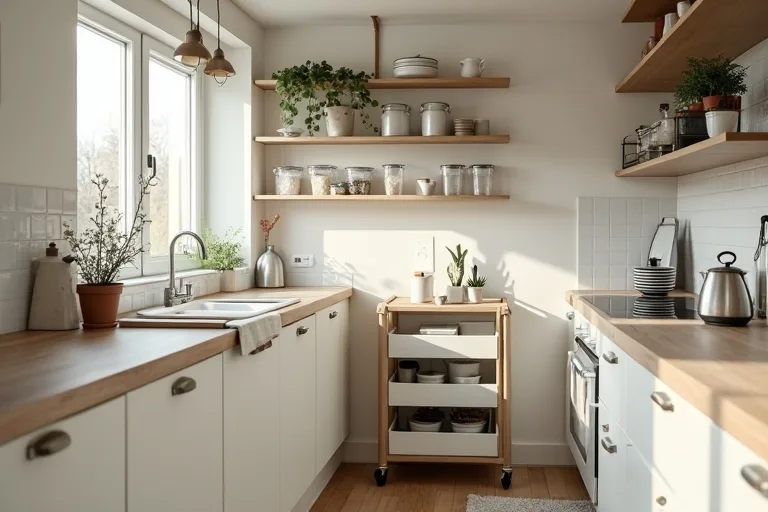
The real decision is not whether you like the product. It is whether the item fits your traffic path, solves one clear storage problem, and still leaves the kitchen easy to use every day.
Measure the space before you shop
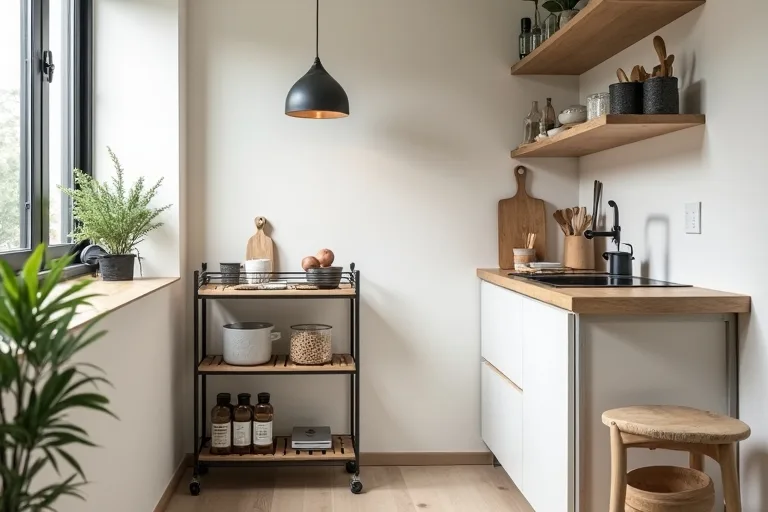
Small kitchen ideas only work when the size is right. Measure the floor space where a cart, shelf, or bin might go, then measure the nearby clearances too. A piece that fits the footprint can still feel wrong if it makes a drawer harder to open or narrows the path through the kitchen.
Pay attention to these basics:
- Floor space available for the item itself.
- Door swing for cabinets, fridge, dishwasher, and pantry doors.
- Walking path between work zones.
- Wall height, shelf height, and the depth of available vertical space.
If you want a cleaner way to test the layout before buying, the Room Layout Planner is a useful next step. It helps you map the space first so you can compare options with less guesswork.
When a kitchen is narrow, even a slim cart or a shallow shelf can change the flow of the room. That is why measuring is not a technical extra. It is the part that keeps a good idea from turning into a daily annoyance.
List what must be stored and what can be simplified
Once the space is clear, look at the things that need a home. A small kitchen often feels cramped because too many categories are competing for the same shelves and counters. Group items by use, then decide what should stay close at hand and what can move elsewhere.
Start with four questions:
- What do you use every day?
- What only needs occasional access?
- What can be stored in a container instead of loose packaging?
- What could be removed, donated, or moved to another room?
This is where airtight pantry containers can make a real difference. They are most useful when you want to reduce visual noise, use shelf space more efficiently, and keep dry goods easier to stack. They are less helpful if the problem is not food storage at all.
For people who want to plan the room before spending, a simple digital workspace can also help. The Room Makeover Planner, Home Layout Budget Spreadsheet (Digital Download) is a practical option if you want to compare storage ideas and keep the budget in one place.
A small kitchen gets easier to live with when each category has a place and the least-used items stop competing with the daily ones.
Choose the right type of storage piece
After the measurements and storage list are clear, the product choice becomes much simpler. A cart, shelf, bin, or container set should answer a specific need rather than act as a general fix.
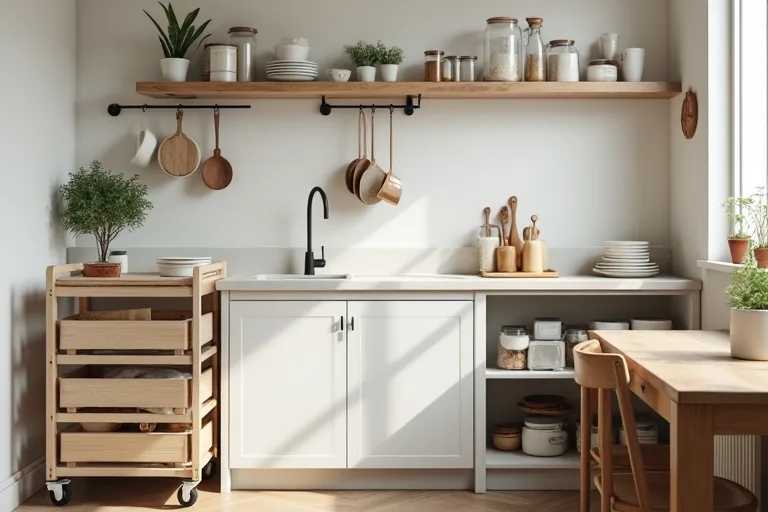
A rolling kitchen cart with storage works well when you need one of three things: extra prep surface, movable storage, or a narrow piece that can be shifted out of the way. Airtight pantry containers are better when the main issue is shelf organization, food visibility, or keeping dry ingredients tidy. Open bins and baskets can work for quick-access items, but they are best used when the contents stay neat and are easy to sort.
If you are still unsure, compare each option against the layout instead of the product photo. Ask whether it improves access, fits the room without crowding it, and makes the kitchen easier to reset at the end of the day.
Best next step
Map the kitchen first, then shop. The quickest way to avoid buying the wrong size or style is to test your layout before you commit.
- Buying storage before checking clearances and door swing.
- Choosing a cart or shelf that fits the room but blocks the working path.
- Adding containers without first sorting what should stay in the kitchen.
- Picking a piece that looks useful but does not solve the main problem.
- Skipping a budget and ending up with mismatched items.
Small kitchen ideas work best when you start with the layout, not the shopping list. Measure the space, decide what really needs to be stored, and choose one piece that improves the room without crowding it. If you want a safer starting point, use the Room Layout Planner before you buy. Then continue to the Kitchen & Dining hub for more small kitchen planning ideas.
Helpful next tools and planners
If you want to make the decision easier before you buy
These links fit the planning step that usually comes before a purchase. They are most useful when you already know what the kitchen needs and want a practical next move.
FAQ
What should I measure first in a small kitchen?
Start with the floor area for any new item, then check clearance for doors, drawers, and walking paths. That keeps you from buying something that technically fits but feels awkward in daily use.
Is a kitchen cart a good idea for a very small space?
It can be, if you need extra prep space or flexible storage and still have room to move around it comfortably. A cart works best when it solves one clear problem.
Are storage containers worth it if the kitchen is already full?
Yes, if the issue is disorganized dry goods or wasted shelf height. They are less useful if the real problem is simply too many items in the kitchen.
What is the safest first purchase for a small kitchen?
The safest purchase is usually the one that follows a layout check. If you already know the space, a cart, container set, or slim shelf can make sense much faster.
Three sensible next steps
Some links in this article may be affiliate links. Read more in the Affiliate Disclosure.