
A small kitchen rarely feels tight because of one big problem. More often, it is a few small choices adding up: blocked walkways, crowded counters, the wrong storage, or lighting that makes the room feel closed in.
The good news is that you do not need a full remodel to improve it. If you focus on flow, visible clutter, and a simple layout plan before shopping, even a compact kitchen can feel calmer and easier to use.
The biggest mistake is blocking flow. Keep walkways clear, reduce visual clutter, and choose storage that adds function without crowding the room.
Why small kitchens feel tighter than they need to
Most small kitchens do not need more stuff. They need fewer obstacles. When the eye sees too many objects at once, the room feels busier and smaller, even if the actual floor area has not changed.
That is why countertops matter so much. A counter filled with small appliances, loose utensils, open packets, and decorative extras leaves no clear landing space for prep. A kitchen with a few necessary items on display, and the rest put away in a simple system, usually feels larger right away.
The same is true for storage. Open shelving can work well in a small kitchen, but only if it stays edited. If every shelf becomes a catch-all, the room starts to feel visually heavy. A better approach is to group similar items together and keep the surfaces that matter most free for actual use.
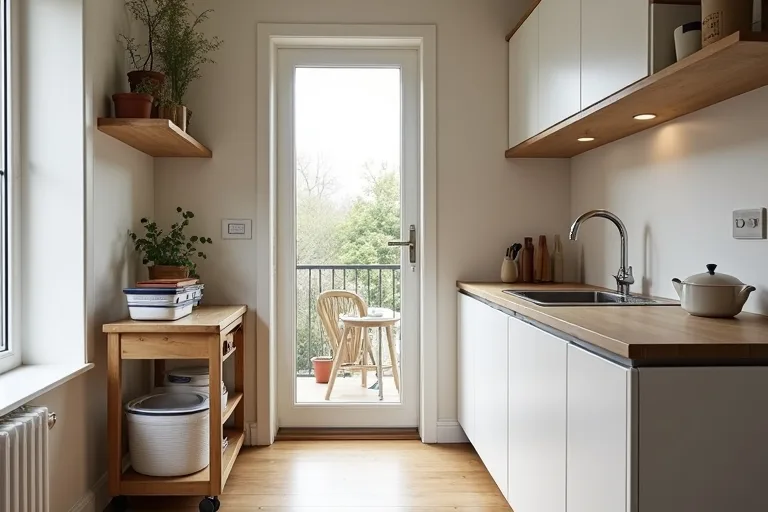
If you remove three visible items from the counter and the room immediately feels better, the problem is usually visual clutter, not the size of the kitchen itself. If the room still feels awkward, look next at traffic flow and storage scale.
The storage mistake that makes a small kitchen feel crowded
Storage is one of the easiest places to make a small kitchen worse. Too little storage forces items onto the counter. Too much bulky storage can steal the floor space you actually need to move, cook, and clean comfortably.
The most useful storage in a small kitchen is often flexible rather than fixed. A rolling kitchen cart with storage can hold prep items, extra bowls, or pantry overflow without a permanent remodel. It works best when it supports a real job instead of acting like another surface for clutter.
Airtight pantry containers can also help, but only when they replace messy packaging rather than add another layer of organization. If you decant dry goods, use containers that fit the shelf depth and leave room for easy reach. Oversized bins can be as awkward as cardboard boxes if they crowd the cabinet.
- Keep everyday items easy to reach.
- Store backup items away from the main prep zone.
- Choose storage that fits the room, not just the basket or shelf.
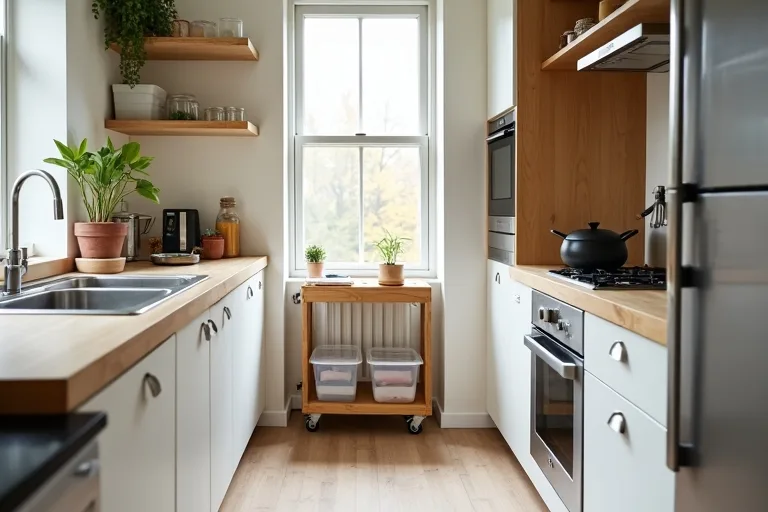
Layout and lighting mistakes that shrink the room visually
A kitchen can be well stocked and still feel tight if the layout interrupts movement. When cabinet doors, appliances, or a table edge sit too close to the main path, every task becomes a little harder. Over time, that friction is what makes the room feel cramped.
Before buying anything new, map the spaces you actually use: cooking, rinsing, prep, loading, and walking through. If one of those zones overlaps too much with another, the room will keep feeling busy no matter how tidy it looks.
Lighting matters too. Dark finishes can work in small kitchens, but they need enough light to keep the room open. If the kitchen relies on one weak overhead fitting, it may feel smaller at night than it does during the day. Layered light is usually more helpful than one dramatic fixture.
Stand in the kitchen and notice where you hesitate. If you are turning sideways, dodging a door, or shifting items every time you prep, the problem is likely flow, not style. Fix the path first, then adjust storage and lighting around it.
How to plan before you buy anything
The easiest way to avoid expensive mistakes is to plan the room before you shop. In a small kitchen, every new item should earn its place by improving prep space, storage access, or movement. If it does none of those things, it is probably not the right buy.
Start by measuring the space, then mark the walkways, main work zones, and the places where clutter naturally lands. That simple map often makes the next decision obvious. You may realise you need one slim cart, a better container set, or a clearer pantry plan rather than a bigger purchase.
If you want a calmer way to do that planning, use a room layout tool first and then decide on add-ons. That keeps you from buying storage that looks useful but does not fit the room you actually have.
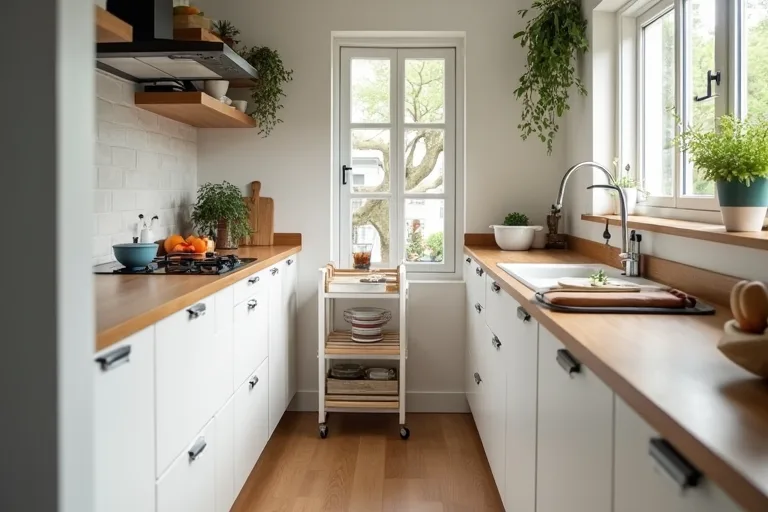
Best next step
Before you buy carts, containers, or other small-space add-ons, map your walkways and prep zones first. The Room Layout Planner helps you see where storage can fit without blocking the room. If you want broader kitchen layout guidance after that, browse the Kitchen & Dining hub. For more planning support, the tools page is a good place to compare the next step before you spend.
- Leaving too many items visible on the counter, which makes the kitchen feel busier than it is.
- Choosing storage that is bulky, oversized, or hard to access, so it gets in the way instead of helping.
- Ignoring traffic flow around doors, drawers, and work zones.
- Adding dark finishes or weak lighting without enough contrast or task light.
- Buying organizers before measuring the space they need to fit.
Small kitchens feel smaller when flow is blocked and storage is chosen without a plan. The best fix is usually not a remodel. It is a clear layout, fewer visible items, and one storage upgrade that genuinely improves prep space. If you measure first and map the room before shopping, your next purchase is far more likely to help.
Helpful next tools and planners
If you want to make the decision easier before you buy
These options are useful when you are trying to improve a small kitchen without taking on a full renovation. Start with planning, then choose only the storage that fits the room.
FAQ
What makes a small kitchen feel even smaller?
Blocked walkways, crowded counters, poor lighting, and storage that takes up more space than it saves are the most common reasons.
Should I keep things on the counter in a small kitchen?
Yes, but only the items you use often. A few regular-use pieces are fine; everything else is better stored away.
Is a rolling kitchen cart a good idea in a small kitchen?
It can be, especially if you need extra prep or storage space without a fixed remodel. The key is to place it where it helps, not where it blocks movement.
Do airtight containers really help?
They help when they replace messy packaging and fit your shelves well. If they are too large or too many, they can create a different kind of clutter.
Three sensible next steps
Some links in this article may be affiliate links. Read more in the Affiliate Disclosure.