A small kitchen has to work harder than a larger one, so the best updates are the ones that improve how the room moves, stores, and supports daily routines. When counter space is tight and cabinets feel overloaded, the goal is not to cram in more things, but to create a clearer layout, better prep zones, and storage that makes the room easier to use every day.

Focus on storage, prep space, and a clearer layout to make a small kitchen feel easier to use.
Start with the places where the kitchen gets stuck
Before buying anything, look at what slows the room down. In most small kitchens, the problem is not one single lack of space. It is a mix of crowded counters, awkward cabinet access, and a workflow that forces too many steps into one narrow area. If the bin is in the way, the fridge door blocks a prep surface, or the kettle and toaster claim the only open counter, the room will always feel busier than it needs to.
Begin by clearing one surface and watching how you actually cook. Where do you set groceries down? Where do you rinse, chop, season, and plate? Once those actions are visible, it becomes easier to decide which items deserve permanent counter space and which ones should move into drawers, wall storage, or a pantry zone.
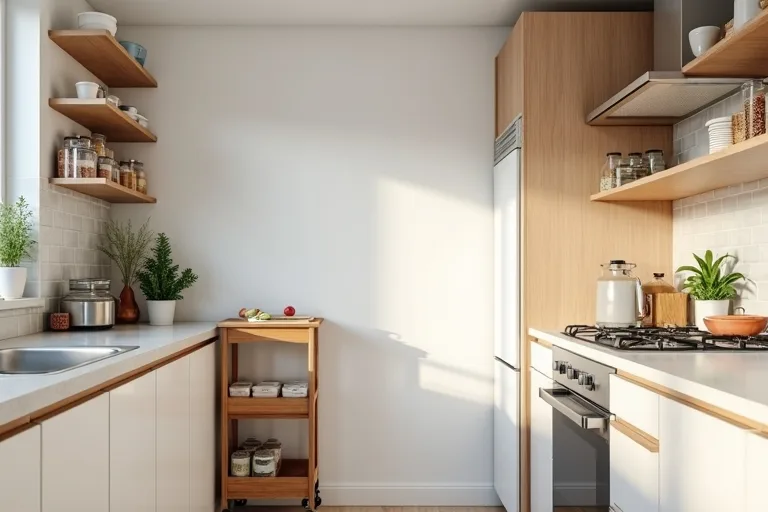
Cutting tools belong near prep space, cooking tools near the hob, and dry goods near the pantry or main storage area.
Improve the layout before you add more storage
Small kitchens work best when movement is simple. Even without changing the footprint, you can often improve the room by reducing crossing paths and opening up the main work zone. If the kitchen is very narrow, think in terms of one clean prep lane rather than trying to spread out across several surfaces. If the room is L-shaped or galley-style, keep the busiest tools in the stretch that gets the best light and easiest access.
A good layout makes the room feel less crowded, even when the storage capacity stays the same. That may mean moving a freestanding bin, shifting a coffee station, or relocating rarely used appliances so the counter nearest the sink can stay open. Small changes like these often matter more than adding another decorative shelf.
Work zones that help a small kitchen
- A landing zone near the fridge for groceries
- A clear prep zone beside the sink or hob
- A cooking zone for pans, utensils, and spices
- A storage zone for dry goods and backup items
Use storage where the room already has structure
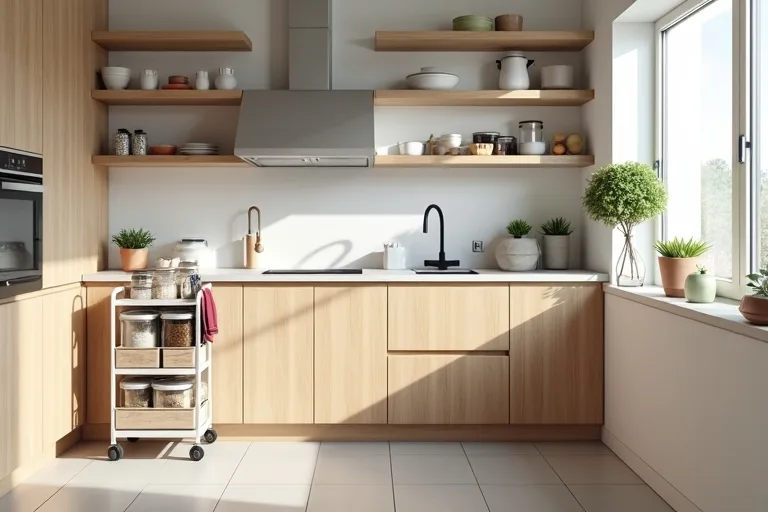
The easiest storage wins usually come from making better use of existing surfaces. Inside cabinets, stackable inserts can stop wasted vertical space. In drawers, dividers help group utensils, wraps, and small tools so they do not spread out. On the wall, a rail, a shallow shelf, or a few hooks can free up a drawer that is currently overloaded with everyday items.
Pantry areas deserve the same attention. Group food by use rather than by category alone. Keep breakfast items together, cooking basics together, and baking supplies together if they are used often. A small kitchen becomes much easier to manage when you can see what you have and reach it without moving three other things first.
Choose a small number of finishes and repeat them, so open shelving, containers, and tools feel coordinated rather than crowded.
Choose flexible pieces that earn their place
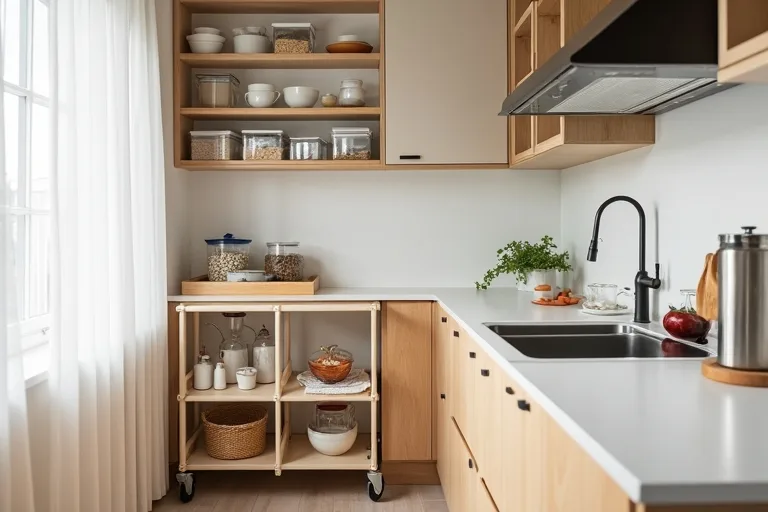
In a compact kitchen, the best extra piece is one that can do more than one job. A rolling kitchen cart can add prep space, hold overflow storage, or carry serving items when needed, then move out of the way when the room feels tight. It is especially useful when you need flexibility more than a permanent fixture. If you are planning storage around a smaller footprint, it is worth mapping the room first with a tool such as the room layout planner before buying anything new.
For dry goods, airtight pantry containers can make a real difference. They help reduce visual clutter, keep staples grouped neatly, and make shelves easier to read at a glance. A set like the airtight pantry food storage containers set is most useful when you are trying to tidy a shelf that currently mixes bags, boxes, and half-open packets. If the kitchen also needs a simple planning reset, a digital tool such as the Room Makeover Planner, Home Layout Budget Spreadsheet can help you decide what to change first and what to leave alone.
Use one flexible item at a time. Add a cart, container set, or organizer where the kitchen feels most strained, then reassess before layering in more.
Keep the room light, clear, and easy to maintain
Small kitchens tend to feel larger when the surfaces stay simple. That does not mean bare or cold. It means fewer visual interruptions, fewer mismatched items on display, and a clearer sense of what belongs where. Light finishes, open shelving used sparingly, and a controlled palette can all help the room feel calmer. If you are updating more than one area in the home, it can also help to keep the kitchen connected to the broader look of your home by reviewing the rest of your kitchen and dining planning as a whole.
Clean lines matter, but so does maintenance. If a surface is hard to wipe down or a shelf becomes a catch-all, the room will start to feel crowded again. Choose finishes and storage pieces that are easy to live with, not just attractive on day one. The best small kitchen is the one that stays usable after a busy week, not the one that only looks organized for a photo.
If you want a simple place to continue planning, the small spaces storage ideas page is a useful next stop for compact-room solutions that carry across the home.