
Small kitchens usually do not need a dramatic makeover first. They need fewer bottlenecks: a little more prep room, a clearer place for dry goods, and a layout that is easier to move through.
The choice is often not between a perfect kitchen and a bad one. It is between making a few low-cost changes that solve the day-to-day problem now, or stepping up to a larger storage solution that gives the room more breathing room.
Start with budget storage and layout fixes first; upgrade only if you still need more prep space or better flow. If the kitchen works once surfaces are cleared and supplies are organised, you may not need a bigger purchase yet.
What small kitchens usually need first
The most common issue in a small kitchen is not style. It is the lack of a clear place to prepare food, store everyday items, and open drawers or cabinet doors without getting in the way of something else.
Before buying anything, look at the room in three parts: prep space, storage space, and movement. If one of those is weak, the whole kitchen feels harder to use. A tight counter can make cooking feel crowded. A messy pantry can make the room feel smaller than it is. Poor flow can make even a tidy kitchen frustrating.
That is why the best small kitchen ideas are often simple. You are not trying to remodel the room in one step. You are trying to remove friction where it matters most.
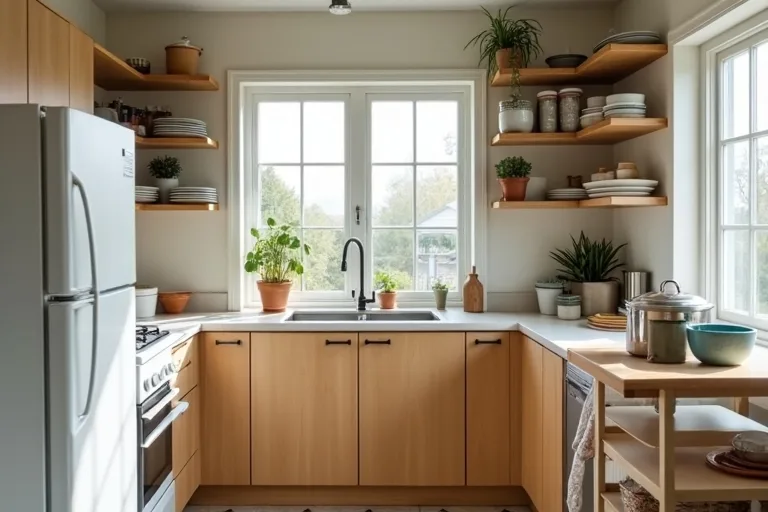
If the kitchen feels cramped only when counters are cluttered, storage improvements may be enough. If the room still feels awkward after clearing surfaces and organising supplies, the problem is likely layout or working space, not just storage.
Budget fixes that improve the room fast
Low-cost changes work best when you need immediate relief, not a full transformation. They help when the room is usable but simply too tight to stay organised.
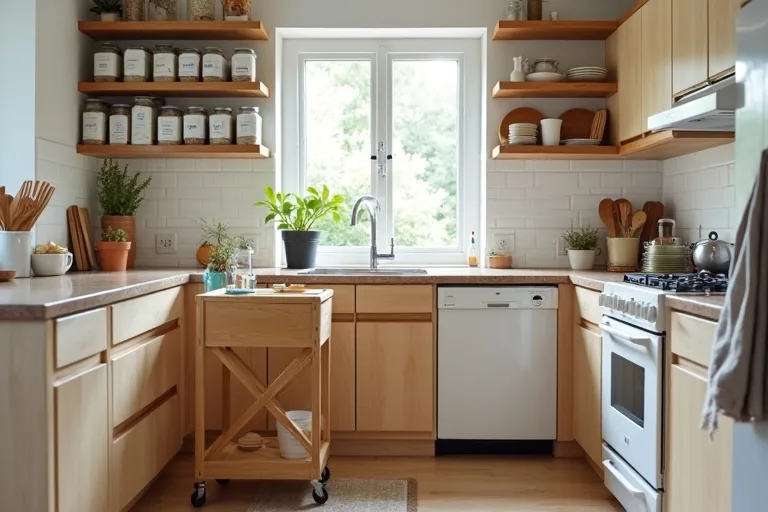
A rolling kitchen cart with storage can give you extra prep space, a place for appliances, or a landing spot for ingredients. It is especially useful if your counters are narrow or if you need a movable surface that can shift with the task at hand.
Airtight pantry containers are another simple upgrade. They reduce visual clutter, make shelves easier to read, and help you use the space you already have more efficiently. When dry goods are stacked in mismatched packaging, pantry storage can feel larger simply by becoming easier to see and access.
Other useful budget fixes include:
- Clearing one permanent prep zone on the counter.
- Grouping similar items together so cabinet space is easier to use.
- Moving rarely used appliances out of the main work area.
- Using vertical storage inside cabinets or on open shelving.
When a bigger space-saving upgrade makes sense
Some kitchens reach a point where small fixes only do so much. If you still cannot prep comfortably, store essentials without crowding, or keep a clear workflow between sink, stove, and counter, a more substantial upgrade may be worth it.
This does not always mean a remodel. Sometimes the better move is to choose one larger piece that adds function in a way smaller tweaks cannot. A well-sized rolling cart, a better pantry system, or a more deliberate layout plan can make the room work harder without changing the entire kitchen.
If your current setup forces you to stack tasks in the same narrow zone, a bigger space-saving upgrade can be more efficient than collecting several small products. The point is to remove daily friction, not just add more storage pieces.
That is also where planning matters. Before spending more, map out how often you cook, what you store, and where the bottleneck actually starts. A clear room layout shows whether you are solving a storage problem or a workflow problem.
A bigger upgrade is usually justified when the kitchen needs one of these: a proper prep surface, better pantry visibility, or a clearer path between the main cooking zones. If none of those are true, a simpler fix may be enough.
How to choose the right next step
The easiest way to decide is to compare your pain point with the size of the change.
If the room mainly feels messy, start with containers, drawer grouping, and a small cart. If the room feels too tight to work in, focus on layout planning before buying more storage. If you are somewhere in between, test a low-cost solution first and see whether it removes the bottleneck.
A simple rule helps: fix the habit problem before the hardware problem. If the real issue is clutter, better organisation may be enough. If the real issue is missing work surface, you need a solution that creates actual usable room.
For a clearer decision, map your kitchen against the tasks you do every day. That will tell you whether a budget fix is sensible or whether a larger purchase is justified.
Best next step
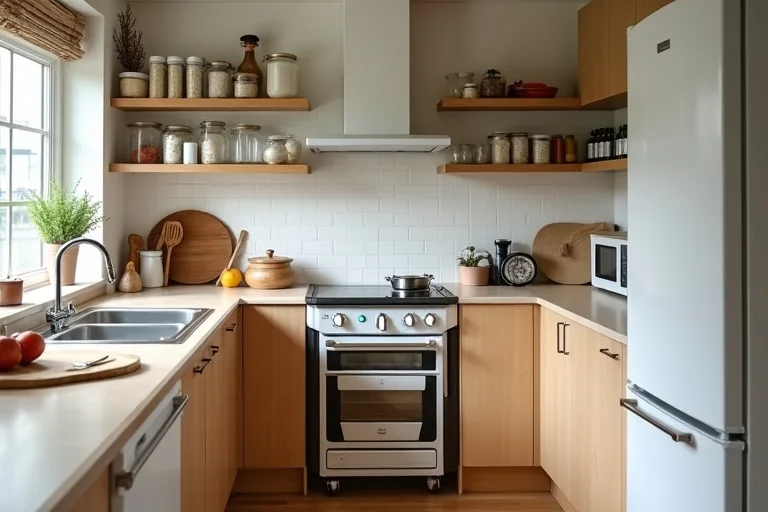
Before you buy another storage piece, map your kitchen layout and decide where the real bottleneck is. That makes it easier to tell whether a simple budget fix is enough or whether a larger upgrade will actually improve daily use.
- Buying storage before checking whether the kitchen has enough usable prep space.
- Adding too many small organisers instead of solving the main layout problem.
- Using open counter space for storage and then losing the room needed to cook.
- Choosing a larger product without measuring the path it needs to move or open safely.
- Focusing on appearance first when the real issue is flow.
Start with budget storage and layout fixes, because they solve the most common small-kitchen problems quickly and cheaply. Move to a bigger space-saving upgrade only when you still lack real prep room, better storage access, or smoother movement through the kitchen. The calmer choice is the one that improves how the room works every day.
Helpful next tools and planners
If you want to make the decision easier before you buy
These options fit the planning stage of a small kitchen update: one simple storage helper, one pantry organisation reset, and one budget tool to clarify whether a bigger change is worth it.
FAQ
What is the cheapest way to make a small kitchen feel bigger?
Clear the counters, reduce visual clutter in the pantry, and create one dedicated prep zone. Those changes often make the room feel easier to use without buying much.
Is a rolling kitchen cart worth it in a small kitchen?
Yes, if you need extra prep room or a flexible landing spot for ingredients and appliances. It is most useful when the kitchen lacks a permanent extra counter.
When should I choose a larger storage upgrade instead of budget fixes?
Choose a larger upgrade when the kitchen still feels cramped after you organise it, or when the main problem is not clutter but a lack of usable work surface.
How do I know whether I need more storage or better layout?
If the room is messy, storage may be the issue. If the room is tidy but still awkward to cook in, layout and flow are more likely the real problem.
Three sensible next steps
Some links in this article may be affiliate links. Read more in the Affiliate Disclosure.