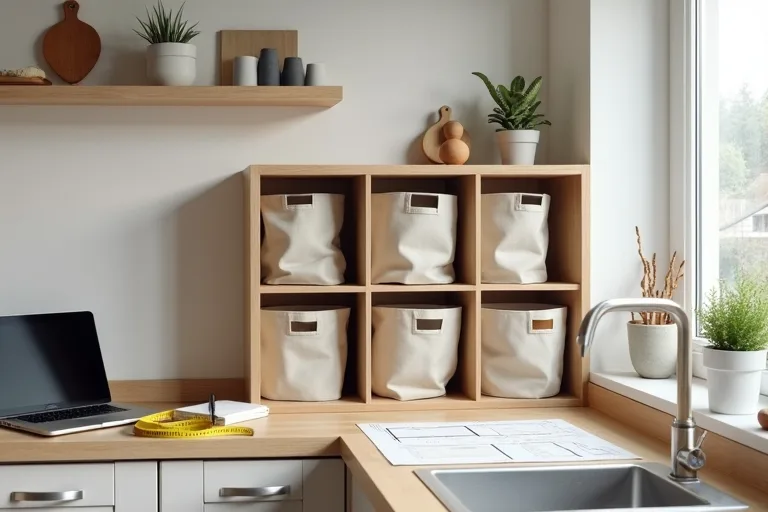
Small kitchens usually run out of space in the same predictable ways: there is not enough room for things to land, not enough clearance to open doors comfortably, and not enough separation between what you use every day and what you only need occasionally. That is why storage decisions work best when they start with layout, not with shopping.
A simple checklist can save you from buying furniture that looks useful but blocks movement, swallows floor space, or does not suit the items you actually need to store. The goal is not to fit more in. The goal is to make the kitchen easier to use.
Measure first, then choose storage that fits your kitchen flow and daily use.
Measure the space before you buy
The first step in any small kitchen storage plan is to understand the room you actually have. That means measuring the wall or corner where the furniture will sit, but also checking how much space remains when doors, drawers, and appliances are open.
Write down the width, depth, and height of the spot you are considering. Then note nearby obstacles: radiators, baseboards, outlets, handles, and the swing of the fridge, oven, or cabinet doors. In a small kitchen, those details matter as much as the furniture size itself.

If you are weighing a compact storage piece such as an 8 cube storage organizer, the measurement should include more than the footprint. Think about how it will sit against the wall, whether it will crowd a walkway, and whether the top surface can still be used safely.
The real decision is not whether a storage piece fits the wall. It is whether it fits the room once you open doors, pull out chairs, carry groceries, and move through the kitchen every day.
Decide what storage needs to do
Before you compare organizers, decide what problem you are solving. Small kitchens often need a mix of functions: holding pantry items, storing cookware, keeping school bags or recycling tidy, or creating a landing spot for daily clutter. A piece that solves only one of those jobs may still fail in the room.
It helps to sort your items into three groups:
- Must stay close at hand: everyday plates, mugs, coffee items, and prep tools.
- Can be hidden: spare linens, seasonal dishes, bulk groceries, and backup supplies.
- Should stay visible only if it helps: items you use often enough to justify open access, but not so often that they need prime cabinet space.
Once you know the job, the storage choice becomes clearer. Open cubes may work for quick access, while closed bins are better if you want visual calm. A set of fabric storage bins set for cube organizer can help turn a simple shelf into more controlled storage, especially when you need flexible zones inside one unit.

Check clearance and walking space
Small kitchen storage should make circulation easier, not tighter. That is why clearance is just as important as capacity. A piece that technically fits may still be wrong if it interrupts the path between the counter, sink, fridge, and dining area.
Check the space around the item from more than one angle. Ask yourself whether someone can stand at the counter while another person walks past, whether the chair can move out smoothly, and whether cabinet doors or appliance doors can open fully without conflict.
If you are choosing furniture rather than a simple bin system, compare the piece against the way the kitchen is actually used. A narrow unit can be a better choice than a wider one if it preserves movement. A taller unit may work well if floor space is tight, but only if it does not visually or physically crowd the room.
For small kitchens that also serve as dining areas, it is worth looking at the bigger room relationship too. The planning advice in Kitchen & Dining can help you avoid placing storage where it competes with seating or daily traffic. If you are still defining the room setup, the broader Small Spaces & Storage hub is a useful next stop.
Use a simple planner before you purchase
Once the measurements and storage needs are clear, sketch the layout before spending money. A rough room plan can show whether one larger storage unit is better than several small ones, and whether the storage should sit on an open wall, under a counter, or in a less visible corner.
This is also the point where a planner becomes useful. A straightforward room layout sheet helps you test options without rearranging the kitchen in real life. If you want a more structured way to check fit before buying, the Room Layout Planner is a practical next step, and the Small Space Furniture Planner, Room Layout Spreadsheet (Digital Download) can be helpful if you prefer a digital worksheet for comparing sizes.

If you are leaning toward a cube-style unit, the tools page can help you move from a rough idea to a more confident purchase decision. The point is to confirm the fit before the box arrives, not after.
Best next step
If your kitchen already feels tight, use a layout tool before you buy storage furniture. It is the easiest way to check whether a piece supports movement, clears doors, and fits the daily path through the room.
- Buying storage before measuring the wall, doorway, or walkway around it.
- Choosing a unit for capacity alone and forgetting clearance for doors and drawers.
- Using open storage for items that need to stay contained and visually quiet.
- Placing furniture where it blocks traffic between the kitchen’s main work areas.
- Skipping a simple layout sketch and hoping the piece will work once it arrives.
Small kitchen storage works best when the decision starts with the room, not the product. Measure the space, sort what needs to be stored, protect clear walking paths, and test the layout before you buy. That approach makes it much easier to choose furniture or organizers that genuinely help the kitchen feel calmer and easier to use.
Helpful next tools and planners
If you want to make the decision easier before you buy
These are the most useful next steps if you are still comparing storage types, checking fit, or trying to keep the kitchen layout practical.
FAQ
How do I know if a storage unit is too big for my kitchen?
If it blocks a walkway, interferes with door swings, or makes the room harder to move through, it is too big even if the dimensions seem acceptable on paper.
Should small kitchen storage be open or closed?
Use open storage for items you reach for often and closed storage for anything better kept visually contained. Many kitchens need both.
What should I measure before buying kitchen furniture?
Measure width, depth, and height, then check clearance around doors, drawers, appliances, and seating. The surrounding movement matters as much as the item itself.
Do I need a planner if I already know the measurements?
Yes, if you want to compare options properly. A layout planner helps you see whether the storage improves the room instead of just filling it.
Three sensible next steps
Some links in this article may be affiliate links. Read more in the Affiliate Disclosure.