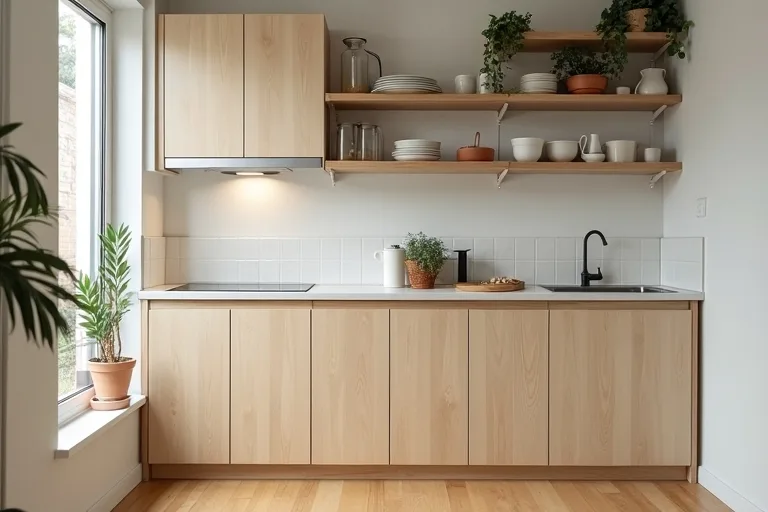
Small kitchens usually feel cramped for one of two reasons: too much storage is packed into the room, or the storage that is there gets in the way of movement and sightlines. The result is often the same — counters disappear, daily tools end up scattered, and the room starts to feel busier than it needs to be.
The fix is not always to add more organizers. In many small kitchens, the calmer choice is to simplify what is visible, keep the working surfaces clear, and make sure storage supports the way the room is used every day. That is where layout and scale matter more than buying another bin.
The biggest mistake is using storage that blocks flow, light, and clear surfaces. In a small kitchen, the room feels larger when storage is scaled to the space, counters stay open, and everyday items are grouped where they are actually used.
Why storage makes a small kitchen feel tighter
In a compact kitchen, visual clutter can matter as much as physical clutter. A crowded counter, oversized containers, or shelves filled with mixed items can make the room feel narrower even when the floor plan itself is fine. When your eye has nowhere to rest, the kitchen starts to feel busy before you even begin cooking.
The easiest way to improve that feeling is to reduce the number of things competing for attention. Keep the most-used items within reach, but avoid letting every surface become storage. A few well-placed zones usually work better than spreading small items across the room.
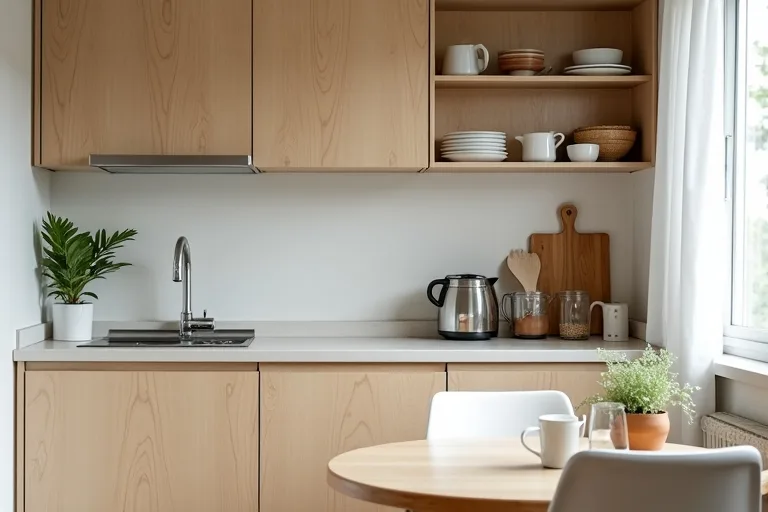
If the kitchen feels smaller after you add a new basket, shelf, or cart, the issue may not be organization. It may be that the storage piece is taking up the room’s visual breathing space. Before you buy anything else, ask whether the item will make movement easier, keep the counter clearer, or simply add another place for things to collect.
Common mistakes with cabinets, shelves, and containers
Upper cabinets, open shelves, and countertop containers can be useful in a small kitchen, but they also become part of the room’s visual load. The wrong version of each one can make the space feel more crowded than it needs to be.
Oversized upper cabinets can dominate the room if they are packed edge to edge with bulky items. Open shelving can help a kitchen feel lighter, but only when it is edited carefully. If shelves become a second storage dump, they do the opposite. Countertop containers are another common problem: when every tool, ingredient, and appliance gets its own container, the counter stops functioning as working space.
A better approach is to keep the most visible storage quiet and consistent. Use fewer containers, choose simple shapes, and leave some open space between items so the kitchen feels easier to read.
Why zone planning matters more than adding bins
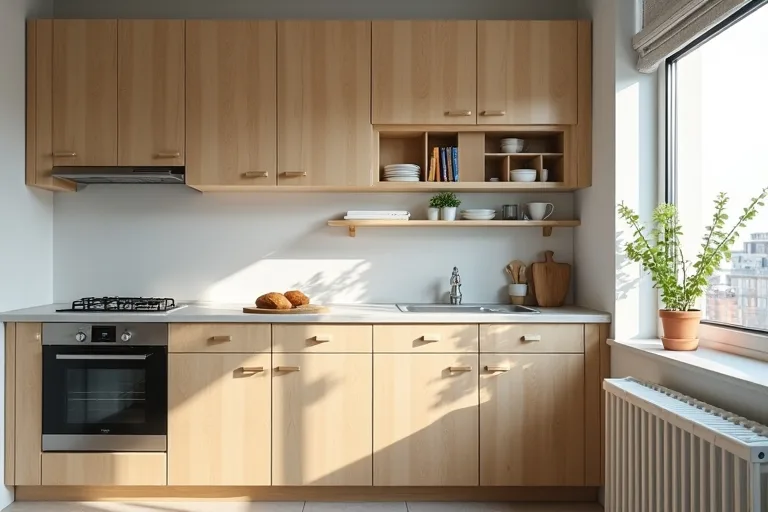
Many small kitchens get harder to use when storage is arranged by category only, instead of by task. For example, if dishes, prep tools, cookware, and cleaning items are all spread out, you end up making extra steps all day long. That friction builds quickly in a small room.
Think in zones:
- Prep zone: keep cutting, mixing, and measuring items near the main work surface.
- Cooking zone: store pans, utensils, and seasonings near the stove.
- Cleaning zone: keep dish tools and supplies close to the sink.
- Everyday access zone: place mugs, plates, and regular pantry items where they are easy to reach without blocking the path.
When storage follows the way you cook and clean, the kitchen usually feels calmer without needing more furniture. That is also why a small space can benefit from a simple planning tool before you reorganize. A layout view helps you see whether a bin, shelf, or organizer will actually improve flow.
A simpler way to reset storage before you buy
Before you add another organizer, clear the kitchen by decision, not by volume. Start by removing anything broken, duplicated, or rarely used. Then decide what deserves counter space, what belongs in a cabinet, and what can be stored elsewhere.
If the room still feels crowded, the next step is usually not more storage. It is better storage. That might mean one compact organizer instead of several loose containers, or a storage piece that fits a wall or corner without interrupting movement. An 8 cube storage organizer can be useful when you need one contained place for grouped items, especially if it helps clear a main work area. For smaller contents, fabric storage bins set for cube organizer can help keep the look tidier without adding visual weight. If you want to plan the layout before you buy, a simple tool like the Small Space Furniture Planner, Room Layout Spreadsheet (Digital Download) can make it easier to see what actually fits.
Best next step
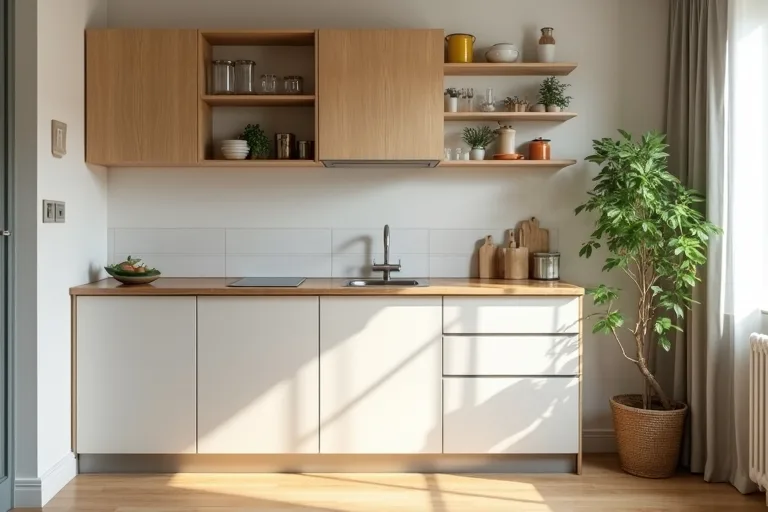
If you are not sure whether you need fewer items, better zoning, or a new storage piece, pause before buying more bins. Start with a layout check so the room can tell you what it actually needs. The Small Spaces & Storage hub is the best place to compare practical approaches, and the kitchen-dining section helps when storage choices affect movement and daily use.
- Buying storage before deciding what should stay visible and what should be put away.
- Using bulky containers that take up counter space and break up the room visually.
- Filling open shelves so tightly that they become another source of clutter.
- Storing items by category only, instead of by where they are used.
- Adding furniture or organizers that interrupt the main path through the kitchen.
- Keeping duplicate tools and rarely used items in the most valuable storage areas.
A small kitchen feels larger when storage supports the room instead of competing with it. Keep counters clearer, use fewer and simpler containers, and group items by task so daily movement feels easy. If you are unsure what to change first, plan the layout before you shop. That usually saves space, money, and a lot of second-guessing.
Helpful next tools and planners
If you want to make the decision easier before you buy
These options are most useful when you want to test scale, reduce clutter, or map storage before bringing in another organizer.
FAQ
What makes a small kitchen feel the most crowded?
Usually it is a mix of too many items on display, bulky storage pieces, and poor use of the work surfaces. When the eye and the hands both run into clutter, the room feels smaller fast.
Are open shelves a good idea in a small kitchen?
They can be, but only if they stay edited. Open shelving works best for a few useful items, not as overflow storage for everything that no longer fits elsewhere.
Should I buy organizers before I declutter?
It is better to declutter first. Once you know what is staying, it is easier to choose storage that fits the actual amount of items and the way the kitchen is used.
How do I know if I need more storage or better layout?
If the problem is mostly visual clutter, you may need less on display. If the problem is daily friction, such as extra steps between prep, cooking, and cleaning, the layout and storage zones probably need to be adjusted.
Three sensible next steps
Some links in this article may be affiliate links. Read more in the Affiliate Disclosure.