
A small kitchen usually feels cluttered for one of two reasons: there is not enough storage, or the storage that exists is not being used well. In practice, most kitchens have a mix of both. The fix starts with clearer decisions, not more shopping.
If you want the room to feel calmer, begin by clearing surfaces, grouping what you really use, and then matching storage to the shape of the kitchen. That approach keeps everyday cooking easier and helps you avoid buying organizers that look useful but do not fit the space.
Start by clearing surfaces, using vertical space, and choosing storage that fits your kitchen layout. The best small kitchen storage solution is usually the one that makes daily access easier, not the one that holds the most in theory.
Start with what the kitchen actually needs to hold
Before you add baskets, racks, or bins, make a short list of what has to live in the kitchen every day. That usually includes food, cookware, dishes, small appliances, cleaning items, and a few rarely used extras. Once you see the categories clearly, it becomes easier to separate essential storage from items that could move elsewhere.
The biggest mistake in small kitchens is treating all storage problems the same. Dry goods need visibility. Pots and pans need easy access. Cleaning supplies need a contained zone. When everything is mixed together, the cabinets feel full even if the kitchen is not truly maxed out.
Try sorting by use, not by product type. The things you reach for daily should stay in the most accessible areas. Seasonal or occasional items can move higher, lower, or farther back. That simple change often frees up enough room to make the kitchen feel manageable again.
For readers planning a wider kitchen update, it can also help to look at the bigger room flow. The Kitchen & Dining hub is a useful next stop if you are balancing storage with prep space, dining clearance, or a better overall layout.
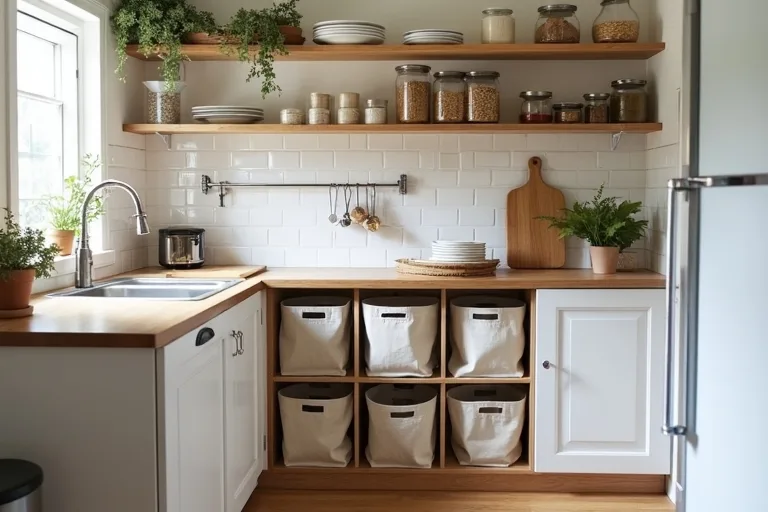
If you are deciding what to buy next, ask one question first: is the problem about capacity, or about access? If you need more room, look for vertical or flexible storage. If you already have enough room but can never reach things easily, focus on zoning and better cabinet use.
Use vertical, under-sink, and cabinet zones well
In a small kitchen, the best storage often comes from using space that is already there but underused. Vertical wall space, the area under the sink, and the inside of cabinets can each solve a different part of the problem. When those zones work together, the kitchen feels more open without losing function.
Start with the walls. Open shelving, rails, and wall-mounted holders are useful when they keep frequent items visible and easy to reach. They work best for things you use often, such as mugs, plates, spices, or cooking tools. If they are filled with rarely used items, they become clutter instead of help.
Under the sink deserves special attention because it is often wasted or awkwardly packed. Cleaning supplies, backup sponges, dishwasher tablets, and waste bags can usually live there if the space is divided into one clear system. A small shelf insert or bin can stop items from collapsing into a single messy pile.
Cabinet zones are just as important. One shelf can be for plates and bowls, another for food storage, and another for small appliances. When cabinets are assigned by use, you spend less time searching and more time actually cooking.
Choose storage pieces that stay flexible
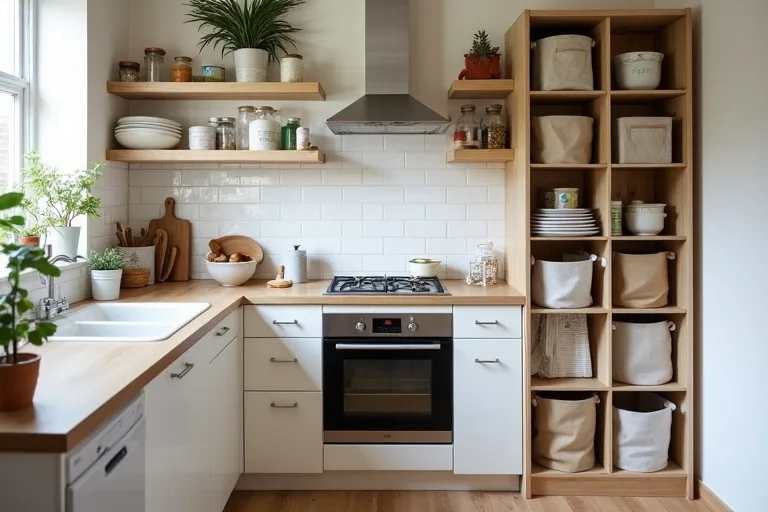
Flexible storage is often the safest choice in a small kitchen, especially if your needs change during the week. Bins, cube organizers, and modular inserts can adapt better than fixed systems when the kitchen has to do many jobs at once.
One practical option is an 8 cube storage organizer used as a side unit for pantry overflow, appliances, or grouped dry goods. It is not a replacement for built-in cabinetry, but it can help when you need a separate place for items that do not fit neatly inside the kitchen. Adding a fabric storage bins set for cube organizer makes that setup feel more contained and easier to keep tidy.
If you are still working out what will fit where, a planning tool can save you from buying the wrong thing twice. A simple room map can show whether a storage piece will block a walkway, crowd a door, or create more congestion than it solves. For that kind of planning, the Room Layout Planner is a sensible next step before you add more furniture.
For homeowners and renters who want to think through room flow first, the Small Space Furniture Planner, Room Layout Spreadsheet (Digital Download) can also help you test ideas before you commit. It is especially useful when you are deciding whether a freestanding storage unit will genuinely improve the room or simply take up the last usable corner.
Check the layout before you buy anything
A good small kitchen storage plan starts with measurements, not with a cart full of organizers. Before you buy, look at the doors, drawer fronts, work triangle, and the amount of clear floor space you actually need to keep. The goal is not to squeeze in more items. The goal is to make the kitchen easier to use.
A simple order of operations usually works well:
- Measure the available wall, cabinet, and floor space.
- Mark the items you use every day.
- Identify one storage zone that needs to become easier to reach.
- Choose a storage piece that fits that zone, not the other way around.
- Leave room for movement, cleaning, and opening doors fully.
That process may sound basic, but it prevents a lot of frustration. A storage unit that seems perfect online can feel bulky at home if it interrupts the path between the sink, stove, and prep area. In a small kitchen, even a well-made organizer is the wrong choice if it makes daily tasks harder.
If you want to compare storage choices against your layout instead of guessing, the Small Spaces & Storage hub is a useful place to step back and look at the bigger picture.
Best next step
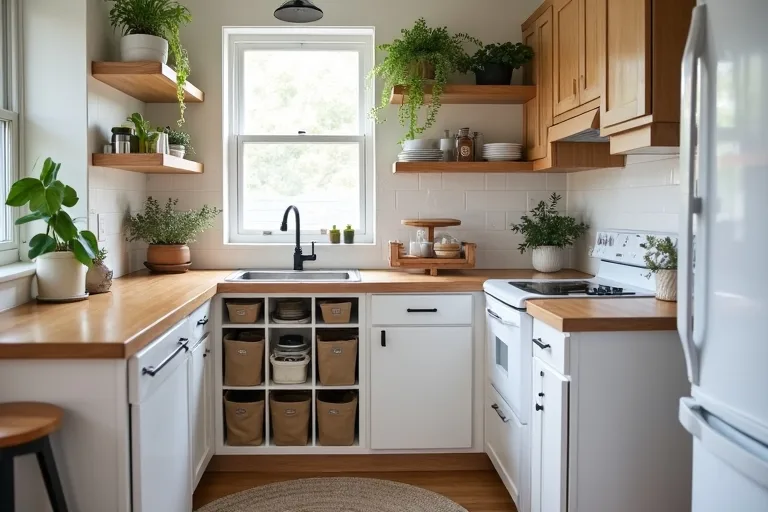
If your kitchen feels tight, the easiest way to improve it is to plan storage around the room you already have. Start with a layout check, then choose flexible storage that supports the way you cook, clean, and put things away.
- Buying organizers before measuring the space.
- Filling every surface so the kitchen loses its working room.
- Using tall or deep storage in a spot that needs easy access.
- Mixing everyday items with rarely used extras.
- Choosing storage that looks neat but is difficult to keep up with.
Small kitchen storage works best when it follows the room, not the other way around. Clear the surfaces, separate what you use often from what you do not, and build storage around the easiest path through the kitchen. If you need a flexible solution, a cube organizer with bins can be a useful bridge, but the layout should still come first.
Helpful next tools and planners
If you want to make the decision easier before you buy
These options work best after you have clarified the space and the kind of storage you actually need. They are useful when you want a simple, flexible next step rather than a full kitchen overhaul.
FAQ
What should I store first in a small kitchen?
Start with the items you use every day: plates, cups, cookware, food staples, and basic cleaning supplies. Once those are assigned to the easiest-to-reach spots, the rest of the kitchen becomes easier to organize.
Are open shelves a good idea in a small kitchen?
They can be, if you use them for items you reach for often and can keep tidy. Open shelves work best as part of a clear system, not as a place to park everything that has nowhere else to go.
Is a cube organizer useful in a kitchen?
Yes, especially when you need flexible overflow storage for pantry items, small appliances, or grouped supplies. It works best when paired with bins so the contents stay easy to manage.
How do I know if I need more storage or a better layout?
If the kitchen is full but hard to use, the layout is probably the issue. If the kitchen has clear access but not enough room for essential items, then you likely need more storage.
Three sensible next steps
Some links in this article may be affiliate links. Read more in the Affiliate Disclosure.