
Small kitchens usually feel tight for one of two reasons: there is not enough storage, or the storage that is there does not match how the room is used. When counters fill up, doors collide, and everyday items spread into the wrong places, the kitchen starts to feel smaller than it really is.
The good news is that you often do not need a remodel to fix that feeling. A better layout, a few vertical storage decisions, and clearer zones can make a compact kitchen easier to move through and far easier to keep tidy.
Use vertical storage, clear zones, and slim organizers so the kitchen stays open and easier to move through. Before buying bins or shelves, check how much wall, cabinet, and adjacent storage you actually have, then choose pieces that support the room plan instead of crowding it.
Start with flow, not shopping
The biggest mistake in a compact kitchen is assuming the problem is only a lack of containers. In practice, the room usually feels cramped because storage is interrupting movement. If a drawer blocks another drawer, a bin sits where you prep food, or a appliance lives on the only clear worktop, the kitchen will feel busy even if it is well organized.
Start by noticing the points that slow you down: where you chop, where you unload groceries, where you reach for dishes, and where clutter collects. Once those patterns are clear, storage becomes easier to place. The goal is not to hide everything. It is to keep the most used items close to the work they support.
If your kitchen opens into a dining area, it can help to think about the two spaces together. Storage in the kitchen-dining boundary often works better than forcing everything into the smallest room alone. You can see how that approach fits broader room planning on the Kitchen & Dining hub.

Before you buy anything, stand in the kitchen and ask: what should be easy to reach, what should be hidden, and what is taking up space without earning it? If an item is used daily, it belongs close to the prep or cooking zone. If it is only used sometimes, it can move to a higher shelf, a lower cabinet, or nearby storage outside the main work path.
Use vertical and hidden storage well
In a small kitchen, vertical storage usually gives you more breathing room than adding more freestanding pieces. Wall space, the inside of cabinet doors, and the area under the sink are all useful if they are kept simple. Slim shelves can hold the items you reach for often, while deeper cabinets can store backup supplies and less attractive pieces.
Hidden storage also matters because visual clutter makes a room feel more crowded than it is. Bins, baskets, and drawer inserts reduce the number of loose objects sitting out in the open. The aim is not to fill every available gap. It is to give each category a place that feels obvious and easy to maintain.
A simple order of priority helps:
- Keep the counter as clear as possible for prep and cleaning.
- Move daily items to reachable shelves or drawer zones.
- Use closed storage for things that do not need to be seen.
- Reserve open display for a few items only, not everything.
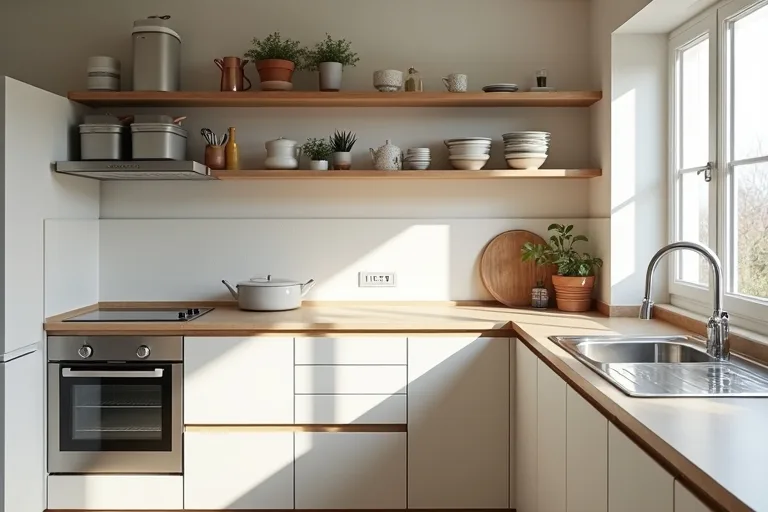
Create zones for cooking, prep, and everyday items
Clear zones make a compact kitchen easier to use because they reduce back-and-forth movement. Instead of storing everything by type alone, think about how the room works during a normal day. Cooking items should stay near the stove, prep tools near the main worktop, and everyday dishes near the sink or dishwasher if possible.
This is also where small furniture decisions can help. An 8 cube storage organizer can work well in an adjacent kitchen-dining nook, pantry corner, or utility-style space when the kitchen itself is too tight for a larger cabinet. It is most useful when you need one place for overflow storage, extra paper goods, lunch items, or family supplies that should stay nearby but not on the main counters.
To keep the setup calm, pair that kind of organizer with soft-sided storage that hides the visual noise. A fabric storage bins set for cube organizer can help separate categories without making the shelf feel busy. If you want a more planning-focused way to test whether a cube unit fits the room, the Small Space Furniture Planner, Room Layout Spreadsheet (Digital Download) is a useful next step before you commit.
When a cube organizer is the right choice, it should support the room rather than dominate it. That means checking the walkway, door swing, and how often you need access to the items inside. If the unit blocks movement, it is too large for the job even if it technically fits.
Choose organizers that fit the room, not just the shelf
Many small kitchens end up cluttered because storage products are bought before the room is measured properly. A bin that is too deep, a shelf that interrupts the door path, or a cart that leaves no space to bend down can make the kitchen harder to use than before.
Good organizer choices are usually simple: shallow where reach matters, closed where clutter shows, and easy to remove when cleaning. Fabric bins are useful when you want softer visual lines and a less crowded look. Open cube storage works best when the contents are predictable and do not need constant reshuffling. If you are trying to decide between the two, think about whether the items are daily-use, backup, or seasonal.
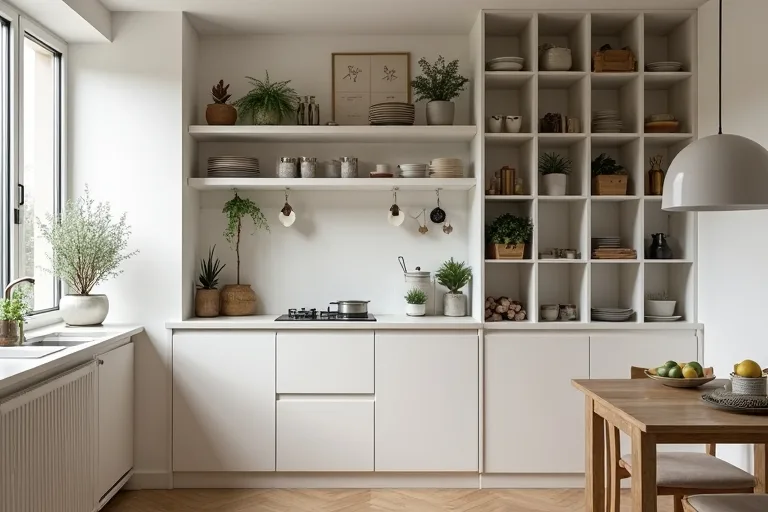
Before you buy, do a quick layout check: measure the width of the wall or nook, note the depth you can actually spare, and confirm that nearby drawers, doors, and appliances still open cleanly. If you need a calmer way to work through that decision, start with the Room Layout Planner or return to the Small Spaces & Storage hub for more room-planning guidance.
Best next step
If you want the kitchen to feel bigger, start by mapping the room before adding more storage. A simple layout check will show you which zones need help, what can move out of the way, and whether a cube unit, bin system, or wall shelf is actually the right size for the space.
- Buying storage before measuring the room.
- Using too many open shelves for items that create visual clutter.
- Putting everyday items too far from the prep and cooking zones.
- Choosing deep organizers that block movement or door swings.
- Filling every wall and corner until the kitchen feels tighter than before.
Small kitchen storage works best when it supports the way the room is used. Start with flow, keep counters clear, use vertical and hidden storage carefully, and choose organizers only after you know what the space can comfortably hold. A compact kitchen does not need to feel crowded; it needs storage that respects the room.
Helpful next tools and planners
If you want to make the decision easier before you buy
These are useful if you are still deciding how much storage the room can handle, or whether a cube organizer, fabric bins, or a layout planner is the better next step.
FAQ
How do I make a small kitchen feel less cluttered?
Keep the counters clear, move daily items closer to where you use them, and use closed storage for things that create visual noise. A few well-placed organizers usually help more than adding extra furniture.
Is open shelving a good idea in a compact kitchen?
It can be, but only for a limited number of items. Open shelving works best when you store things you use often and are happy to see every day. If it becomes a catch-all, it makes the room feel busier.
Where should I put overflow items if the kitchen is too small?
Use nearby storage outside the main work zone if you can, especially in a kitchen-dining nook or adjoining room. That keeps the cooking area open while still keeping useful items close by.
What should I buy first for small kitchen storage?
Measure the room and map the zones first. After that, choose storage that fits the layout, such as shelves, bins, or a cube organizer only if the size and access make sense.
Three sensible next steps
Some links in this article may be affiliate links. Read more in the Affiliate Disclosure.