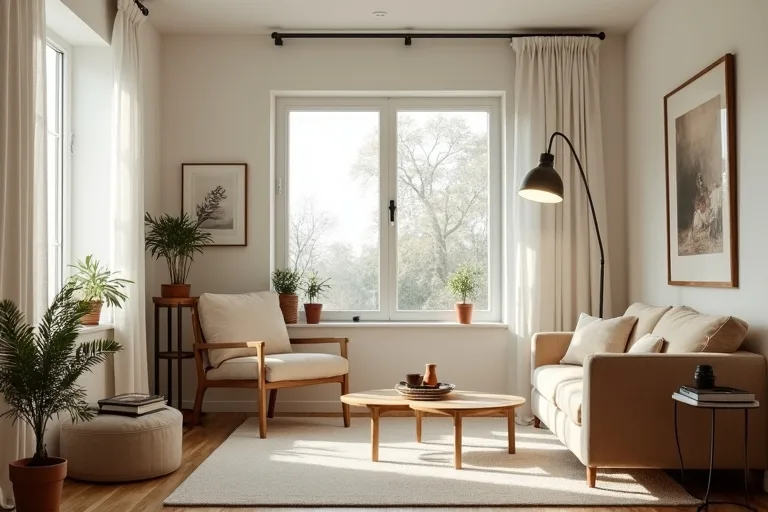
A small living room usually feels cramped for one simple reason: the furniture, rug, and lighting are not working together. When each piece is slightly off, the whole room starts to feel tighter than it really is.
The good news is that you do not need to buy a new sofa to fix it. A calmer layout, better scale, and the right rug size can change the room’s balance before you spend money on anything new.
The biggest mistakes are oversized furniture, the wrong rug size, poor lighting, and blocking the room’s natural flow. If you want the fastest improvement, start by checking rug size and seating placement before adding more pieces.
Why a small living room starts to feel cramped
Most small living rooms do not feel small because of square footage alone. They feel small when the layout makes the eye stop too soon, the walking paths are awkward, or the main furniture pieces compete instead of supporting each other.
A room can be modest and still feel open if the furniture is scaled to the space and the arrangement leaves clear movement around it. In practice, that means fewer pieces, more intention, and less visual interruption.
If you are unsure where to begin, look at the room from the doorway. Ask yourself what blocks the view, what interrupts the path, and what feels oversized for the footprint. That is usually where the problem starts.
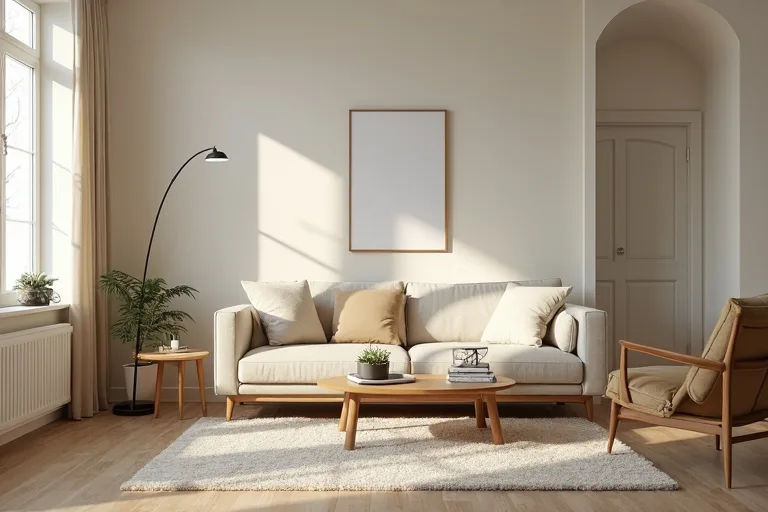
If one furniture piece feels like it needs the room to adapt around it, the scale is probably wrong. In a small living room, the room should define the layout, not the other way around.
The rug mistake that makes everything feel tighter
A rug that is too small is one of the quickest ways to shrink a living room visually. It breaks the seating area into disconnected parts and makes the furniture look as if it is floating without a plan. A properly sized rug does the opposite: it anchors the room and gives the eye one clear zone to read.
This is why rug sizing matters before anything else. If the rug is too short or too narrow, even a tidy room can feel unsettled. The seating may look crowded, and the boundaries of the room become harder to understand.
A simple rule helps: the rug should support the seating group, not sit awkwardly under only the coffee table. If you want a quicker way to check the balance, use the Styling Homes rug size calculator before you order anything.
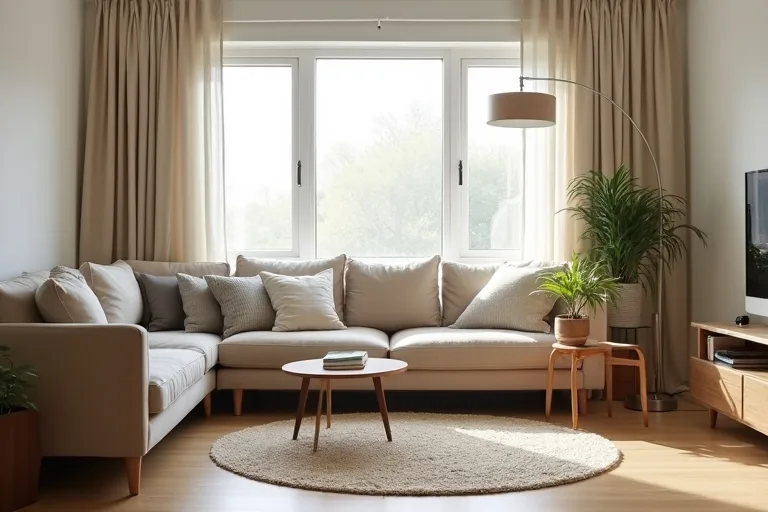
- Measure the seating area first, not the open floor.
- Choose a rug that visually connects the main seats.
- Leave enough surrounding floor to keep the room light.
Furniture scale and walking paths matter more than you think
In a small room, one oversized sofa or bulky chair can affect everything around it. It narrows walkways, makes corners feel blocked, and reduces the sense of air around the seating area. Even when the furniture is comfortable, the room can still feel heavy if the proportions are off.
The goal is not to make the room empty. The goal is to make the room readable. People should be able to tell where to sit, where to walk, and what the main purpose of the room is without trying to figure it out.
If you are choosing between pieces, the better question is often not “Do I like it?” but “Does it leave the room easy to move through?” That one shift usually leads to better decisions.
Before buying a new sofa, chair, or table, map the room on the room layout planner. If the walkway feels cramped on paper, it will feel cramped in real life too.
The room usually feels calmer when the main pieces are fewer, slimmer, and more deliberate. A compact sofa, one useful chair, and a clear path can often do more for the room than adding another object to fill a gap.
Lighting, clutter, and visual blocking can flatten the space
Poor lighting can make a small living room feel lower, darker, and more compressed than it is. A single ceiling light often leaves the corners flat, while a layered approach creates depth and helps the room feel more open.
Clutter has the same effect. When surfaces are crowded, cords are visible, or storage spills into the walkway, the room loses structure. Even small amounts of visual noise add up quickly in a compact space.
Wall placement matters too. Large dark pieces, tall items placed in tight corners, or furniture pushed in a way that blocks the room’s shape can make the footprint harder to read. A clearer edge usually helps the room breathe.
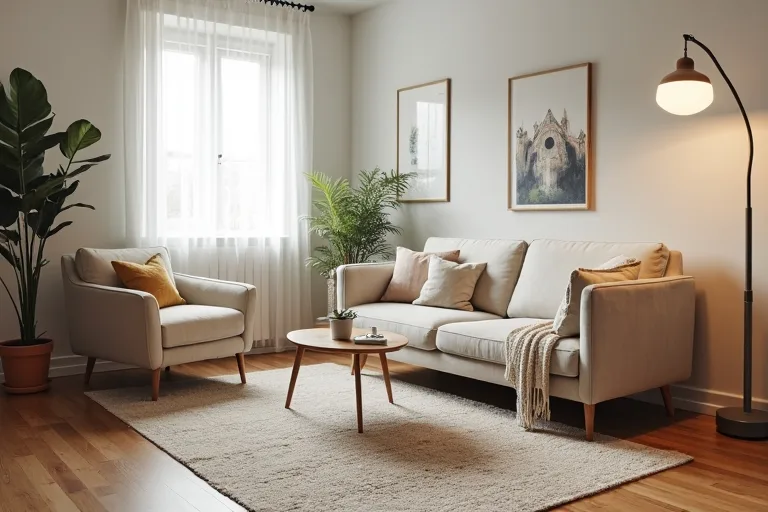
A modern arc floor lamp can help here because it adds light without needing a side table to support it. If you are comparing options, a modern arc floor lamp for living room is a practical choice when the goal is to lighten the room without adding more furniture.
Best next step
Before you shop for new furniture, define the seating zone first. The right rug size gives the room a clear anchor, and once that is set, it is much easier to judge what else belongs in the space.
- Choosing a rug that is too small for the seating area
- Using furniture that is too deep, wide, or heavy for the room
- Blocking the natural walkway with chairs, tables, or storage
- Relying on one overhead light and ignoring the corners
- Adding clutter that breaks up the room’s clean visual lines
- Pushing every piece against the wall without checking the balance
A small living room feels smaller when the layout is unclear, the rug is undersized, the furniture is too heavy, or the lighting is flat. Fix the structure first. Once the room has one clear seating anchor and easy movement, it usually feels larger without changing the whole room.
Helpful next tools and planners
If you want to make the decision easier before you buy
Start with the sizing and planning tools, then use a few practical products only after the layout makes sense. That order usually saves time, money, and avoidable returns.
FAQ
What makes a small living room feel even smaller?
Usually it is a mix of oversized furniture, a rug that is too small, blocked walking paths, and lighting that leaves the room feeling flat.
Should I buy furniture first or plan the layout first?
Plan the layout first. If the room cannot support the scale and movement of the furniture, even good pieces can feel wrong.
Why does rug size matter so much in a small room?
The rug helps define the seating area. When it is too small, the room looks fragmented and the furniture can feel like it is floating.
How can I make a small living room feel less cluttered?
Reduce visual blocks, keep clear walkways, and use lighting and storage that support the room instead of filling it up.
Three sensible next steps
Some links in this article may be affiliate links. Read more in the Affiliate Disclosure.