A small living room can feel comfortable and well-proportioned when the layout is planned from the start. The goal is not to fit in more furniture, but to give each piece a clear role, keep movement easy, and use scale, light, and storage to make the room feel open rather than crowded.
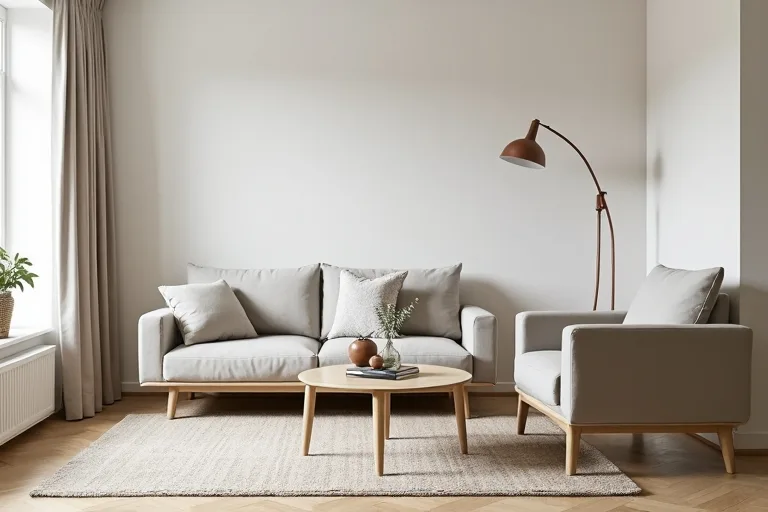
Start with the rug, then place the main seating around it and keep the layout open.
Start with the room flow
The best small living rooms usually begin with a simple question: how do people move through the space? Before choosing furniture, identify the main walkway, the focal wall, and the spots where the room naturally narrows. That gives you a layout that feels intentional instead of squeezed together.
Leave enough open floor area for daily movement, and avoid placing pieces where they interrupt the route to a doorway, balcony, or adjoining room. If the living room connects to another zone, the edge of the seating area should stay visually clear so the room reads as one calm space rather than a collection of obstacles.
Use the room layout planner to test a few arrangements before you commit to furniture placement or shopping.
When a room is especially tight, think in zones rather than in individual pieces. A sofa, rug, and side table can form one zone; a reading chair and lamp can form another. This approach helps a small room feel structured without becoming crowded.
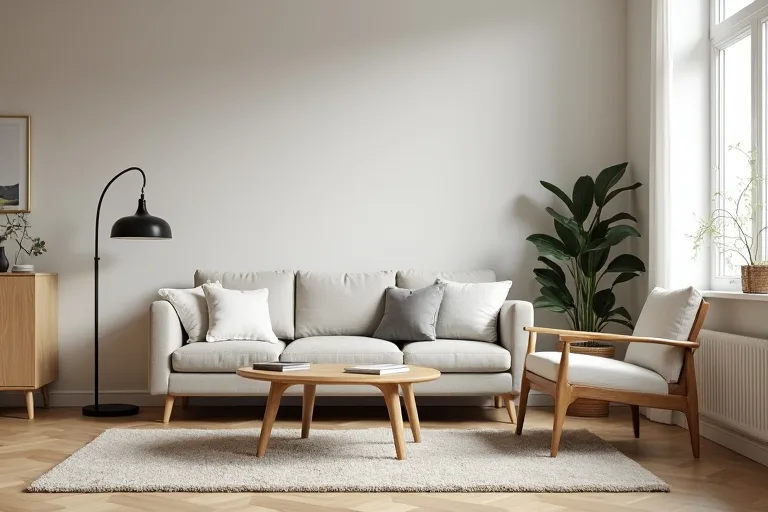
If you want a more precise starting point, the room layout planner can help you map furniture placement before you move anything heavy.
Choose a rug that anchors the seating
In a small living room, the rug does more than add texture. It defines the seating area and helps the room feel complete. A rug that is too small makes the furniture look scattered, while one that is large enough to connect the main pieces creates a steadier, more balanced layout.
An 8×10 neutral rug is often a strong choice when the room needs visual calm and the seating area includes a compact sofa and one chair. The neutral tone keeps the floor from breaking up the room, and the larger surface helps the furniture read as one arrangement instead of separate pieces.
The key is to size the rug around the seating, not the walls. In many compact rooms, front sofa legs on the rug are enough to establish the zone. What matters most is that the seating area feels grounded and the edges of the room are still visible.
If you are unsure about proportions, check the rug size calculator before ordering. It is an easy way to avoid a rug that feels too small once it arrives.
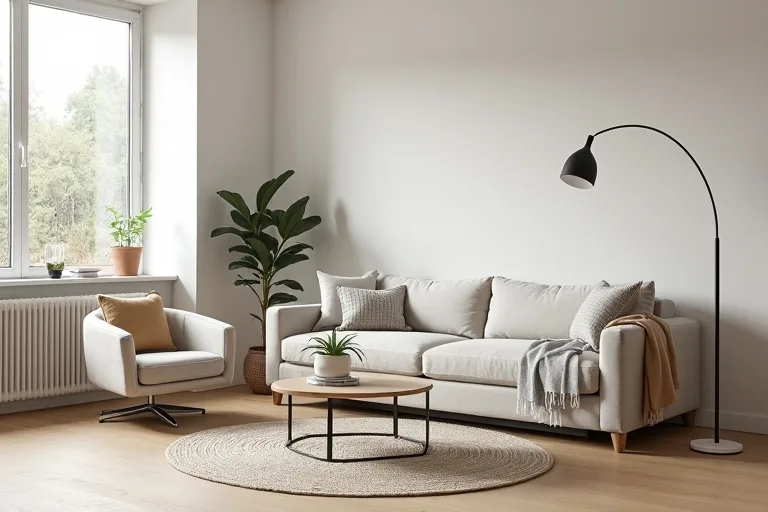
If you are comparing options, a neutral 8×10 living room area rug can be a practical place to start when the sofa and chair need a shared base.
Place furniture with purpose
Small living room furniture should work harder than furniture in a larger room. A compact sofa, one accent chair, and a small table often create a better result than trying to fill the room with extra seating. The layout should support conversation first, then circulation, then storage.
It helps to keep at least one side of the room visually lighter. If the sofa is against a wall, avoid placing another tall piece directly opposite it unless the room is very narrow. A lower chair, open-leg table, or compact ottoman can keep the space from feeling boxed in.
Choose pieces with visible floor beneath them when possible. Raised legs help the room feel less heavy, especially if the flooring is light. That said, the most important decision is proportion. A room often feels bigger when it contains fewer, better-scaled pieces instead of more furniture squeezed into the same footprint.
Make one seating group do the work
In a smaller room, a single well-defined seating group usually looks better than several small clusters. Keep the main conversation area centered around the rug, then add one secondary perch only if the room still allows a clear walking path.
If you are choosing between a bigger sofa and a second chair, consider how the room is actually used. For many small living rooms, a sofa plus one chair is more comfortable and easier to arrange than a larger sectional that interrupts the flow.
Use light to widen the room
Lighting can make a small living room feel open without changing the footprint. Natural light should stay as unobstructed as possible, so keep window treatments simple and avoid blocking the glazing with tall furniture. When the room needs more light after dark, layer it rather than relying on one central source.
An arc floor lamp works well beside a sofa because it brings light over the seating area without needing a side table or ceiling change. It also adds height, which helps balance lower furniture and draws the eye upward. In a compact room, that vertical line can make the whole space feel a little more generous.
Mixing one floor lamp with a table lamp or small wall light gives the room depth and reduces harsh shadows. Soft, even light is especially useful in narrow rooms, where strong contrast can make the edges feel tighter.
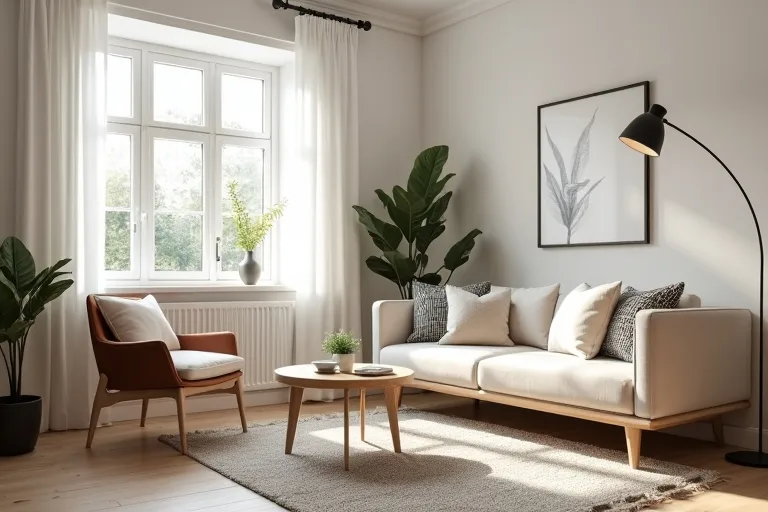
A modern arc floor lamp is useful when you need focused light over the sofa without adding another bulky surface.
Choose storage and decor that keep the room clear
Small rooms need storage that disappears into the layout. Closed storage usually works better than open shelves when the room already has a lot going on. A low media unit, a narrow sideboard, or a storage ottoman can hold essentials while keeping the room visually quiet.
Decor should be edited, not absent. One large artwork, a pair of cushions, and a few carefully chosen objects can be enough. Too many small items make a small room feel busy, while fewer, larger pieces usually feel more settled and deliberate.
A room makeover budget planner is helpful when you are choosing between new furniture, storage, lighting, and accessories. It keeps the spending sequence realistic, which matters more in a small room where every purchase affects the layout.
Use the room makeover planner to compare layout choices against your budget before buying.
Common mistakes that make a small room feel tighter
The most common mistake is using furniture that is either too large or too many. A room becomes harder to navigate when every wall is filled and no space is left for the eye to rest. Another frequent issue is choosing a rug that is too small, which makes even a tidy arrangement look unfinished.
It also helps to avoid pushing every piece directly against the walls. In some rooms, a slight float can improve the sense of balance and give the seating area clearer shape. Even a few inches can make the layout feel more thoughtful.
Finally, watch the visual weight of the room. Dark, bulky furniture in a room with limited light can make the space feel compressed. Lighter finishes, slimmer profiles, and a more restrained colour palette usually work better because they keep the room open without making it look bare.
For more layout ideas across the home, browse the Living Room Ideas hub or compare styles in the design styles section if you are still deciding on the overall direction.