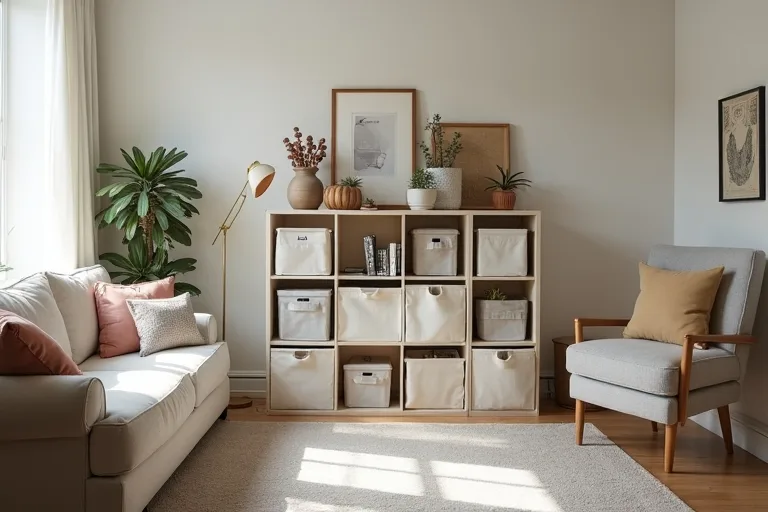
Small living rooms usually do not feel cramped because they lack storage. They feel cramped because the storage is too visually heavy, too large for the wall it sits on, or placed where people actually need to walk.
That is why the best storage decision is not the one that holds the most. It is the one that fits the room’s layout, keeps movement easy, and lowers the visual noise in the space.
The biggest mistake is using storage that adds visual bulk or blocks flow instead of fitting the room’s layout.
Why storage can make a small room feel tighter
In a small living room, every piece of furniture affects how the room reads at a glance. Low, open, and narrow pieces tend to feel lighter. Tall, deep, or closed-off pieces can make the room look more crowded, even when they are useful.
That does not mean you should avoid storage. It means storage should work with the room’s proportions. A shelf, cabinet, or cube unit can help the room feel calmer when it sits neatly against a wall and leaves a clear path through the space.
One of the simplest ways to reduce visual weight is to keep the storage surface organized and use containers that look consistent. If you want a practical, flexible option, a compact 8 cube storage organizer can be easier to place than a bulky cabinet, especially when you want to separate open storage from hidden storage.
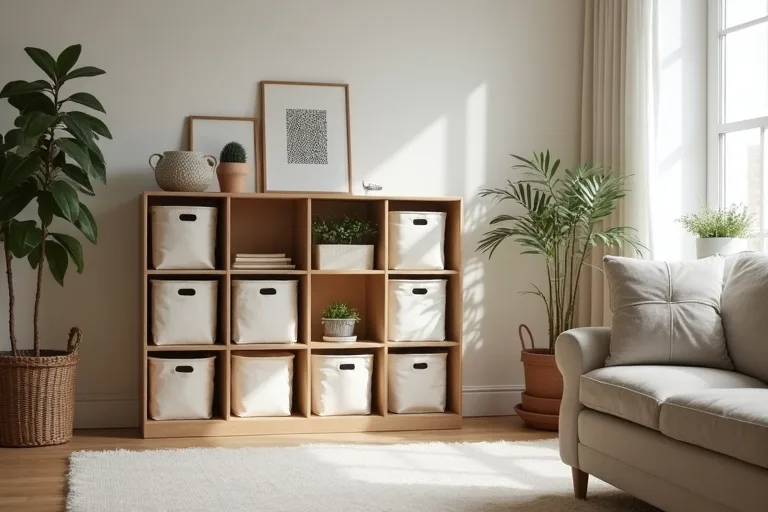
Before you buy anything, ask one question: does this piece solve storage without interrupting movement? If the answer is no, the room will probably feel smaller after it arrives, even if it is technically more organized.
The biggest storage mistakes to avoid
The most common mistakes are easy to miss when you are shopping online. A piece can look compact in a photo and still overwhelm a small room once it is in place.
- Choosing oversized furniture. Deep cabinets and wide shelving units can take over the wall and make the room feel narrower.
- Blocking the natural walking path. If storage sits in the route between the sofa, door, and window, the room starts to feel awkward and cramped.
- Using too many closed pieces. Several solid-front cabinets can create a heavy wall effect, especially in a room with limited natural light.
- Overfilling open shelves. Open shelving can work well, but only if there is enough space left on each shelf for the eye to rest.
If you need a softer look inside a cube unit, a set of fabric storage bins for cube organizers can help reduce visual clutter while keeping everyday items easy to reach.
How to choose storage that fits the layout
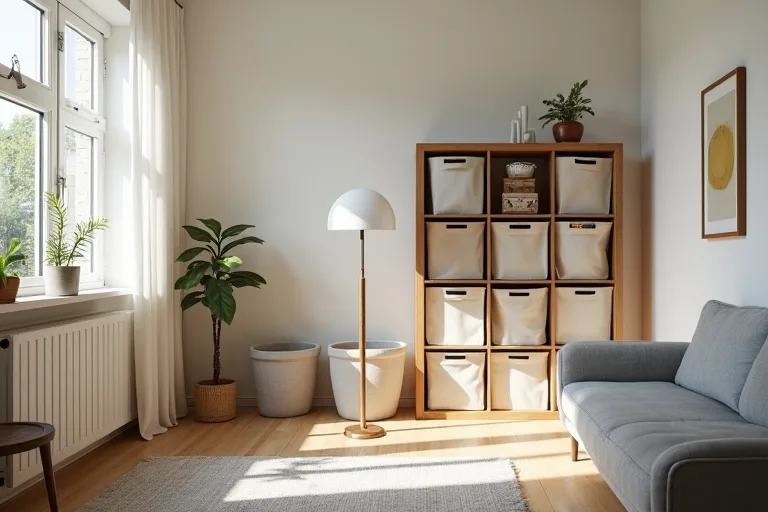
The easiest way to make a small living room feel larger is to choose storage from the layout first and the style second. That means checking where the circulation path is, what wall space is actually available, and how much visual weight the room can handle.
A simple order helps:
- Measure the wall or corner where the storage will sit.
- Mark the path people use most often through the room.
- Choose a storage piece that stays within that boundary.
- Prefer pieces with a lighter profile, open legs, or open cubbies if the room feels dense.
- Use bins, baskets, or labeled inserts to keep the contents calm.
If you are still planning the room, a room layout tool is often more useful than another shopping tab. It helps you see whether the storage will support the room or compete with the sofa, table, or doorway. For a more general styling starting point, you can also browse living room ideas after you have the measurements in place.
For readers who want a planning tool before making a purchase, the Small Space Furniture Planner, Room Layout Spreadsheet can help test placement and avoid buying something that quietly blocks flow.
A simple buying check before you commit
Storage is easiest to choose when you treat it as a room decision, not just a product decision. Before buying, compare the piece against the space it needs to live in.
Use this quick check:
Does it fit the wall without crowding the next piece?
Does it leave a clear walking path?
Does it reduce visual bulk instead of adding to it?
Can it be kept tidy without constant effort?
If the answer is yes, you are probably looking at the right kind of storage for a small living room. If the answer is mixed, the room may need a different size, a lighter finish, or a more flexible system like a cube unit with bins.
Best next step
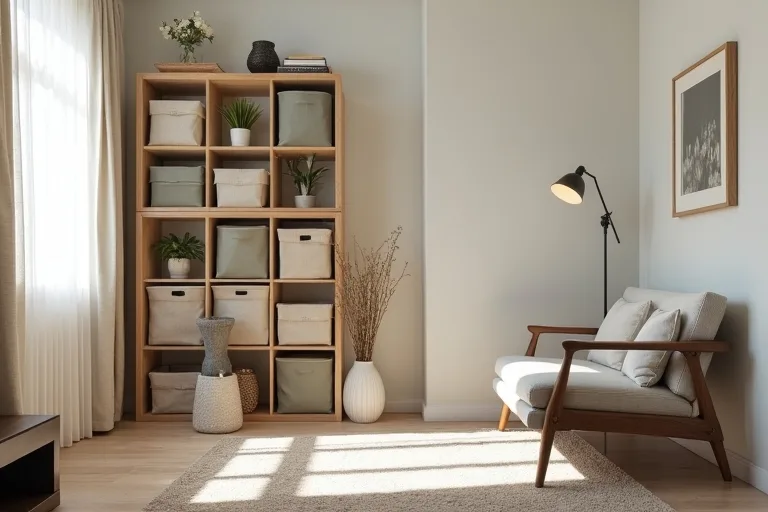
If you are comparing storage options for a small living room, start with the layout first and the purchase second. A practical cube system can be a smart fit when you need flexible storage with a lighter visual footprint, especially when paired with bins that keep the shelves quiet.
- Buying storage that is wider or deeper than the room can comfortably hold.
- Placing storage in the main walking route between seating and the doorway.
- Choosing several heavy, closed-front pieces that make the room feel boxed in.
- Leaving shelves too full, which creates visual clutter even when everything is technically stored away.
- Skipping the layout check and shopping by appearance alone.
In a small living room, storage should make the room feel easier to use, not harder to move through. The safest choice is usually the one that fits the layout, keeps the floor path open, and has less visual bulk. If you want a practical, adaptable option, a cube organizer with fabric bins can be a strong middle ground between open shelving and a solid cabinet.
Helpful next tools and planners
If you want to make the decision easier before you buy
These options are most useful after you have checked your layout. They help you keep the room calm, test fit, and choose storage that supports the space instead of crowding it.
FAQ
What kind of storage makes a small living room look smaller?
Storage that is too deep, too wide, or too visually heavy tends to shrink the room most. Pieces that block the path or sit awkwardly in front of windows also make the space feel tighter.
Is open storage better than closed storage in a small living room?
Not always. Open storage can feel lighter, but only if it stays tidy. Closed storage can work well when you want to hide clutter, but too much of it can make the room feel heavy.
Are cube organizers a good choice for small spaces?
Yes, when the size fits the wall and the contents are managed well. A cube organizer can offer flexibility without the bulk of a larger cabinet, especially with bins inside.
What should I check before buying living room storage?
Measure the available wall space, check the walking path, and think about how much visual weight the piece adds. If the storage interrupts flow, it is probably the wrong fit.
Three sensible next steps
Some links in this article may be affiliate links. Read more in the Affiliate Disclosure.