
Small living room storage works best when it solves a layout problem first and a clutter problem second. In a compact room, the wrong piece can block movement, crowd the eye, and make the space feel harder to use than it really is.
The goal is not to hide everything. It is to choose storage that fits the room, keeps surfaces calmer, and leaves clear walking paths so the living room feels more open on a normal day.
Use storage that fits the layout, hides clutter, and keeps walkways clear.
Start with the real storage problem
Before you look at baskets, cabinets, or cube units, decide what the room is actually struggling with. Most small living rooms are not short on storage in a general sense; they are short on storage that fits the way the room is used.
If the room needs to hold remotes, throws, board games, kids’ items, or media gear, the best solution is usually the one that groups the daily clutter in one controlled place. That keeps the rest of the room visually quiet, which matters a lot more in a small space than in a larger one.
Think about where the clutter collects. If it lands near the sofa, storage should sit close to the seating zone. If it is tied to the TV wall, the storage should work with that wall instead of competing with it. A compact room feels bigger when storage follows the room’s logic instead of fighting it.
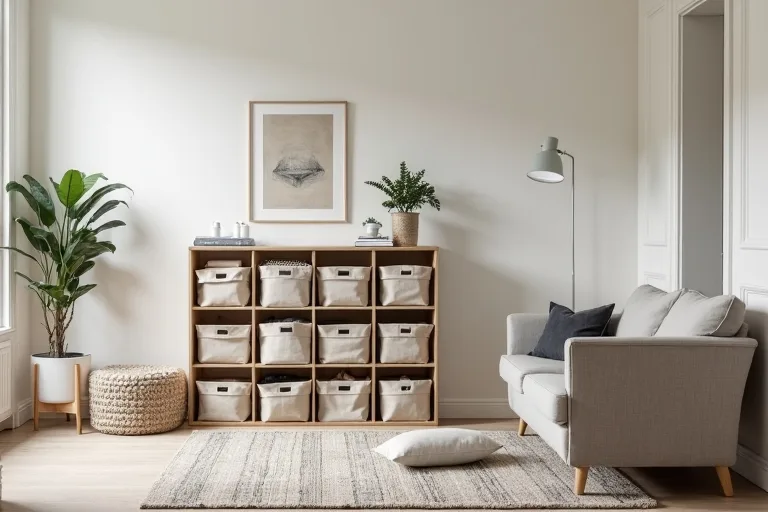
Ask one simple question before buying anything: does this storage piece reduce clutter without taking the room’s easiest walking path? If the answer is no, it is probably the wrong size or the wrong type for the space.
Choose storage that keeps the room open
The best small living room storage usually does one of three things well: it tucks away visual clutter, it stays low enough not to dominate the room, or it doubles as a useful surface. In compact rooms, storage that tries to do too much often ends up feeling bulky.
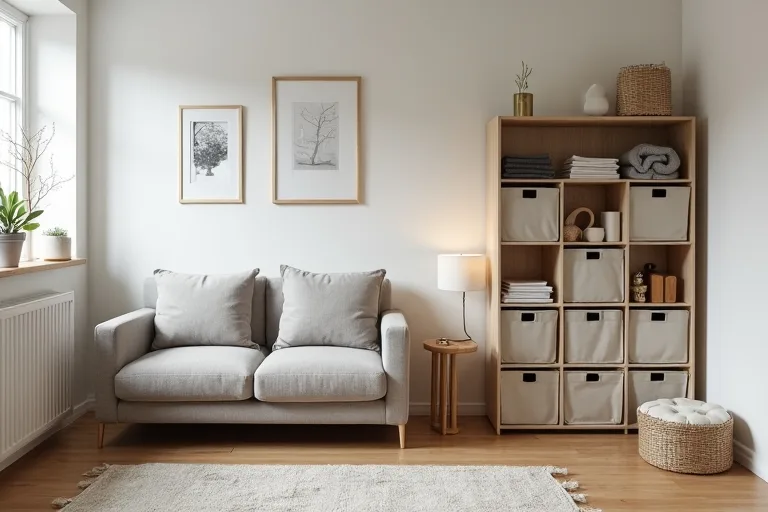
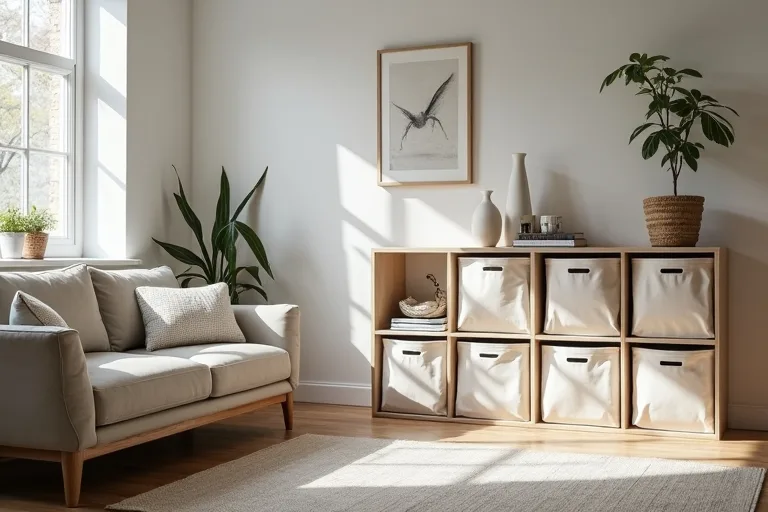
An 8 cube storage organizer can work well when you need a simple, flexible wall unit for mixed storage. It gives you structure without requiring custom furniture, and it can be easier to keep organized than a collection of open shelves and loose bins. Pairing it with a fabric storage bins set for cube organizer helps the unit feel calmer and less visually busy.
Other low-profile options can also help, especially when floor space is limited:
- Use a closed storage bench if seating and storage need to share one footprint.
- Choose a narrow sideboard or media cabinet when the wall is long but the room is shallow.
- Use lidded bins only when they can live inside a larger piece or under a table without cluttering the floor.
The key is to keep the room reading as one open shape, not as a collection of small objects spread across every wall.
Check scale and placement before you buy
Good storage in a small living room is less about style and more about fit. A piece that looks reasonable in a product photo can still feel oversized once it lands in a tight room. That is why scale checks matter before you order anything.
Start with the wall or corner where the storage will go. Measure the full width, then leave room for anything that needs to open, swing, or be reached comfortably. If a door, drawer, or bin will be used often, the surrounding space matters just as much as the furniture footprint.
Use this simple order of checks:
- Confirm the storage will not block the main walking route.
- Make sure the height works with nearby furniture and windows.
- Check whether the piece needs clearance to open or pull out bins.
- Decide what will live inside it before you buy, so the size is realistic.
If you are not sure whether a piece belongs in the room, a room layout planner is the easiest way to test it before spending money. It is much cheaper to discover a size problem on paper than after delivery.
Make the room easier to live in every day
Small living room storage should not just look neat for one afternoon. It should make daily cleanup faster and the room easier to use without extra thought. That usually means fewer storage pieces, clearer jobs for each piece, and less open clutter on display.
When a room has one place for toys, one place for media items, and one place for throws or spare chargers, the space stops drifting into visual mess. That is especially helpful in homes where the living room does more than one job, because a room can feel crowded long before it is actually full.
If you want a simple planning step before shopping, compare the storage idea against the rest of the room layout. The Small Space Furniture Planner, Room Layout Spreadsheet is useful when you want to test placement, scale, and storage fit before buying. For broader styling and layout ideas, the living room ideas hub is a good place to continue once the practical decisions are clear.
The calmest small living rooms are usually the ones where storage is almost invisible in daily life. It is there when needed, but it does not take over the room’s shape.
Best next step
If you are deciding between a few storage options, check the room plan first. The easiest way to avoid buying the wrong size is to map the layout before you shop, especially in a compact living room.
- Buying a storage unit before checking the walking path around it.
- Choosing open storage for items that create visual clutter fast.
- Using too many small containers instead of one clear storage system.
- Picking a piece that is too tall or too deep for the room proportions.
- Forgetting to leave space for drawers, doors, or bins to open properly.
The right small living room storage should help the room breathe. Choose pieces that fit the layout, reduce visible clutter, and protect the main walkway. If you are unsure about size, test the plan first, then buy the storage that truly supports the room instead of filling it.
Helpful next tools and planners
If you want to make the decision easier before you buy
These options are most useful when you want to compare storage ideas, check fit, and avoid ordering something that looks good online but overwhelms the room in real life.
FAQ
What storage works best in a very small living room?
The best option is usually the one that uses one wall or one corner well, hides everyday clutter, and does not break up the walking path. Cube organizers, narrow cabinets, and storage benches are often more practical than scattered small pieces.
Should small living room storage be open or closed?
Closed storage is usually easier in compact rooms because it reduces visual noise. Open storage can work if the items are neat, limited, and genuinely worth displaying.
How do I know if a storage piece is too big?
If it blocks the main path, crowds the seating area, or makes the room feel tighter as soon as you place it on the floor, it is probably too large or too deep for the space.
Is a cube organizer a good idea for a living room?
Yes, if you want flexible storage that can handle mixed items and stay visually simple with bins. It works best when the size fits the wall and the contents are kept under control.
Three sensible next steps
Some links in this article may be affiliate links. Read more in the Affiliate Disclosure.