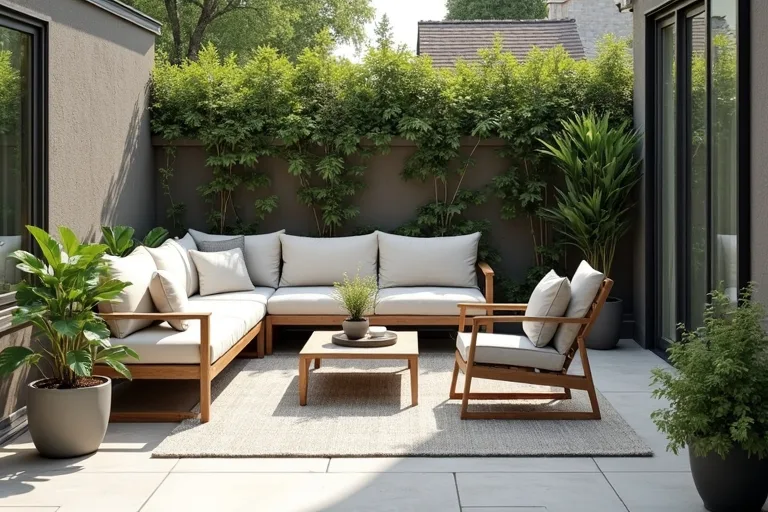
A small patio usually feels difficult for one reason: too many decisions are made before the space has a clear job. Once you decide where the main seating zone should go, the rest becomes much easier.
This guide is for anyone who wants the patio to feel usable first and decorative second. The goal is not to fill every corner. It is to create a layout that leaves room to move, sit, and use the space comfortably.
Start by defining one clear seating zone, then size the furniture to fit the patio with enough walking space.
Start with the patio’s real purpose
Before you look at furniture, decide how you want the patio to work on an ordinary day. A small patio can be a coffee spot, a conversation area, a reading corner, or a place for a couple of chairs and a side table. It does not need to do everything at once.
The best small patio ideas usually begin with one main function. That choice helps you avoid buying pieces that look good online but make the space awkward in real life. If the patio is mostly for sitting, make the seating zone the priority and let everything else stay secondary.
A compact outdoor conversation set can be a good starting point when you need a simple arrangement that stays visually contained. The key is to choose a set only after you know the patio’s actual footprint and how much walking room you need around it.
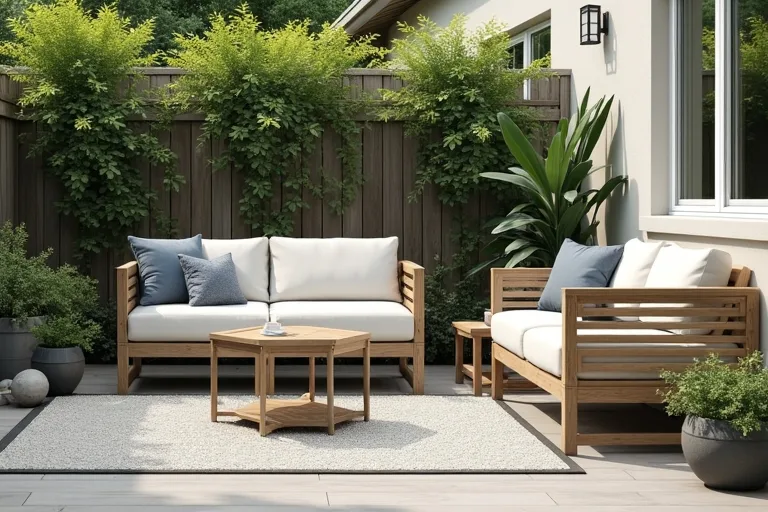
The real decision is not which style you like most. It is whether the patio can fit one seating zone without blocking movement. If the answer is unclear, plan the layout first and shop later.
Measure the space and mark the seating zone
Small patios improve quickly when you work from dimensions rather than guesses. Measure the full patio, then note doors, railings, steps, fixed planters, and anything that affects movement. After that, mark the area you think the seating zone should occupy.
A simple way to plan it is to think in layers:
- Measure the patio’s full width and depth.
- Identify the main traffic path in and out of the space.
- Decide where the seating zone can sit without interrupting that path.
- Choose furniture that fits inside that zone with some breathing room.
If the space is narrow, the seating zone often works best along one side instead of in the center. If it is more square, a centered rug and balanced seating can make the area feel calmer. For awkward patios, the best answer is often the simplest one: one compact grouping, not several smaller clusters.
The room layout planner is useful here because it lets you test the seating zone before you commit to buying. That matters more than choosing a chair shape too early.
Choose a layout that suits the shape of the patio
Different patio shapes call for different decisions. The goal is not to make every layout symmetrical. The goal is to make the space feel clear and easy to use.
For narrow patios, keep the furniture low-profile and line it up so the main walkway stays open. For square patios, a centered arrangement often feels most stable. For L-shaped or irregular spaces, one defined corner seating area usually works better than trying to divide the patio into several uses.
Use the rug to support the layout, not to force it. A waterproof outdoor rug in the right size can visually anchor the seating zone and help separate it from the rest of the patio. On a small patio, a 5×7 rug is often a practical place to start if the seating group is compact and you want the furniture to feel connected without crowding the edge of the space.
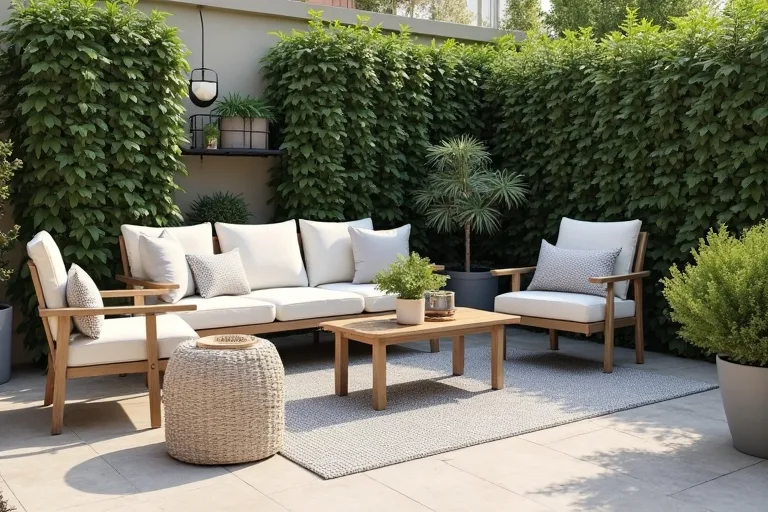
If you are comparing options, look for pieces that keep the visual weight light. Slender arms, open legs, and a simple table shape can make the patio feel less crowded than bulkier furniture with the same seat count.
Use furniture and styling that support flow
Once the layout is clear, choose pieces that reinforce it. A good small patio setup is usually about restraint: enough seating to be useful, but not so much that every inch becomes furniture.
Space-saving choices tend to work best when they serve the patio’s main function. Foldable chairs, nesting tables, compact benches, and smaller-scale conversation sets can all be useful if they fit the zone you already planned. A matched set is not required, but the pieces should belong to the same visual area.
Styling should stay practical. A rug, one or two planters, and a side table are often enough. Too many accessories can make a small patio feel fragmented. Keep surfaces clear where people sit and move.
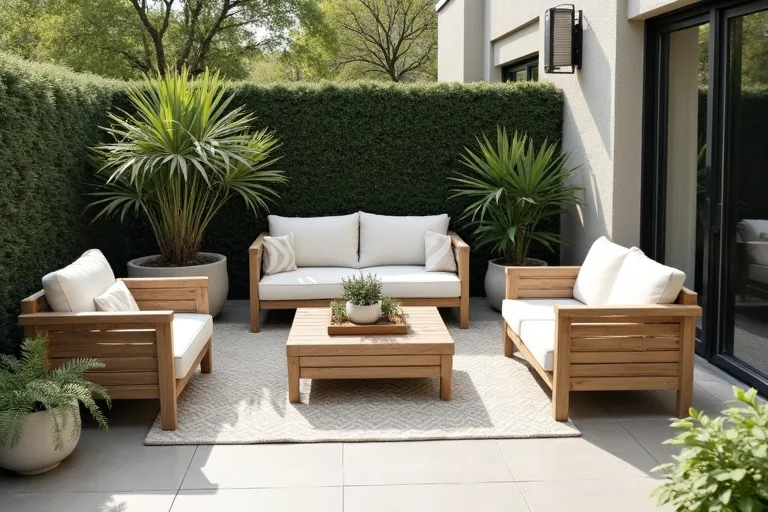
If you want a simple planning bridge before shopping, the room layout planner helps you confirm the seating size, and the Outdoor Living hub gives you more related ideas once you know what the patio needs to do.
Best next step
Before you buy furniture, map the patio as one seating zone and check that the layout still leaves a clear path to move through the space. That one step can prevent the most common small-patio mistakes.
- Buying furniture before defining the seating zone.
- Forgetting to leave a comfortable path around the patio.
- Using a rug that is too small to connect the seating area.
- Trying to fit too many functions into one small outdoor space.
- Choosing bulky pieces that close in the patio visually.
The easiest way to make a small patio work is to decide on one clear seating zone first, then choose furniture and a rug that fit the space with room to move. When layout comes before shopping, the patio feels calmer, more usable, and much easier to finish well.
Helpful next tools and planners
If you want to make the decision easier before you buy
These options fit the planning-first approach. Start with layout, then use product searches and planning tools to narrow down what belongs in your space.
FAQ
What is the first thing to plan for a small patio?
Start with the main seating zone. Once that area is defined, it is much easier to choose furniture, rug size, and traffic flow.
Is a rug necessary on a small patio?
No, but it can help anchor the seating area and make the layout feel more intentional. The rug should fit the furniture zone rather than float in the middle of the space.
How do I make a narrow patio feel less cramped?
Keep the layout simple, use smaller-scale furniture, and protect the walkway. One clear arrangement usually works better than several small pieces spread around.
Should I buy patio furniture before measuring?
No. Measure first, then plan the layout, then shop. That order reduces the chance of choosing pieces that look fine individually but do not work together in the space.
Three sensible next steps
Some links in this article may be affiliate links. Read more in the Affiliate Disclosure.