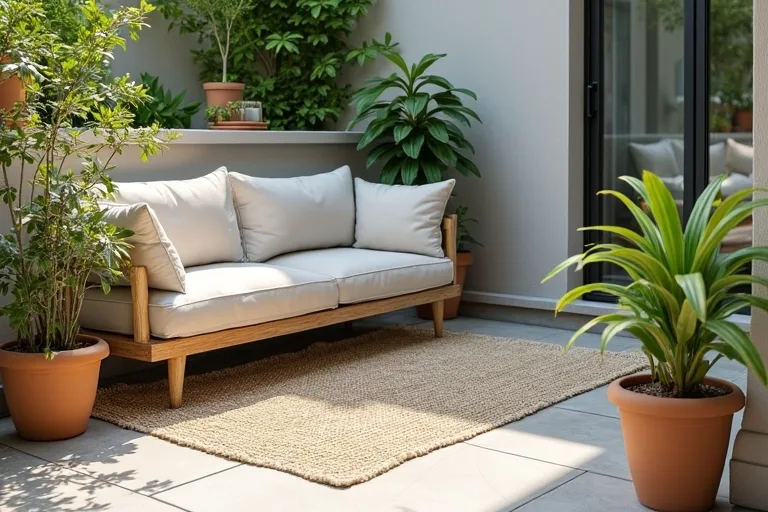
Small patios get expensive in a hurry when the layout is unclear. A chair that looks fine in a shop can feel oversized outside, and a rug that is only slightly too large can leave the whole area awkward and tight.
The easiest way to avoid that is to plan the main seating zone first. Once you know where people will sit, walk, and set down a drink, the budget version and the more space-saving upgrade become much easier to compare.
Start by defining the main seating zone, then choose the simplest layout that fits your space and budget.
Start with the seating zone, not the shopping list
A small patio works best when one area has a clear job. For most homes, that job is a main seating zone for two to four people, with enough room to move around it without squeezing past table legs or plant pots.
That decision comes before style details. If the patio is too tight, the wrong chair depth or rug size will make it feel cluttered no matter how carefully you decorate. If the layout is sensible, even simple pieces can look calm and intentional.
Use the same rule whether you are updating a compact balcony-like patio or a slightly larger outdoor corner: map the sitting area first, then build around it.
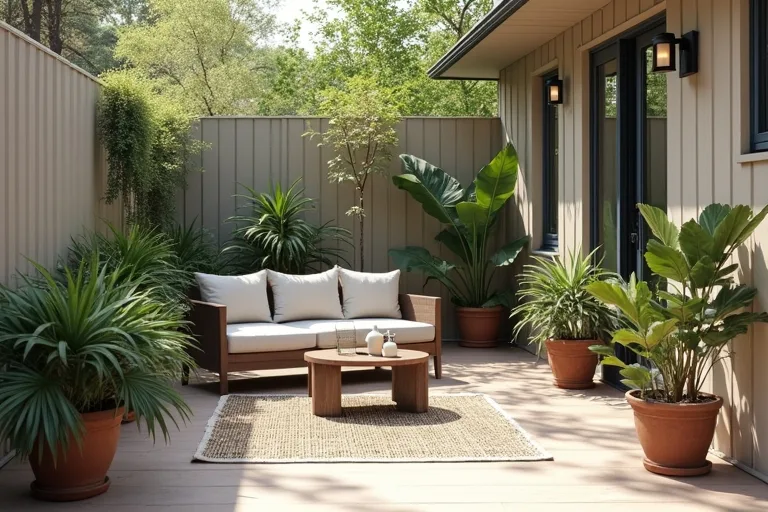
If you cannot point to where the main seating zone starts and ends, you are not ready to buy furniture yet. Mark the area on paper or in a layout planner, then decide what should fit inside it. That one step usually prevents overspending on pieces that look reasonable online but crowd the patio in real life.
What the budget version gets right, and where it can fall short
The budget approach is usually the most forgiving. It works well when you want a patio that is easy to move, easy to change, and not tied to one exact furniture arrangement. That might mean a compact outdoor conversation set, a simple side table, and a weatherproof rug to anchor the zone.
For many small patios, that is enough. The goal is not to fill every corner. It is to create a place where the seating area feels separate from the rest of the yard or terrace.
Here is the part that matters most:
- Choose fewer pieces, not smaller pieces at random.
- Keep the walking route open.
- Use the rug to define the zone, not cover the entire patio.
- Leave room for cushions, a tray, or a plant without blocking movement.
If you want a practical starting point, a simple 4 piece outdoor patio conversation set and a waterproof outdoor rug 5×7 can be enough to test the layout without overcommitting.
When a bigger space-saving upgrade makes sense
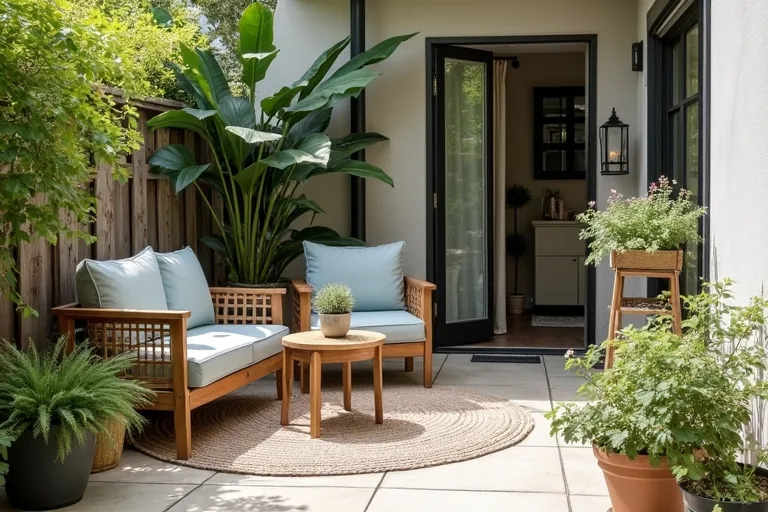
A better fit does not always mean a bigger footprint. In small patios, the smartest upgrade is often furniture that improves flow. That can mean slimmer arms, a table with a smaller base, or pieces that are easier to shift when you need the area to do more than one job.
This is the version to consider when the patio is used often, when you host more than one or two people, or when the current setup keeps getting moved around because it never quite fits.
A more planned setup also helps when storage matters. If cushions, side tables, or extra seating need to be brought in and out regularly, the layout should leave room for that routine. Otherwise the patio may look finished on day one but feel inconvenient a week later.
A digital planning tool can help here, especially if you are trying to balance furniture size, walking room, and budget. The Room Makeover Planner, Home Layout Budget Spreadsheet (Digital Download) is useful if you want a simple way to compare options before buying.
Check sizes before you buy, then spend where the space needs it most
For small patio ideas on a budget, the real decision is not “cheap or expensive.” It is whether the layout is clear enough to support the way you actually use the space. Once the main seating zone is defined, sizing becomes straightforward.
Before you place an order, check three things: the footprint of the seating group, the rug size relative to the furniture, and the amount of open circulation space around the arrangement. Those checks tell you whether a patio will feel calm or crowded.
If you want a more structured next step, map the layout in the room layout planner first, then move into the Outdoor Living hub for more patio planning guidance and sizing support.
Best next step
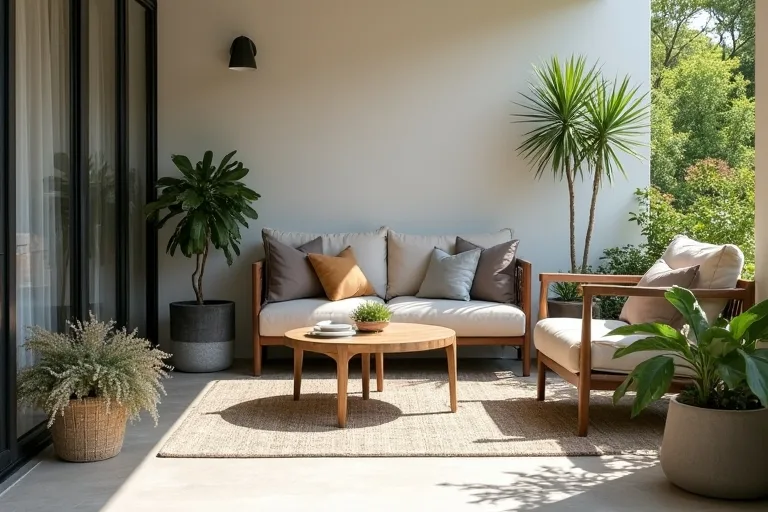
If you are deciding between a budget patio setup and a more polished space-saving upgrade, start by mapping the seating zone before you buy anything. That will show you whether a compact set is enough or whether you need a better-fitting layout.
- Buying patio furniture before deciding where the main seating zone will sit.
- Choosing a rug that is too small to anchor the furniture.
- Filling every corner instead of leaving a clear walking path.
- Picking pieces for style alone and ignoring storage, movement, and daily use.
- Upgrading to larger furniture when better proportions would solve the problem more effectively.
Small patio ideas on a budget work best when the layout is simple and the seating zone is clearly defined. A bigger space-saving upgrade is worth it when it improves flow, comfort, and storage without making the patio feel tighter. Plan the zone first, check sizes second, and shop third.
Helpful next tools and planners
If you want to make the decision easier before you buy
These tools and planning resources are useful when you are comparing a simple patio setup with a more refined space-saving version. They help you confirm fit, budget, and layout before you spend.
FAQ
How do I know if my small patio needs a budget setup or an upgrade?
If the current layout feels crowded, awkward, or hard to use, start with a better layout first. If the furniture still fits well but looks plain, a budget refresh may be enough.
What is the most important thing to define first?
The main seating zone. Once that is clear, it is much easier to choose the right rug, table, and chair sizes.
Should I buy the rug or furniture first?
Decide the layout first, then confirm rug size and furniture footprint together. That avoids ending up with pieces that compete for space.
Can a small patio still feel comfortable with fewer pieces?
Yes. In many cases, fewer well-sized pieces feel better than a fuller patio with awkward gaps and blocked movement.
Three sensible next steps
Some links in this article may be affiliate links. Read more in the Affiliate Disclosure.