
Studio apartment shopping goes wrong when the buying starts before the layout is clear. A bed, sofa, storage piece, or dining table can look right online and still make a small room feel crowded, awkward, or hard to use.
The better approach is to map the room first, then choose only the pieces that fit the way you actually live. That usually means measuring the zones, checking circulation, and deciding what the space needs to do before you compare furniture or storage.
Measure the zones first, then choose furniture and storage that fit the flow of the room. In a studio, the right piece is not just the right size; it also has to leave enough breathing room around doors, windows, and daily walk paths.
Start with the room zones, not the shopping list
A studio apartment works best when each part of the room has a clear job. Before you buy anything, sketch where sleeping, sitting, dining, working, and storage will happen. You do not need a perfect floor plan. You just need a simple view of how the space will function.
Start with the biggest decision: where the bed will sit. That one choice affects everything else, including how much room you have for a sofa, a table, and a storage unit. If the bed takes over the most visible wall, the rest of the room may need lower furniture or a more open layout. If you can tuck it into a quieter corner, you may have more freedom with the living area.
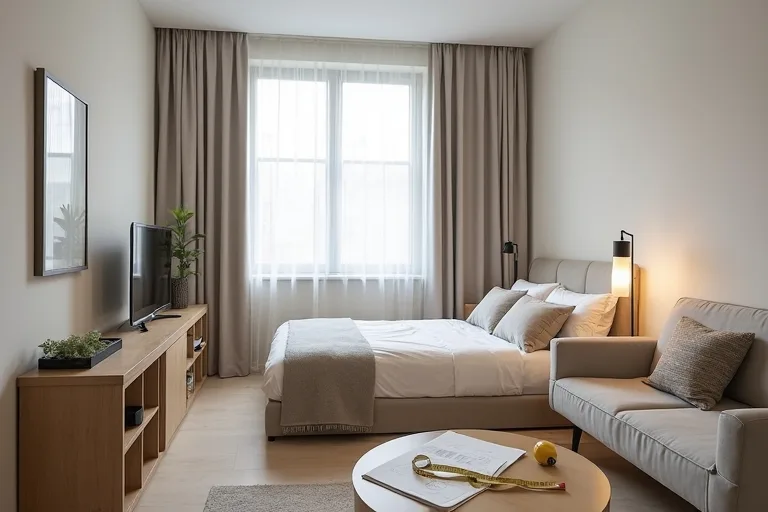
Once the main zones are placed, look at how they relate to one another. A studio feels calmer when the seating area does not collide with the sleeping area and when storage supports the room instead of splitting it into awkward fragments.
The real decision is not whether a piece looks good in isolation. It is whether that piece still works after you account for bed placement, door swing, window access, and the route you use every day to move through the room.
Measure the fixed features that control what will fit
In a studio, the walls are not the only limits. Doors, windows, radiators, outlets, and built-ins can matter just as much as the room size itself. If you skip these, you may end up with furniture that fits the square footage but still blocks the room in practice.
Before you buy, note the fixed elements and mark them on a sketch. Then add the main walk paths. That gives you a much clearer sense of where furniture can live without interrupting the room.
- Measure wall lengths and the main open spans.
- Mark door swings and any sliding clearance needed.
- Note window height, sill depth, and radiator placement.
- Locate outlets and light switches for lamps and work areas.
- Map the route from the entry to the bed, seating, and storage.
If a piece only fits by ignoring one of those points, it is probably not the right choice for a studio. A slightly smaller item often works better than a larger one that makes everyday movement feel tight.
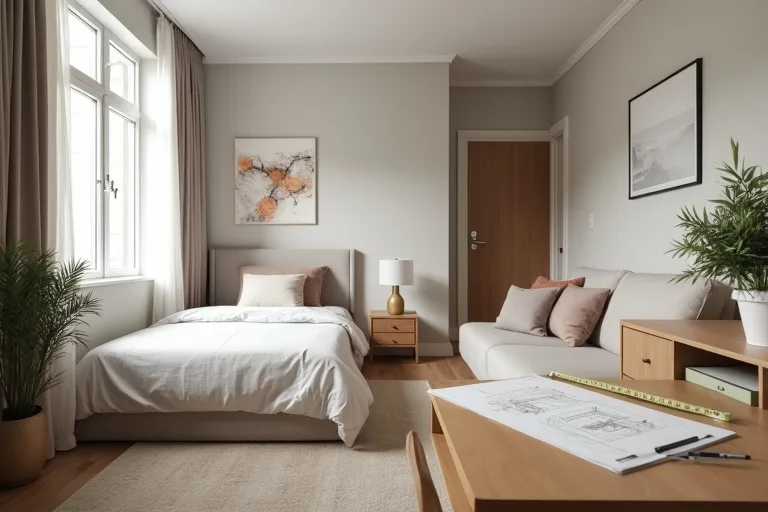
Choose furniture by function and scale
Once the room is measured, decide what each piece has to do. In a studio, furniture usually has to earn its place. A bed that also creates hidden storage, a sofa that stays visually light, or a narrow console table that can act as a drop zone may be more useful than a larger item with no extra function.
It helps to think in terms of the minimum useful size rather than the ideal showroom version. If a piece is too deep, too wide, or too heavy-looking for the room, it can make the entire apartment feel smaller.
The easiest way to sort your options is to compare them against the layout you already sketched. Ask three questions before buying:
- Does this piece fit the zone where it will actually be used?
- Does it leave a clear path around it?
- Does it support another need, like storage, display, or work surface?
That is where compact, practical furniture usually wins. A narrow console table with storage can work near an entry or behind a sofa. A simple seating piece with a modest footprint can keep the room open. And if you need a storage block that can define a zone without feeling bulky, an 8 cube storage organizer is often worth comparing against more decorative options because it gives you both structure and storage in one place.
Check storage fit before you commit
Storage is where studio apartment plans often get messy. People buy containers, shelves, and cabinets before they know what the room can actually absorb. The result is usually more visual clutter, not less.
Start by separating storage into what needs to be hidden and what can stay visible. Daily items, linens, and cleaning supplies usually need enclosed storage. Books, baskets, and a few display pieces can often live on open shelving if the room still feels calm.
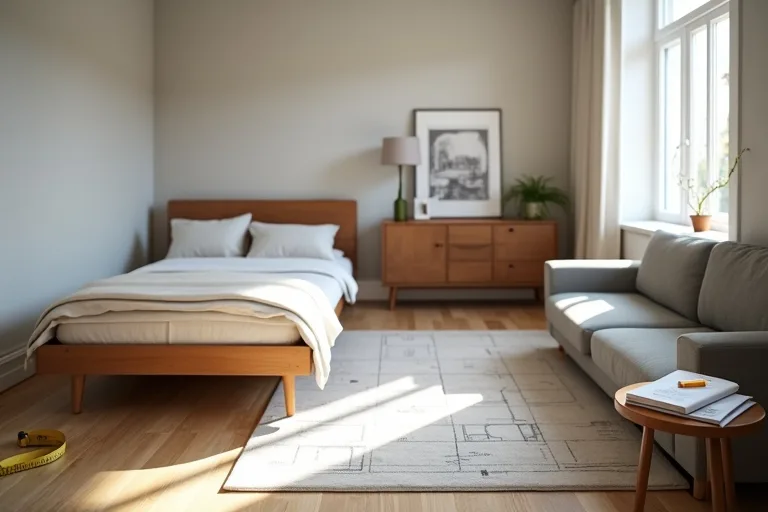
If you are deciding between a cabinet, cubbies, or a narrow table with storage, measure the exact footprint and then compare it to the path you still need through the room. Storage should solve a problem without taking over the circulation.
If you want a more detailed planning layer before purchasing, a simple digital layout tool can help you test combinations and keep track of what fits. A Small Space Furniture Planner, Room Layout Spreadsheet (Digital Download) is useful if you prefer to map choices before ordering anything. For a broader planning approach, the Room Layout Planner is the best next step on Styling Homes.
Best next step
If you are still deciding what to buy, use a room planner before you place the order. It is the easiest way to test bed placement, seating size, and storage options without guessing.
- Buying furniture before measuring the main zones.
- Choosing pieces that block a door, window, or walkway.
- Filling the room with too many storage items at once.
- Ignoring scale and ending up with furniture that feels heavy in a small room.
- Forgetting to plan where everyday items will actually land when you come home.
A studio apartment becomes much easier to furnish when you plan the layout first. Measure the room, mark the fixed features, and choose only the furniture and storage that support the flow you already need. That simple order of decisions saves money, keeps the room open, and makes the final result feel much calmer.
Helpful next tools and planners
If you want to make the decision easier before you buy
These options are useful when you are moving from a rough layout to a real purchase plan. Start with the planner if you want to test fit first, then compare compact storage and furniture once the room zones are clear.
FAQ
How do I start planning a studio apartment layout?
Begin by marking the sleeping, living, and storage zones on a simple sketch. Once those are in place, you can compare furniture sizes against the room instead of buying by instinct.
What should I measure before buying furniture for a studio?
Measure wall lengths, door swings, windows, outlets, and the walk paths you need every day. Those details usually matter more than the total room size.
Is storage or seating more important in a studio?
It depends on how you use the room, but storage should usually support the layout rather than crowd it. If a storage piece blocks movement, it is probably too large for the space.
Do I need a planner for a small studio?
You do not need one, but a planner makes the purchase decision much clearer. It is especially useful if you are choosing between several furniture or storage options and want to avoid a bad fit.
Three sensible next steps
Some links in this article may be affiliate links. Read more in the Affiliate Disclosure.