A studio apartment works best when every piece has a clear job. The challenge is not simply fitting furniture in, but creating a layout that gives sleeping, lounging, dining, and storage their own place without breaking the flow of the room.
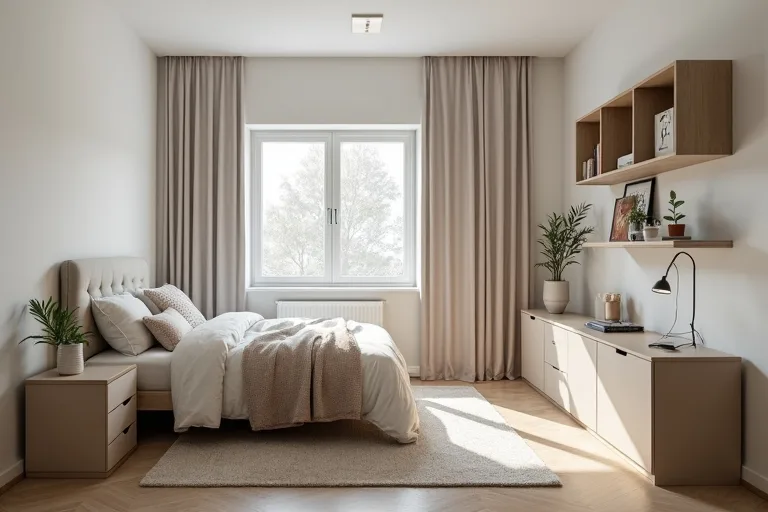
Use zones, scale furniture carefully, and add storage that doubles as room structure.
Start with the real constraints of the room
Most studio apartment layout problems come from trying to make one room do too much without a clear plan. Before thinking about decor, look at the fixed points: windows, radiators, doors, closets, and where you naturally walk through the space. Those details decide what can go where long before style choices do.
It helps to think in terms of circulation. If a sofa blocks the only path to the bed or a dining table sits too close to the wardrobe, the room will feel cramped even if the furniture is technically small enough. Good layout is less about filling corners and more about protecting movement.
Measure the full room, note door swings, and mark the walking routes you need every day. A simple room layout planner can make this much easier, especially if you are deciding between a sofa, dining table, or desk.
Use zoning to give each area a clear purpose
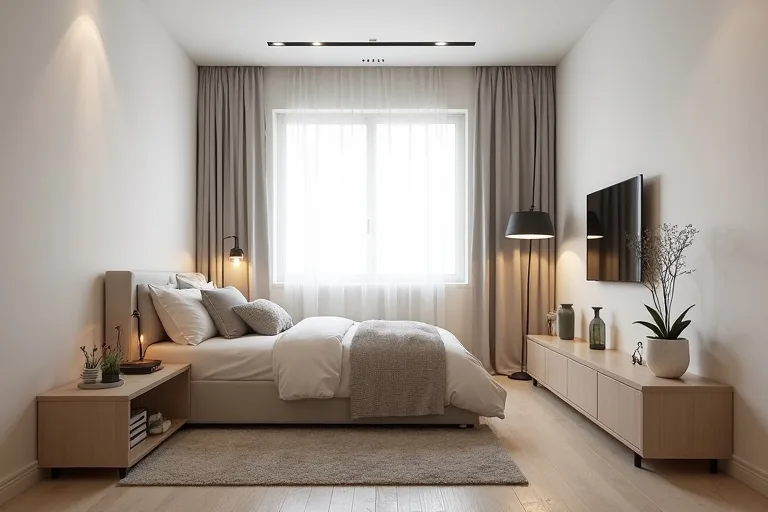
Zoning is what makes a studio feel intentional rather than improvised. A rug can define a sitting area, a low shelf can separate the bed from the living zone, and a narrow console can create a landing spot without visually closing off the room. The goal is not to build walls. It is to make the room read as several useful areas.
For many studios, the bed zone works best at the quieter end of the room, ideally away from the entry if possible. The living area usually feels better near the window, where daylight supports both relaxing and hosting. If you need a dining spot, place it where it can flex between eating, working, and occasional extra storage for everyday items.
Let furniture do more than one job
In a small studio, storage furniture often has the best return. A low shelving unit can divide space and hold baskets, books, or folded textiles. A narrow console table with storage can act as a hallway landing zone, a desk, or a surface for keys and charging. Pieces that support the layout are usually more valuable than decorative extras.
Keep the room visually calm by repeating just a few finishes. Two or three materials are usually enough in a studio, especially when storage and furniture already have to do a lot of work.
Measure furniture against the room, not the catalog photo
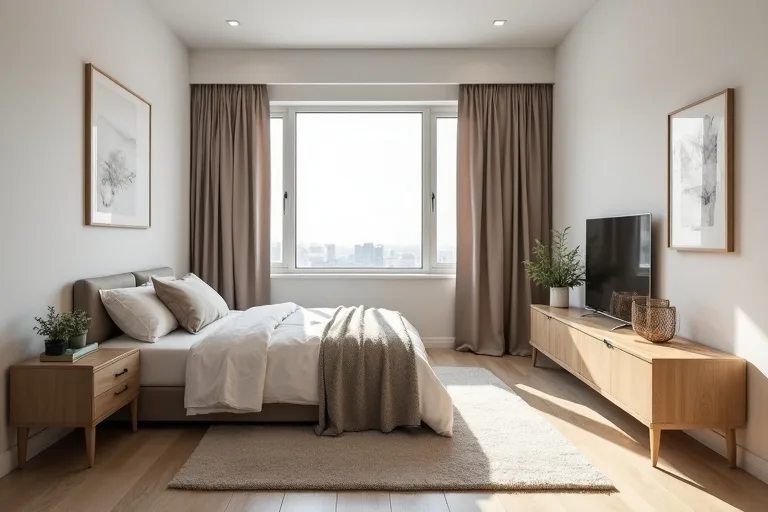
Small spaces are easy to misjudge online. A piece that looks light in a product photo may still be too deep, too tall, or too visually heavy once it arrives. Measure the length, depth, and height of any item you are considering, then compare it with the clearances you need around it.
As a rule, leave enough room to open drawers, pull out a chair, and pass comfortably through the room. If a bed frame includes oversized side rails or a bulky headboard, it may take more visual space than the mattress size suggests. The same is true for sofas, tables, and storage units with thick sides or dark finishes.
An 8 cube storage organizer can work well as a divider when you need separation without a full wall. If you are still mapping the room, a Small Space Furniture Planner, Room Layout Spreadsheet can help you compare furniture options before buying.
Match the layout to the shape of the studio
Square, narrow, and open studios each ask for a different approach. A square studio often benefits from zoning that radiates from the center, because the room can easily become one large undifferentiated box. A narrow studio usually works better with a linear plan, where bed, seating, and storage are arranged along the long walls. In a more open studio, you can use furniture placement to create a looser flow between areas.
In a square room, placing the bed off to one side and using a rug to anchor the living space can keep the center from feeling crowded. In a narrow room, avoid pushing everything against one wall if that leaves the opposite side unused and awkward. It is often better to create a clear path down the middle or along one edge and let the furniture support that route. In open studios, a low divider or shelf can add structure without making the space feel smaller.
Avoid the small-space mistakes that make studios feel tighter
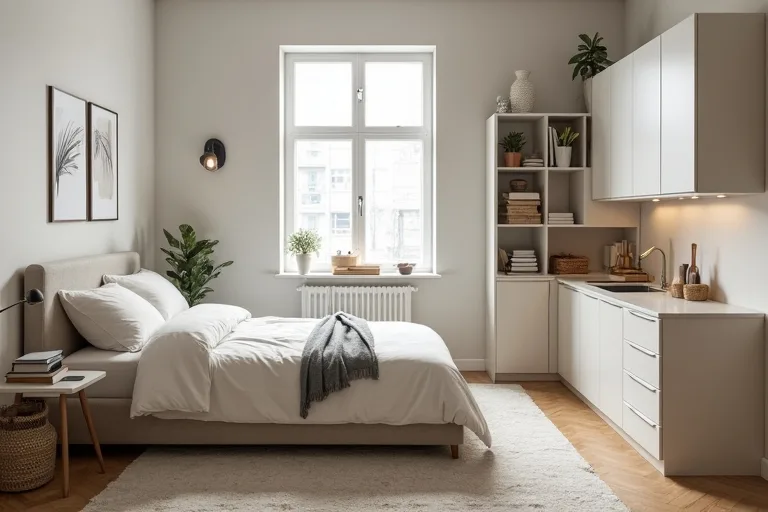
The most common mistake is buying pieces one by one without a plan for scale. Another is choosing too many standalone storage items, which can make the room feel cluttered even when everything is organized. Heavy visual contrasts, oversized rugs, and furniture with no clear purpose can also work against you.
A better approach is to decide on one layout, one storage strategy, and one or two anchor pieces before you add the rest. If the room needs more structure, use storage to create it. If the room already has strong architectural lines, keep the furniture simpler and let the architecture do more of the work. The point is to make each decision support the same plan.
For more storage ideas that work in small rooms, see Small Spaces & Storage. If you are still refining the setup, the room layout planner can help you test ideas before you commit to a purchase.