
A good TV wall does more than hold a screen. It helps the room feel settled, makes furniture placement easier, and keeps the main view of the living room from feeling cluttered or awkward.
If you are planning one from scratch, start with the room logic first: screen size, viewing distance, wall position, and what the rest of the furniture needs to do. Styling comes later, after the practical decision is clear.
Start with TV size, viewing distance, and wall layout, then choose a mount and styling approach that fits the room.
What a good TV wall needs
The best TV wall ideas begin with a simple goal: the screen should feel easy to watch without taking over the room. That usually means balancing three things at once: where the TV sits, how people will view it, and what else needs to happen around that wall.
In a calm living room, the TV wall often works best when it feels intentional rather than added at the last minute. A clean wall can still be practical. You may want a mount with flexibility, a bit of space for sound equipment or storage, and a little visual balance from art or shelving.
If you want to check whether your screen size suits the room, use the TV size distance calculator before you settle on the final setup.

The real decision is not just where the TV can fit. It is where the TV can be watched comfortably, how the wall will connect with the seating layout, and whether the wall will still look calm once cables, remotes, and media pieces are added.
Measure the room before you mount anything
Before you buy hardware or move furniture, look at the room as a whole. A TV wall works best when the screen size, sofa position, and walking space all agree with each other. If one of those elements is off, the room usually feels tighter or less settled.
Use a simple order of decisions:
- Confirm the screen size and viewing distance.
- Check which wall gives the most natural seating angle.
- Look at glare, windows, and light sources.
- Think about where cables, consoles, and remotes will live.
- Map the wall against the rest of the furniture, not just the TV.
If you are still deciding on the broader room plan, the room layout planner can help you see whether the TV wall works with traffic flow and furniture placement before you commit.

Choose the right wall, mount, and cable plan
Once the room measurements make sense, the next step is choosing the wall itself. In many homes, the best wall is not the one that looks empty. It is the one that gives the most comfortable seating angle and leaves enough flexibility for the rest of the room.
For mounting, a full motion tv wall mount can be useful when you want to angle the screen toward different seating positions or reduce glare from windows. A fixed mount can look cleaner, but it gives you less adjustment later. The better choice is the one that matches how the room is actually used.
To keep the wall from feeling unfinished, plan cable hiding and media storage at the same time. Even a simple setup looks better when wires are controlled and nothing has to be moved around every day to make the space function.
If the wall only works when the sofa is pushed into an awkward position, the mount choice is not the real problem. The layout is. Adjust the seating plan first, then decide whether a flexible mount or a simpler fixed setup makes more sense.
Style the wall so it feels finished
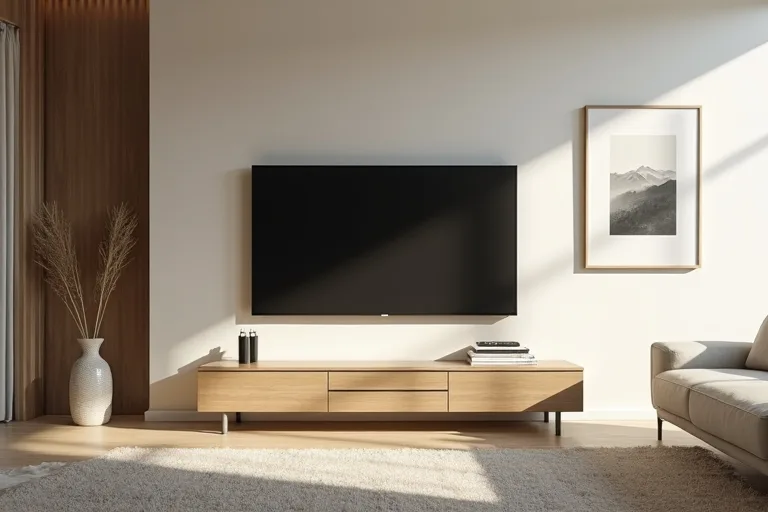
TV wall styling should support the room, not compete with the screen. The easiest way to do that is to keep the surrounding pieces simple and repeat a few quiet materials or tones that already belong in the room.
Neutral framed wall art can soften the look of a TV wall without adding visual noise. A small group of frames beside the screen, or a balanced arrangement around a media unit, can help the whole wall feel planned. If you want a straightforward finishing touch, a neutral framed wall art set for living room is often easier to place than decorative objects that need constant rearranging.
Use the wall to bring in calm structure: one or two supporting pieces, restrained shelving if needed, and enough open space for the TV to remain the main focus. That usually reads better than filling every gap.
Best next step
Before choosing a mount or rearranging the room, confirm the screen size and viewing distance first. That single decision usually makes the rest of the layout much clearer.
- Choosing a wall because it is empty, not because it suits the seating plan.
- Mounting the TV before checking viewing distance and screen size.
- Ignoring window glare or bright lamps near the screen.
- Leaving cables, boxes, or remotes without a clear storage plan.
- Adding too much wall decor so the TV area feels busy instead of calm.
The calmest TV wall ideas are usually the most practical ones. Start with viewing distance, wall position, and furniture flow, then choose the mount and styling details that support that layout. If you are not sure where to begin, measure first and style second.
Helpful next tools and planners
If you want to make the decision easier before you buy
A few focused tools and planning aids can reduce guesswork before you choose a mount, adjust the room layout, or spend money on finishing pieces.
FAQ
What is the best height for a TV wall?
The best height depends on your seating position and screen size, but the goal is usually comfortable viewing from the sofa without lifting your eyes too much.
Should the TV wall be the focal point of the room?
It can be, but it does not have to dominate the space. In many living rooms, the best result is a balanced wall that supports the room rather than overpowering it.
Is a full motion mount worth it?
It is often useful if the room has more than one seating angle or if glare is a problem. If the sofa and TV stay in one fixed position, a simpler mount may be enough.
How do I make a TV wall look less cluttered?
Keep the surrounding decor simple, hide cables, and limit the number of objects on the wall. A few well-placed pieces usually look calmer than a crowded display.
Three sensible next steps
Some links in this article may be affiliate links. Read more in the Affiliate Disclosure.